
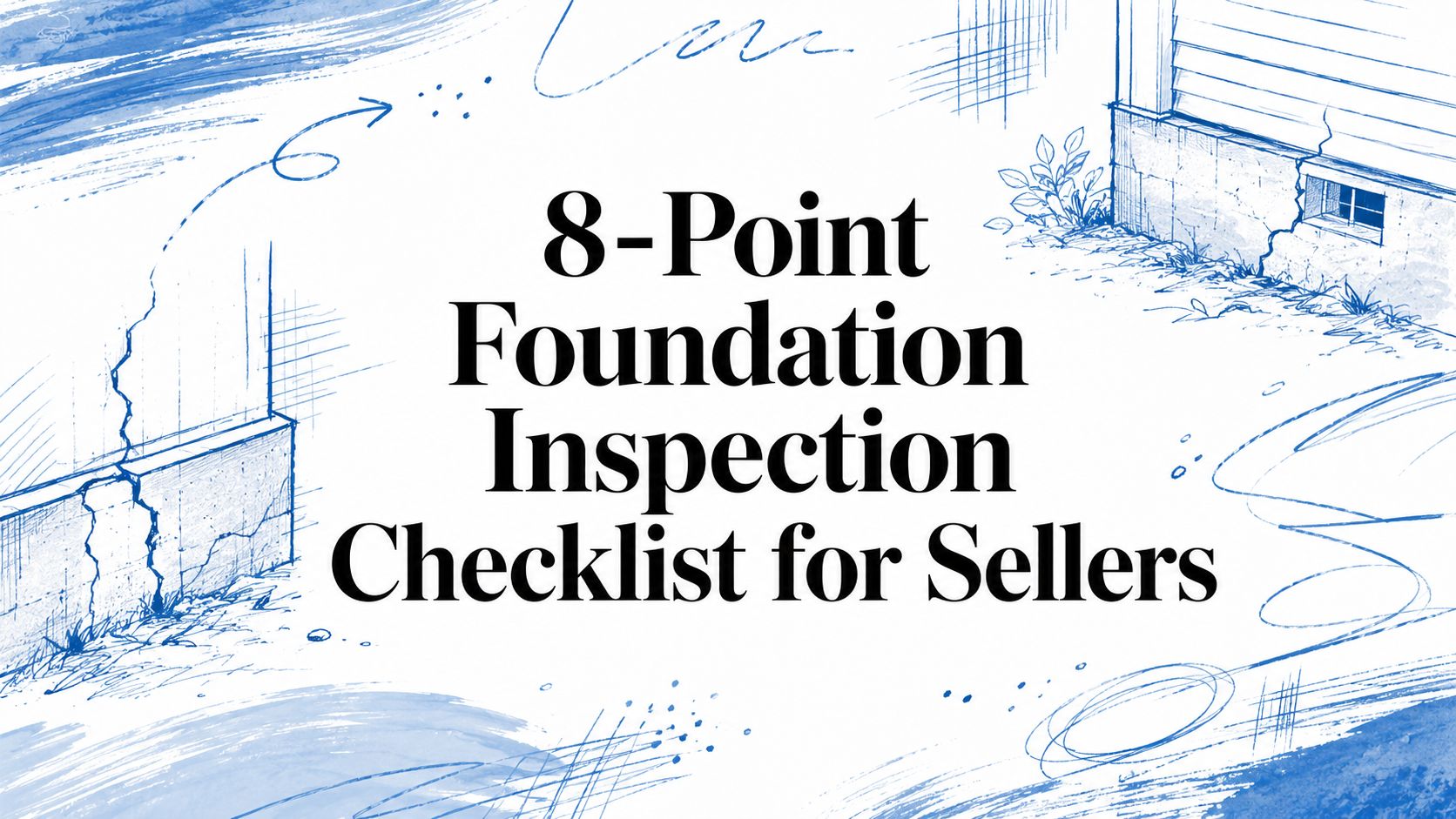
If you're preparing to sell in Palm Coast or St. Augustine, are you sure the small foundation clues buyers worry about are even visible yet? A foundation inspection checklist is one of the smartest tools a seller can use because it helps you catch movement, moisture, and drainage problems before they turn into a negotiating advantage. That matters in Palm Coast real estate, St. Augustine real estate, and throughout Flagler County real estate, where buyers pay close attention to what's happening beneath the surface.
The best sellers don't wait for a buyer's inspector to point out cracks, damp crawl spaces, or poor grading. They look early, document carefully, and fix the issues that matter most. In Northeast Florida, that often means paying attention to sandy soil, high water tables, coastal moisture, and termite exposure, especially in communities like Palm Coast, St. Augustine, Flagler Estates, and the surrounding neighborhoods. A well-used foundation inspection checklist helps protect Palm Coast home values and keeps a listing cleaner when it hits the market.
1. Foundation Cracks and Settlement Issues
Cracks are usually the first thing people notice, but not every crack means trouble. The pattern tells the story. Vertical, horizontal, and stair-step cracks all deserve attention, and horizontal cracks usually raise more concern because they can signal structural stress or pressure from the outside soil. One practical benchmark from a foundation inspection guide is that cracks wider than 1/4 inch or cracks that are growing need prompt evaluation by a qualified engineer (foundation inspection guide).
What sellers should do first
Start by photographing every visible crack with a ruler or tape measure beside it. Mark the ends with painter's tape and date the tape so you can see whether the crack changes over time. That kind of record matters when you're selling a home in Palm Coast or preparing for the St. Augustine housing market, because buyers want to know whether an issue is active or old and stable.
A simple local example makes the trade-off clear. A Palm Coast homeowner found horizontal cracks during a pre-sale inspection, had them professionally evaluated and sealed, and sold at market value without buyer concerns. On the other hand, a Flagler County property with unrepaired foundation cracks saw offers drop until the seller addressed the issue. That's why repair timing matters. If the crack is large, active, or paired with bowing walls, it's usually smarter to deal with it before listing.
Practical rule: If the crack looks bigger than a hairline line on paint, treat it like data, not decoration.
What works and what doesn't
- Work: Keep a dated photo log and disclose known repairs with contractor reports and warranties.
- Work: Bring in a structural engineer for larger or changing cracks.
- Doesn't work: Painting over movement and hoping buyers won't notice.
- Doesn't work: Describing a crack as “normal settling” without proof.
2. Water Intrusion and Moisture Damage
In Northeast Florida, moisture is often the hidden issue behind the crack. Palm Coast, St. Augustine, and much of Flagler County real estate deal with high water tables, heavy rain, and humid crawl spaces, so water control is part of foundation health, not an afterthought. Inspectors look for seepage, wet flooring, stains, mold, and efflorescence, which is the white mineral residue that shows water has moved through the material.
A good time to inspect is after heavy rain or during the wetter parts of the year, when drainage problems show up fastest. Check the basement or crawl space walls for discoloration, soft spots, rust, and musty smells. If you suspect mold, get testing done instead of guessing. Sellers sometimes underestimate how quickly a moisture issue can affect Palm Coast home values, especially when buyers know they can walk away from a problem home and choose a cleaner one.
The most effective fixes are usually unglamorous. Gutters need to work, downspouts need to carry water away, and the ground needs to slope away from the house. A St. Augustine home with previous water damage sold at full asking price after professional waterproofing, and a Palm Coast property with active seepage satisfied buyer inspection requirements after an interior perimeter drain system and sump pump were added. Those solutions worked because they addressed the water source, not just the stain.
A few practical checks help sellers stay ahead:
- Look for stains and odor: Musty air, damp insulation, and dark marks often point to hidden water.
- Check after storms: Moisture issues often show up when pressure is highest.
- Document repairs: Photos and contractor reports help buyers trust the work.

3. Foundation Wall Bowing or Buckling
Bowing walls are not a cosmetic issue you can ignore until closing week. They usually mean pressure is building against the wall, often from moisture or soil outside the foundation. In Florida, that pressure can show up even in homes that look solid from the street, especially where grading is poor or drainage has been neglected. A homeowner can see a wall that looks “a little off,” but an inspector sees a condition that needs measurement and, often, engineering review.
Signs that need a closer look
A level or laser tool can reveal whether the wall is out of plumb. A deviation over 1/2 inch per 10 feet warrants professional evaluation, and horizontal cracks alongside bowing make the concern more urgent. In a Palm Coast home, minor inward bowing was deemed stable with monitoring, and the seller sold without a major price reduction because the issue was documented properly. That's the kind of clarity buyers appreciate in St. Augustine real estate and nearby markets where structural uncertainty can slow a deal.
A few things make bowing worse in this region:
- Poor drainage: Water that sits near the foundation increases pressure.
- Moisture intrusion: Constant dampness weakens the system over time.
- Delays in repair: Small movement is easier to manage than advanced movement.
If a wall is bowing and the crack pattern is horizontal, bring in a structural engineer quickly.
The trade-off here is simple. Cosmetic patching may make the wall look better for a moment, but it doesn't solve the pressure behind it. Interior braces, exterior drainage improvements, or both may be needed, depending on the engineer's findings. For sellers in Flagler Estates homes or similar Northeast Florida properties, documentation matters almost as much as the repair itself. Buyers don't just want a fixed wall, they want confidence that the fix makes sense.
4. Concrete Spalling and Deterioration
Spalling is what happens when concrete starts to flake, crumble, or break apart at the surface. In coastal areas like Palm Coast and St. Augustine, salt exposure and water intrusion can speed that deterioration, especially on older homes or exposed foundation sections. Minor spalling may look cosmetic, but once aggregate or rebar becomes visible, the issue deserves closer attention.
This is one of those checklist items where sellers can make a strong first impression with a relatively visible repair. A coastal Palm Coast home had salt-induced spalling on the seaward side of the foundation, and after professional cleaning, repair, and protective sealant, the seller satisfied the buyer's inspection. That's a useful example because it shows what buyers respond to: a foundation that looks maintained and documented, not hidden behind a fresh coat of paint.
What to inspect and repair
Walk the perimeter and note where the damage is concentrated. Look for exposed rebar, rough patches, and areas where the concrete is actively breaking down. If the damage is minor, a patching compound or epoxy-based repair may be enough. If rebar is exposed, it needs attention before rust spreads further.
A few maintenance habits help in coastal Northeast Florida:
- Protect exposed surfaces: Sealants help slow salt and moisture damage.
- Fix drainage first: Water control matters more than surface cosmetics.
- Record the work: Photos and receipts support your disclosure file.
A St. Augustine historic home with aged concrete had minor spalling repaired using period-appropriate materials, and the repair preserved character while preventing more deterioration. That balance is important for older homes. Buyers in St. Augustine housing market conversations tend to appreciate maintenance that fits the house instead of a repair that looks slapped on.

5. Foundation Drainage and Grading Issues
Good drainage is one of the cheapest ways to protect a foundation, and one of the easiest things for sellers to overlook. One structural checklist says the ground should fall at least 6 inches within the first 10 feet away from the house, while another source notes that impermeable surfaces such as sidewalks or driveways should slope away at 2% (structural foundation checklist). That tells you something important. Drainage is measured, not guessed.
The most common seller mistake is assuming gutters alone are enough. They're not. Downspouts that dump water too close to the house can soak the soil, and beds piled against the foundation trap moisture right where you don't want it. A Palm Coast home with downspouts discharging within 2 feet of the foundation resolved moisture concerns after the seller extended the drainage and corrected grading. That's the kind of fix that helps when you're preparing for selling a home in Palm Coast.
Quick checks that pay off
- Watch water after rain: Pooled water near the foundation is a red flag.
- Extend downspouts: Move discharge well away from the house.
- Clear the perimeter: Keep mulch, soil, and plants from sitting against the wall.
- Check slopes: Yard grade should move water away, not toward the structure.
A St. Augustine property with landscaping pushed against the foundation and inward-sloping grade was improved with grading correction and gutter cleaning before listing. Buyers care because drainage problems are rarely isolated. If water collects outside, it often finds a way inside later.
The cheapest foundation repair is often the one that keeps water away in the first place.
6. Basement and Crawl Space Conditions
In Northeast Florida, crawl spaces often matter more than basements because they're common in homes built around water table concerns. That means inspectors pay close attention to ventilation, vapor barriers, moisture, pests, and the condition of the framing below the living area. A clean, dry crawl space can be a selling point. A damp one can raise alarms fast.
One Palm Coast home with a crawl space had adequate ventilation and a properly installed vapor barrier, and that clean space was highlighted in marketing materials. That's a smart strategy because buyers don't just buy square footage, they buy confidence. In a market like Flagler County real estate, where buyers compare homes closely, an orderly crawl space suggests the seller has maintained the property well.
What to look for
If access is safe, check the area for debris blocking vents, standing moisture, torn vapor barriers, and wood rot. Musty smells are a clue, not a nuisance to ignore. A St. Augustine property with poor crawl space ventilation was improved with added vents and a full vapor barrier before listing, which removed a buyer objection before it became a negotiation problem.
A few good habits make a difference:
- Keep it dry: Address moisture as soon as it appears.
- Keep it open: Stored items should never block airflow.
- Inspect structure: Posts, beams, and joists should be checked for rot or damage.
- Treat odors seriously: Musty smells often point to moisture that needs investigation.
For absentee property owners, crawl spaces are especially important because damage can progress unnoticed. A home may show beautifully above grade while the support area underneath is deteriorating. That's where a pre-listing inspection can save time and keep Palm Coast home values from taking an avoidable hit.
7. Pier and Support System Integrity
How solid are the piers and supports under the house? In Northeast Florida, that question matters because many homes sit on piers and beam systems instead of a traditional slab. Sandy soils and flood concerns make that setup practical, but they also put more attention on the structure below the living space. Inspectors look for cracked, tilting, or deteriorated piers, plus damage in the beams and bracing that hold the system together.
A Palm Coast home on piers with sound concrete supports and proper bracing reassured buyers because the seller could show maintenance records. That kind of documentation calms concerns fast. In Palm Coast real estate market trends, a clear structural story often carries as much weight as a fresh interior. Buyers can handle an older home. They do not like uncertainty.
Where sellers should focus
- Check exposed piers: Look for cracks, spalling, or settlement.
- Inspect wood components: Mud tubes, soft spots, and damaged wood can point to termite activity.
- Confirm bracing: Cross-bracing and lateral support should be intact.
- Watch soil around the base: Erosion often signals drainage or settling problems.
A Flagler County property showed termite damage in pier support beams, and the seller had termite treatment and beam repair completed before closing. That is the kind of coordinated response that works in this region, where moisture and pests often show up together. If you are marketing a home to buyers in Flagler Estates homes or other rural-edge properties, support-system integrity matters even more because those buyers usually inspect carefully.

8. Basement and Foundation Walls for Efflorescence and Mineral Deposits
Efflorescence is one of the easiest warning signs to miss because it looks harmless at first. It's the white, chalky mineral deposit that forms when water moves through concrete, masonry, or brick and leaves minerals behind as it evaporates. The deposit itself is often cosmetic, but the moisture movement behind it tells the important story.
A structured inspection should focus on low points and grade-level areas, since that's where water pathways often show up first. A Palm Coast home with moderate efflorescence near the foundation grade was cleaned, regraded, and sealed, and the issue no longer bothered the buyer. That works because the seller treated the symptom and the cause. In St. Augustine real estate, that distinction matters a lot when buyers are comparing homes with different maintenance histories.
How to read the signs
- Dry, dusty deposits: These can show past moisture movement.
- Wet, crystalline deposits: These suggest active water intrusion.
- Repeated recurrence: If it comes back quickly, the water source is still there.
- Associated staining or odor: Those clues point to a broader moisture problem.
A St. Augustine property with heavy efflorescence and rust staining led to a deeper investigation, which found water infiltration. After an interior drain system and exterior sealing were installed, the seller had a much cleaner story to tell buyers. That matters because buyers usually don't care whether the white powder is “technically cosmetic.” They care whether water is still getting in.
For sellers, a clean foundation wall with minimal efflorescence is more appealing than a wall that looks patched but still damp. If the deposits keep returning, keep digging until the cause is clear. That's the difference between a quick fix and a durable one.
8-Point Foundation Inspection Comparison
| Item | Implementation complexity | Resource requirements | Expected outcomes | Ideal use cases | Key advantages |
|---|---|---|---|---|---|
| Foundation Cracks and Settlement Issues | Medium (varies from simple sealing to structural work) | Sealants, monitoring tools, possible structural engineer and underpinning contractors | Halt progression, restore integrity, documented condition for sale | Horizontal/vertical cracks, stair-step or widening cracks, pre-sale inspections | Early detection reduces repair costs, increases buyer confidence |
| Water Intrusion and Moisture Damage | Medium–High (may require interior/exterior work) | Waterproofing contractors, drainage systems, sump pump, mold remediation services | Reduced moisture, mold prevention, long-term foundation protection | Active seepage, efflorescence, mold, high water table regions | Prevents structural decay and health hazards, preserves home value |
| Foundation Wall Bowing or Buckling | High (structural engineering and major repairs) | Structural engineer, underpinning, interior braces or wall replacement contractors | Stabilized walls, restored structural safety, documented repairs | Inward/outward wall deviation, horizontal cracks, misaligned doors/windows | Addresses severe structural failure, restores safety and marketability |
| Concrete Spalling and Deterioration | Low–Medium (patching to section replacement) | Concrete patching compounds, sealants, rebar treatment, contractor labor | Repaired surfaces, slowed deterioration if root cause fixed | Surface scaling, exposed aggregate, salt-exposed coastal areas | Relatively inexpensive cosmetic fixes, extends service life when combined with prevention |
| Foundation Drainage and Grading Issues | Low–Medium (simple fixes to excavation for drains) | Landscaping/grading services, gutter/downspout extensions, French drains (if needed) | Diverted surface water, reduced foundation moisture, prevented erosion | Ground sloping toward foundation, downspouts close to foundation, pooling after rain | Cost-effective prevention, improves curb appeal and lowers future repair needs |
| Basement and Crawl Space Conditions | Low–Medium (ventilation and vapor barriers to remediation) | Vapor barriers, vents, dehumidifiers, mold/pest remediation, carpentry for supports | Improved air quality, reduced mold/pest risk, protected structural members | Musty odors, visible mold, dampness, deteriorated support posts | Inexpensive maintenance increases usable space and buyer confidence |
| Pier and Support System Integrity | Medium–High (can require heavy repair/replacement) | Structural engineer, pier replacement/releveling, bracing, termite treatment | Restored support stability, maintained elevation/flood protection | Elevated homes with tilted/sunken piers, visible rot or pest damage | Preserves flood protection and ventilation benefits, prevents catastrophic failure |
| Efflorescence and Mineral Deposits on Walls | Low–Medium (cleaning plus moisture source remediation) | Cleaning tools/chemicals, sealants, drainage corrections if needed | Cosmetic improvement, early indicator of moisture pathways | White chalky deposits, recurring mineral stains at grade level | Low-cost cleanup reveals hidden moisture issues and improves appearance |
Your Next Steps From Inspection to a Successful Sale
A strong foundation inspection checklist gives you an advantage before the buyer does. It helps you sort cosmetic wear from structural concerns, and that matters when you're deciding what to fix, what to document, and what to disclose. In Palm Coast real estate, St. Augustine real estate, and nearby Northeast Florida communities, buyers are looking closely at drainage, moisture, crawl space condition, and visible structural movement because those issues can shape pricing strategy and repair negotiations.
The goal isn't to make every home perfect. The goal is to know what you're working with so you can list with confidence. If you find minor cracks, outdated grading, or signs of moisture, those are often manageable when you address them early. If you find bowing walls, active seepage, or support damage, that usually calls for a more serious review before you go to market. Either way, the seller who prepares early usually has more control over the conversation.
For homeowners in Palm Coast, St. Augustine, Flagler County, and surrounding areas, this kind of preparation can protect marketability and reduce surprises during inspection. It also helps absentee owners, downsizing homeowners, and move-up sellers present a cleaner property story to serious buyers. Good records, clear photos, and timely repairs go a long way when someone is evaluating your home's condition and your asking price.
If you're thinking about selling, this is the right time to walk your property with fresh eyes. Check the foundation, the crawl space, the grading, and the drainage, then decide what needs attention before the first showing. If you'd like help thinking through repairs, pricing, or how these issues may affect your home's value in today's local market, I'm always happy to share practical guidance.
Marilynn Wolfe with Marilynn Wolfe, Realtor, LLC helps sellers in Palm Coast, St. Augustine, Flagler County, and surrounding Northeast Florida communities prepare their homes with clear pricing strategy and local market insight. If you want help connecting a foundation checklist to your sale plan, visit Marilynn Wolfe, Realtor, LLC for personal guidance and local expertise.