


If you're wondering whether your Palm Coast home should be listed high to leave room for negotiation, that popular advice can cost you time and negotiation power. The list price isn't a placeholder. It's the first market signal buyers, appraisers, and listing portals receive, and in Northeast Florida, that signal can shape the entire sale.
Pricing strategy consulting for a home seller isn't corporate rate-setting. It's a practical way to decide what your specific property should communicate to buyers in Palm Coast, St. Augustine, Flagler County, or a surrounding community. The right recommendation considers comparable homes, buyer behavior, competing inventory, property condition, and your timeline.
A seller may be downsizing, relocating, preparing for a move-up purchase, or managing an absentee property from another state. Each situation changes the pricing decision. Marilynn Wolfe helps homeowners approach that decision with local evidence rather than an online estimate or a neighbor's opinion.
Why the List Price Is the Most Important Decision a Seller Makes
The most expensive pricing mistake is treating the launch number as an opening bid. A seller can adjust later, but the first days on the market create the strongest opportunity to attract attention, generate showings, and encourage serious buyers to act.
Consider two similar homes in the same Palm Harbor neighborhood in Palm Coast. One launches at a price $5,000 below the other, based on stronger comparable evidence and a realistic reading of competing listings. The higher-priced home receives less early activity, remains available longer, goes through a price reduction, and ultimately produces lower net proceeds after carrying costs and weaker negotiating position.
That scenario is a useful illustration, not a reported case study. The underlying principle is supported by current housing research. A 2026 housing-market analysis found that a home listed at its eventual sale price went under contract in a median of 7 days, while pricing it just 1% above that level doubled the median wait to 14 days. At 2% over, the median window widened to 6 to 42 days. The Indiana Realtors housing analysis shows why small launch errors can create a meaningful timing penalty.
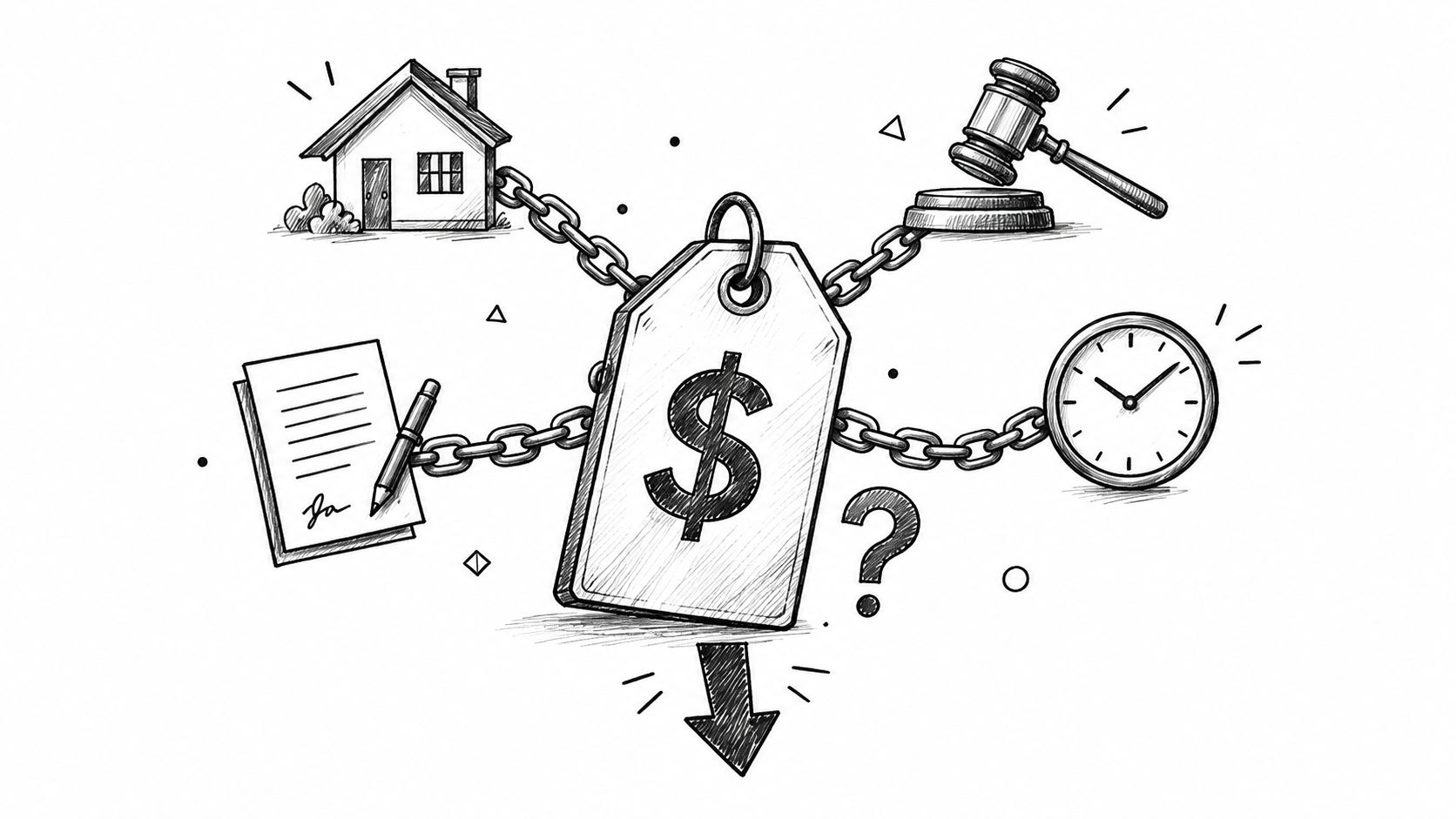
The first number shapes the buyer pool
Buyers search within price bands, compare homes side by side, and notice how long a property remains available. Appraisers later evaluate the sale against market evidence. Listing portals sort and display properties according to price, location, and buyer activity. A number that misses the market can reduce the number of qualified people who ever see the home.
A pricing consultant protects the seller from reading the reaction window incorrectly. In Palm Coast, that means considering the difference between a well-positioned home in Pine Lakes, Palm Harbor, Matanzas Woods, or Flagler Estates. In St. Augustine, it means accounting for distinctions among historic-area properties, suburban homes, beach locations, and homes near the Intracoastal.
Practical rule: Set the launch price to attract the right buyers immediately, not to test how much optimism the market will tolerate.
What Pricing Strategy Consulting Really Means for Home Sellers
Think of a home sale like a small business launch. The price is the headline investors read first, and the property has only one opportunity to make a clean first impression with the buyers currently searching.
A pricing strategy consultant acts before the number goes public. The work goes beyond reviewing a few recent sales. It connects evidence to your property, your competing listings, your financing considerations, and the date by which you need to sell.
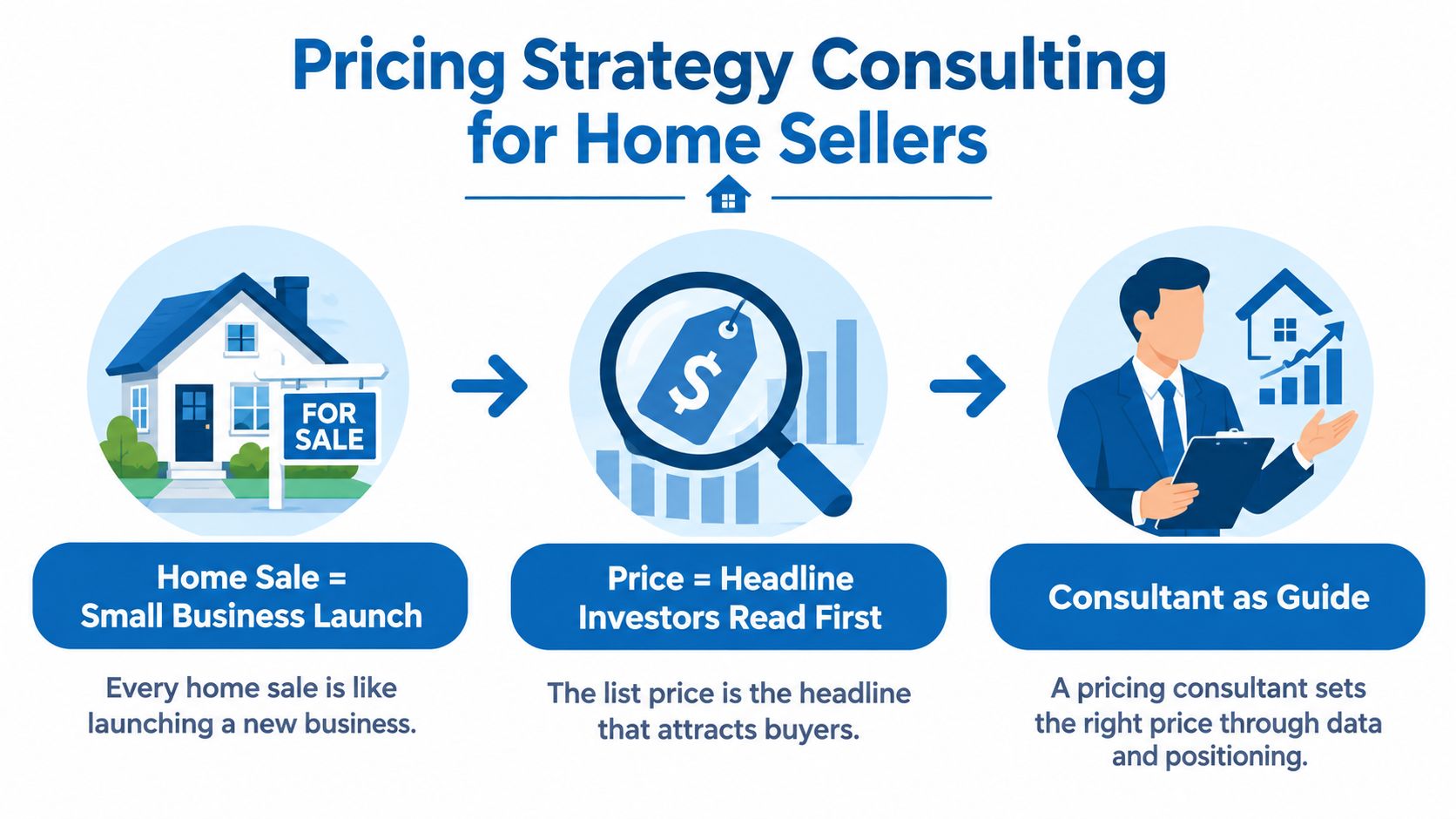
What the consultant evaluates
A seller-focused review usually includes:
- Comparable sales: Recent Palm Coast and St. Augustine sales are selected for meaningful similarities, not just geographic proximity.
- Current competition: Active listings reveal what buyers can choose today, while pending listings can show which pricing positions are attracting action.
- Market velocity: The consultant studies how quickly homes are moving in the relevant price band and location.
- Buyer search behavior: Price thresholds, portal views, saved searches, and showing requests help identify whether the home is reaching its intended audience.
- Offer scenarios: The recommendation considers how different price positions may affect the number and quality of offers.
- Response triggers: The seller and agent agree in advance on what early activity means and when the strategy should be reviewed.
A standard comparative market analysis remains important. Guidance from this comparative market analysis resource describes a CMA as a written argument for what a home should sell for, using comparable sales and adjustments for differences in the subject property.
Pricing strategy consulting adds a forward-looking layer. It asks not only what similar homes sold for, but also how your home will compete against the properties available when you launch, how buyers will interpret the price band, and what your timeline requires.
The Core Pieces of a Smart Listing Price
A defensible list price has several inputs. None works well alone. A high-quality recommendation assembles local property evidence, market movement, competition, and buyer response into one decision.
Comparable selection must be genuinely local
A Matanzas Woods home shouldn't be compared casually with a property in a different Palm Coast community because both have similar bedroom counts. The review should account for lot characteristics, updates, floor plan, age, condition, community location, and the features buyers notice in person.
The same discipline matters in St. Augustine. Oceanfront frontage, Intracoastal frontage, historic character, and ordinary inland location don't carry the same buyer expectations. A property near St. Augustine Beach shouldn't be priced from a comp that lacks the same setting or lifestyle appeal.
Velocity shows whether buyers are acting
A pricing consultant reviews how long comparable homes take to secure an offer and how that pattern changes by price band. For a Palm Coast home in the $400,000 to $450,000 range, the relevant question is whether similar properties are attracting attention quickly, sitting through multiple weekends, or requiring repositioning.
The answer gives context to a seller's timeline. A homeowner moving toward St. Augustine may need a different launch posture than an owner who can wait. An absentee owner may value a clean, decisive strategy that reduces unnecessary carrying time and remote decision-making.
Competition determines your position
Active listings are the seller's real competition. A review should identify how many similar homes are listed within a practical radius, including properties buyers may compare through the same portal search.
A home with a premium lot, updated kitchen, or strong presentation may justify a different position than a similar home needing repairs. The recommendation must explain the difference in terms buyers can understand.
Digital signals confirm reach
Portal views, saved-search activity, and showing requests help answer whether the listing is reaching the intended buyer pool. These signals don't replace contracts or offers, but they can reveal whether a price is attracting attention before the seller makes a larger adjustment.
| Component | Example Input | Why It Matters |
|---|---|---|
| Comparable selection | Similar Matanzas Woods sales adjusted for condition and lot | Establishes a defensible value range |
| Market velocity | Recent movement in the Palm Coast price band | Connects price to expected timing |
| Competitive set | Similar active homes in the relevant search area | Shows how buyers will compare the property |
| Buyer response | Views, saves, inquiries, and showings | Tests whether the launch reaches serious buyers |
For sellers in Flagler Estates, Palm Coast, St. Augustine, and nearby communities, these inputs turn a broad home-value conversation into a property-specific pricing decision.
How Small Overpricing Mistakes Cost Sellers Real Money
Overpricing doesn't always look dangerous on launch day. The listing goes live, the seller feels protected by extra negotiation room, and early interest may seem adequate. The problem appears later, when weak activity forces a reduction after buyers have already formed an opinion.
Academic research found a strong, non-linear relationship between overpricing and time to sell. An increase of 1 percentage point in the markup between asking price and expected transaction price raised expected market time by about 10 days, while a 10-point increase added roughly 200 days. Research from George Washington University documents why the time penalty can accelerate as the pricing gap grows.
A hypothetical Palm Coast example makes the issue easier to see. If a $425,000 home sits for 47 days while a comparable property sells in 14, the seller may face more showings fatigue, continued utilities and maintenance, repeated conversations about price, and less negotiating strength. Those are practical consequences of time on market, not a claim about a specific completed sale.
| Metric | Overpriced by 3% | Strategically Priced |
|---|---|---|
| Buyer reaction | Fewer qualified buyers may engage | Price reaches the intended search audience |
| Early activity | Weak response can develop before a change | Early response can be reviewed against expectations |
| Negotiating position | Buyers may assume the seller is becoming more flexible | Seller has stronger control over the conversation |
| Marketing history | A reduction becomes part of the listing story | The launch supports a coherent value position |
| Seller experience | More uncertainty and repeated decisions | Clearer monitoring and response plan |
Why reductions rarely erase the first impression
A reduction can bring a home back into a buyer's search, but it can't completely remove the days already accumulated. Buyers may wonder why the home hasn't sold or assume the seller will accept even less.
The goal isn't to choose the lowest price. It's to choose the price that makes the home's value easy for the right buyer to recognize.
Pricing strategy consulting exists to address that risk before the listing goes live. It gives a seller a rationale, a competitive position, and a plan for interpreting early market feedback.
How a Strategic Listing Approach Works in Palm Coast and St. Augustine
A representative Flagler County seller may own a three-bedroom home in Pine Lakes and be considering a move to St. Augustine. The seller wants enough equity for the next purchase but doesn't want the current property to linger while plans change.
The consultation begins with the seller's actual circumstances. Desired timing, property condition, relocation plans, mortgage considerations, and tolerance for preparation all matter. A price that looks attractive on paper may be a poor strategy if it creates delays that interfere with the next move.
The market review
The consultant examines comparable homes within a tight local area, then studies current listings and pending activity. The review also considers how buyers may search across Palm Coast and St. Augustine, especially when relocating from another region or comparing established neighborhoods with new construction.
Seasonality can influence how the property is presented, but it shouldn't become an excuse for guesswork. Inventory absorption, competing condition, lot appeal, and buyer urgency need to support the final position.
Preparation changes the pricing conversation
A worn entryway, crowded rooms, dated lighting, or deferred exterior maintenance can make a home appear less valuable than its comparable sales suggest. A focused preparation plan may include decluttering, repairs, professional photography, and staging choices that highlight space and function.
For a downsizing homeowner, preparation may also reduce the burden of moving. For an absentee owner, a local professional can coordinate the practical steps that are difficult to manage remotely. For a move-up seller, the launch plan should keep the current sale aligned with the next purchase.
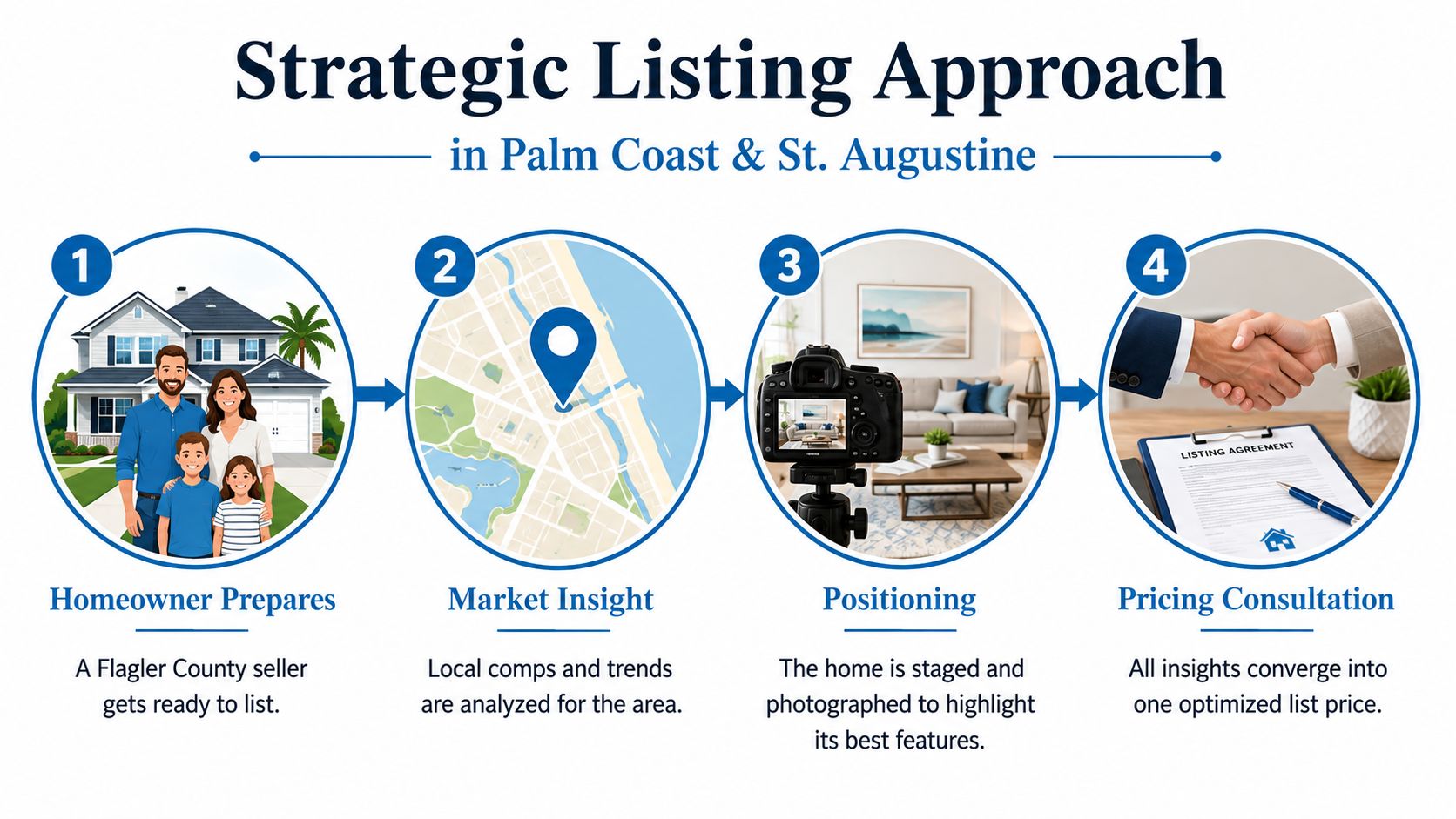
The recommendation connects the pieces
The final price isn't produced by one spreadsheet cell. It reflects the home's condition, its buyer audience, its competitive set, and the seller's timeline. A well-positioned home can then be marketed with a clear explanation of its strongest features rather than relying on price alone.
Buyers relocating to Northeast Florida often need help comparing lifestyle, commute, neighborhood character, and construction quality. New construction buyers may also compare builder incentives with existing homes. Those comparisons influence how a resale property should be positioned in Palm Coast real estate or the St. Augustine housing market.
What the Pricing Process Looks Like From Start to Offer
A disciplined process gives the seller fewer surprises. It also keeps pricing from becoming a one-time opinion delivered before the market has a chance to respond.
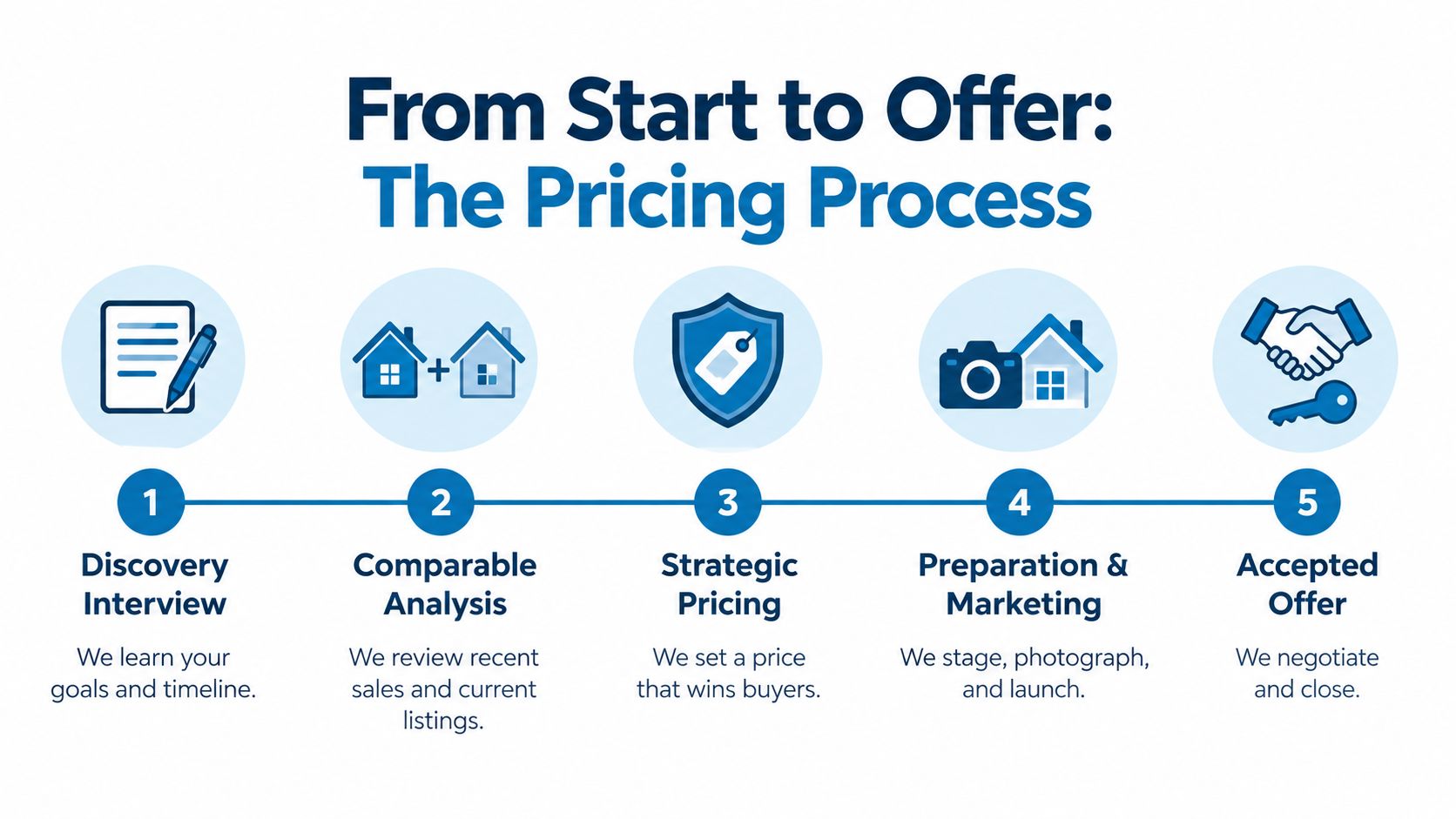
The working sequence
- Discovery interview: The seller explains the reason for selling, preferred timing, property history, and financial priorities.
- Comparable analysis: Recent sales and active competition are reviewed with adjustments for condition, location, features, and presentation.
- Market pulse check: The consultant studies current buyer activity and whether the selected price band supports the seller's goals.
- Price recommendation: The seller receives a clear rationale, not just a number, along with the intended positioning.
- Preparation and launch: Repairs, staging, photography, description, and showing readiness support the chosen price.
- Early monitoring: Buyer response is reviewed through inquiries, showings, feedback, and offer activity.
- Dynamic response: If the market gives a clear signal, the seller and agent decide whether to maintain, improve presentation, or adjust the strategy.
One home may launch high, receive limited engagement, and require more than one reduction. Another may launch at a price designed to attract the correct audience, then receive a structured review after the initial response period. These are contrasting possibilities, not guaranteed outcomes.
The important distinction is that pricing strategy consulting is a calibration loop. The seller starts with evidence, launches with intention, and responds to actual market behavior instead of reacting emotionally to every comment.
Your Next Step Toward a Confident Sale
Carry four principles into your next home-value conversation:
- Price is a decision: It shapes who sees the property and how buyers interpret its value.
- Evidence beats guesswork: Comparable sales, current competition, and buyer response provide a stronger foundation than an outdated estimate.
- Small gaps matter: Research shows that even a modest overpricing gap can extend expected market time, as documented in the earlier days-on-market research.
- Preparation supports position: Condition, presentation, marketing, and pricing need to tell the same story.
A no-obligation pricing conversation can give you clarity before you commit to a listing date. For a Palm Coast or St. Augustine home, the discussion should address your property, your timing, your goals, and the evidence behind the recommended range.
Ask for a written pricing rationale so you have something practical to compare with any other number you receive. Whether you're selling in Palm Coast, St. Augustine, Flagler Estates, Pine Lakes, or another Northeast Florida community, a clear plan can make the decision feel manageable.
Marilynn Wolfe, LLC offers personalized home-value guidance and local pricing strategy for sellers in Palm Coast, St. Augustine, Flagler County, and surrounding communities. To discuss your home's position in the current market and your preferred timing, visit Marilynn Wolfe, LLC and request a consultation.