
National median prices for new homes hover around the low $400,000s, but the true all-in cost in markets like Palm Coast and St. Augustine often climbs significantly higher once lot premiums, design upgrades, and site preparation fees are added to the builder's base price. A realistic budget must account for the land, the selections, the infrastructure, and the cost of carrying your current housing while construction finishes.
If you're standing in a model home in Palm Coast, admiring the kitchen and mentally placing your furniture, the brochure's base price can feel reassuring. Then you notice the upgraded cabinets, the larger homesite, the screened outdoor space, and the finished landscaping. Those features may not be included in the number that brought you through the door.
That distinction matters throughout Palm Coast real estate, St. Augustine real estate, Flagler County, and surrounding Northeast Florida communities. New construction can be a smart choice, but buyers need to evaluate the final contract price, not the model home's appearance or the advertised starting figure.
The Reality Behind the Model Home Price Tag
A buyer relocating to Palm Coast recently walks into a model home with a clear budget and a floor plan already chosen. The home feels spacious, the finishes look modern, and the base-price brochure appears to fit. The trouble starts when the buyer compares the brochure with the model itself and realizes that the features creating the appeal are mostly upgrades.
That isn't an unusual experience. Builders use a base price to make different floor plans easy to compare, while the model home demonstrates what the property could become with premium selections. The base figure may cover the structure on a standard homesite, but it may not include the lot location, upgraded flooring, enhanced cabinetry, designer lighting, appliances, landscaping, or other features that made the model memorable.
Practical rule: Treat the base price as the opening line of the budget, not the answer to “how much do new construction homes cost.”
Resale buyers generally compare a listing price with the home's visible condition, included appliances, landscaping, and established surroundings. New construction buyers must read a specification sheet and contract to determine what they're purchasing. That makes the budgeting process less intuitive, especially for move-up buyers selling a current home or downsizing homeowners who want predictable monthly costs.
Why the model can mislead
The model home is designed to sell a lifestyle. It may show a premium lot, a larger plan, additional structural options, and finishes selected specifically to create an emotional response. In communities near Palm Coast's golf areas, coastal corridors, or St. Augustine's expanding neighborhoods, the lot itself can change the price before any interior choice is made.
Before signing, ask for three separate figures:
- Base contract price: The home and standard included features.
- Selection and lot additions: Homesite charges, structural changes, and design-center choices.
- Estimated all-in cost: The amount needed for closing, site work, utilities, landscaping, financing, and other exclusions.
That separation protects the budget from the most common mistake, falling in love with a finished model while calculating affordability from an unfinished base package.
National Averages Versus Local Market Realities
National data provides useful context, but it can't tell a buyer what a homesite in Palm Coast or St. Augustine will cost. Zillow reported an average new-construction home price of $439,000 in February 2025, while U.S. Census Bureau data placed the average price of a new home at $497,700 in March 2025. An independent industry report put the Q1 2025 median list price at $448,393 for newly built homes. These figures come from different measures, which is why they shouldn't be treated as interchangeable. The figures are compiled in Zillow's overview of building costs.
The spread reflects more than statistical technicalities. Location, lot size, floor plan, upgrades, and builder incentives all affect the result. A national average can help a relocating buyer establish a rough starting point, but it won't account for a premium homesite in St. Johns County, clearing work in Flagler Estates, or the difference between a builder's standard package and the finished home shown in its marketing.
The construction benchmark also varies by size. The National Association of Home Builders reported about $162 per square foot for a typical single-family home, translating to an average construction cost of $428,215 in its 2024 survey. At that benchmark, a 2,500-square-foot home comes to roughly $405,000 before land, financing, and site-specific additions, as summarized by Home Depot's cost guide. That calculation is a baseline, not a Northeast Florida quote.
The U.S. Census Bureau recorded a 2024 median new single-family home sales price of $428,600, with a median size of 2,286 square feet and a median price of $154.70 per square foot. Those benchmarks appear in the Census Bureau's national housing analysis. Use them to frame the conversation, then replace them with a written community-specific estimate before making an offer.
Comparing New Builds to Resale Homes
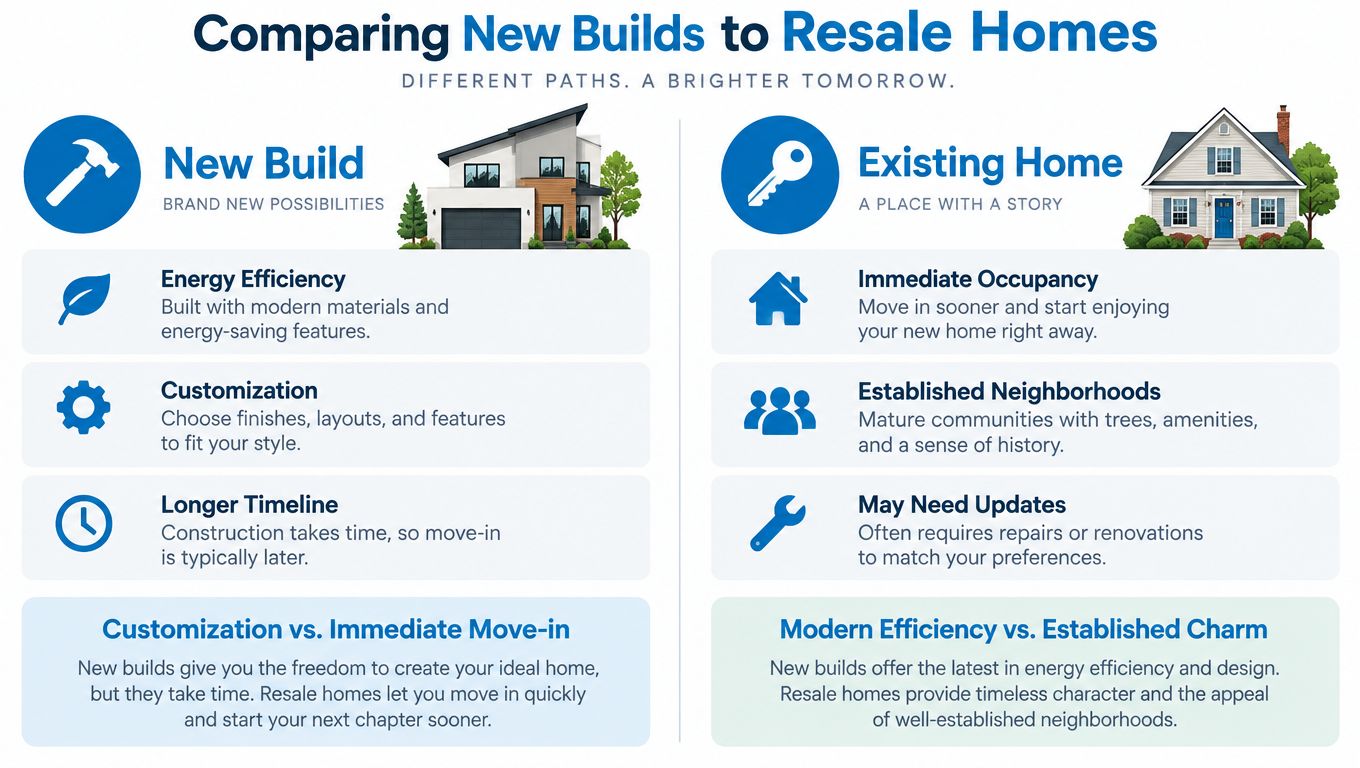
The better choice depends on more than the sales price. A new home offers current systems, customization, and fewer immediate repair decisions. A resale home may offer mature landscaping, an established street, and the ability to move in without waiting for construction to finish.
New construction has also become more competitive with resale housing in some market snapshots. The National Association of Realtors reported that in April 2025, the median new-home sales price was $407,200, compared with $414,000 for existing homes, a difference of about $7,000. That comparison appears in NAR's analysis of the new-home market. Another market report showed a $449,373 national median listing price for new construction and $390,550 for existing homes, producing a 15.1% new-build premium in that snapshot.
Those opposing results make one recommendation clear. Don't assume new construction is automatically more expensive, and don't assume the builder's price is automatically a bargain. Compare the complete property, including size, location, condition, fees, incentives, and the work you'd need to do after buying a resale home.
| Choose new construction when | Choose resale when |
|---|---|
| You value modern systems and customization | You need a faster move-in |
| You can tolerate construction timing | You want established landscaping |
| The builder offers useful financing or closing incentives | You want to inspect the finished home before committing |
| The community location fits your routine | The neighborhood's mature character matters |
For a buyer moving to St. Augustine, an established resale neighborhood may offer a shorter commute or more mature surroundings. For a buyer seeking a specific layout in Palm Coast, a new community may provide the right floor plan and fewer early maintenance projects. The decision should follow your timeline and cash position, not a general belief about which category is cheaper.
Lot Premiums and Design Center Upgrades
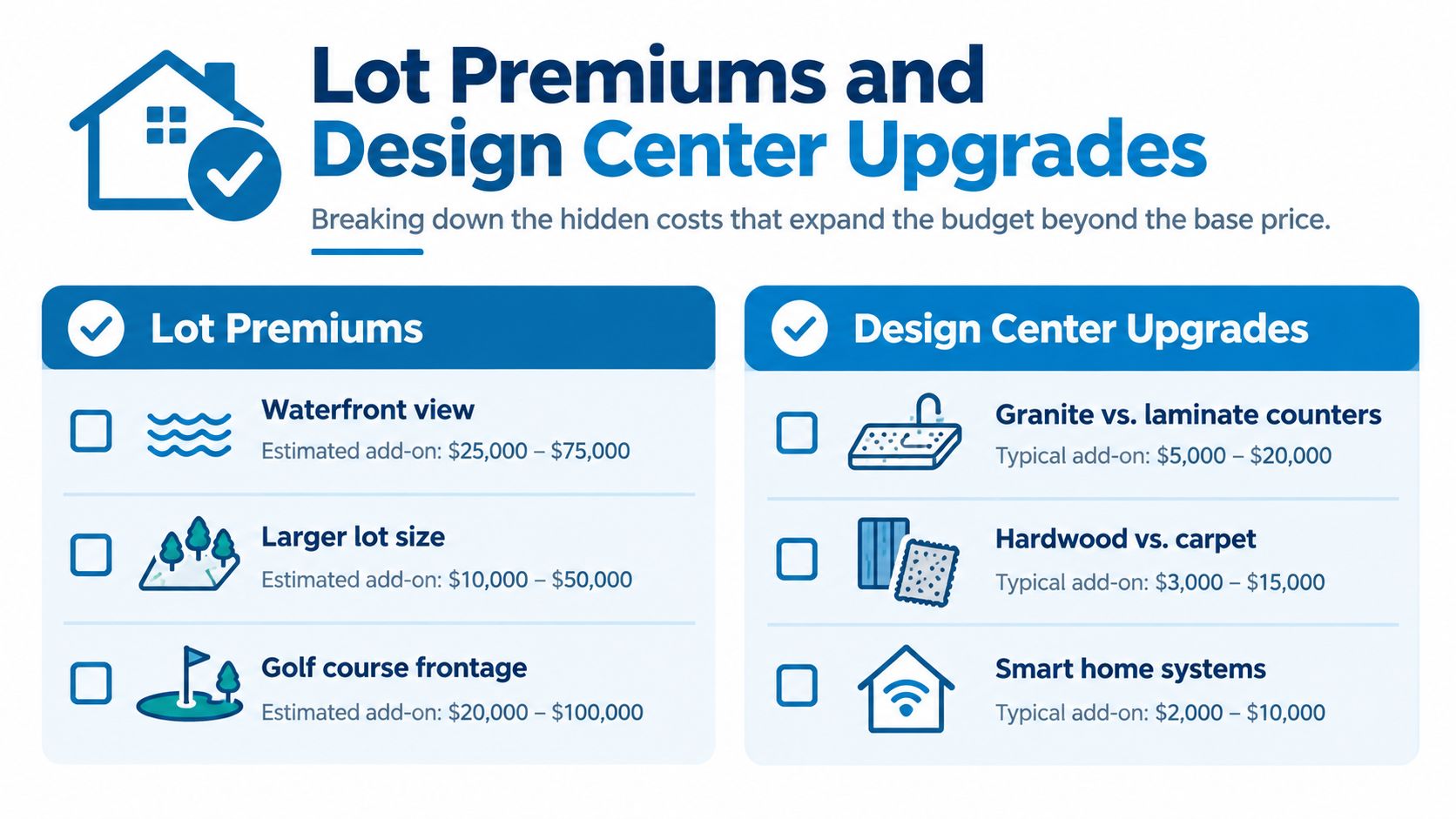
The lot and the selections usually create the largest gap between a builder's advertised price and the home a buyer actually wants. A standard homesite may face a different street, offer less privacy, or lack the water, preserve, golf, or cul-de-sac position that attracted the buyer to the community.
In Palm Coast and St. Augustine, evaluate the homesite before choosing finishes. A premium location can improve daily enjoyment, but it can also affect resale appeal, drainage, privacy, sunlight, and future maintenance. In Flagler Estates, the land itself may require a different level of due diligence than a finished subdivision lot.
Use a written upgrade checklist
Separate choices into must-have, valuable, and cosmetic categories. Structural changes and electrical planning often deserve earlier attention because they may be difficult or impossible to add later. Decorative selections can be prioritized according to cash flow and neighborhood expectations.
- Lot position: Confirm the exact homesite charge and what the premium buys.
- Structural options: Verify changes to the floor plan, garage, windows, or outdoor areas.
- Kitchen and baths: Compare standard counters, cabinets, fixtures, and appliances with the model specifications.
- Flooring and lighting: Ask which rooms receive upgraded materials and whether installation is included.
- Exterior completion: Clarify sod, irrigation, fencing, gutters, driveway details, and outdoor living features.
- Technology: Confirm wiring, security, smart-home equipment, and internet provisions.
Upgrade spending can reach about 10% of the base price for some buyers and 20% or more for premium selections, according to NewHomeSource's guide to building costs. That doesn't mean every buyer should reserve the same amount. It means your selections need their own budget before you commit to the base home.
A useful discipline: Choose the features you'll use every day first, then compare the total with nearby resale homes before approving cosmetic extras.
Hidden Infrastructure and Site Preparation Fees
Square footage doesn't tell you whether the property is ready to live on. Builders may include some site work and exclude other costs, so buyers need to identify who pays for clearing, grading, drainage, permits, utility connections, driveways, and landscaping.
That issue deserves special attention in Flagler Estates and other areas where the parcel may require more preparation than a finished subdivision homesite. A buyer should never assume that a per-square-foot estimate includes the land or every service needed to make the house operational.
A 2026 cost breakdown estimated construction-only costs around $323,000 nationally, while utility hookups alone could range from $3,000 to $30,000 and temporary housing could add $9,000 to $36,000. Those figures are reported in Opendoor's construction cost breakdown. The ranges aren't a local quote, but they show why a builder's construction number can't stand in for the complete project budget.
Ask these questions before you select a lot
- Is the lot cleared, graded, and ready for the selected plan?
- Are water, sewer, electric, gas, or septic connections included?
- Who pays for permits, impact charges, inspections, and engineering?
- Does the contract include drainage and stormwater work?
- What landscaping, driveway, fencing, and exterior finishes are part of the delivery?
- What happens if the site requires additional work after contract signing?
Get each answer in writing. Verbal assurances at a sales office won't protect you if the contract uses different language.
Navigating Builder Contracts and Negotiations
A builder's sales representative works for the builder. That person can be helpful, but their responsibility isn't to independently evaluate whether the contract protects your money. Buyers should have their own representation before signing, especially when the agreement controls deposits, construction delays, change orders, inspections, financing incentives, and warranty procedures.
A contract review should address the construction timeline, extension rights, cancellation terms, deposit protections, included specifications, allowance limits, and the process for documenting incomplete work. If the contract allows the builder broad discretion to substitute materials or extend completion, understand that risk before you commit.
Negotiate the total value
Builders may be less willing to reduce the advertised price than to offer concessions. Depending on the community and timing, ask whether the builder can improve the package through design credits, closing-cost assistance, rate-related incentives, appliance upgrades, or completed exterior features. Compare every incentive with the required lender, title company, interest rate, and contract terms.
A lower mortgage rate may help monthly affordability, while a design credit may prevent a cash shortfall at the selections appointment. Neither is automatically better. Compare the long-term cost and the amount of cash you'll need before closing.
The NAHB cost discussion reports a 2024 national average total build cost of $665,298, with construction accounting for $428,215, or 64.4%, and the lot averaging $91,057, or 13.7%. Those figures reinforce the central negotiation point: land and construction are separate financial components, so ask for a complete breakdown rather than focusing only on the home package.
Planning Your Move and Next Steps
Start with the amount you can spend comfortably, then build the new-home budget from the bottom up. Include the base home, homesite, selections, site work, utilities, permits, closing costs, landscaping, HOA obligations, financing, and a practical reserve for changes. A lender's approval is important, but it doesn't decide which upgrades or delays fit your household.
If you're selling a current home in Palm Coast, plan the sale around the builder's realistic completion window rather than an optimistic verbal estimate. You may need temporary housing if the closing date moves, and you may need a rent-back or flexible possession arrangement if your existing home sells first. Move-up sellers should also compare the cost of carrying two properties with the cost of delaying the sale.
For downsizing and 55+ homeowners, the right question may be whether a new community reduces maintenance enough to justify its fees and upgrade costs. For absentee owners, a local professional can help coordinate inspections, builder communication, and the sale of an existing property without requiring constant travel.
Marilynn Wolfe, LLC provides local guidance for buyers and sellers evaluating Palm Coast, St. Augustine, Flagler County, and surrounding communities. Her work includes pricing strategy, market insight, property valuation guidance, contract coordination, and support for clients considering new construction.
Marilynn Wolfe, LPT Realty LLC, can help you compare a builder's complete cost with Palm Coast and St. Augustine resale options, plan the sale of your current home, and review the local factors affecting your decision. For practical guidance on new construction, selling a home in Palm Coast, or relocating to Northeast Florida, visit Marilynn Wolfe, LLC or call 904-429-2829.