
You may be looking at an inherited home in Palm Coast, a long-distance property in St. Augustine, or a house in Flagler Estates that needs more work than you want to manage. The question sounds simple, “How do I sell my house as is?” The practical answer is more involved: you can skip major renovations, but you can't skip preparation, accurate disclosures, or a pricing strategy built around the home's actual condition.
An as-is sale can make sense for absentee owners, downsizers, move-up sellers, estates, and homeowners who don't want to coordinate contractors. It can also create avoidable problems when sellers assume the phrase removes every buyer protection or legal responsibility. In Northeast Florida, the strongest as-is listings are usually the ones that reduce uncertainty before the buyer ever schedules an inspection.
Understanding the As Is Sale in Northeast Florida
A common Northeast Florida scenario goes like this: you inherit a Palm Coast house with dated systems, old paperwork, and a garage full of belongings, or you own a St. Augustine property from out of town and do not want to coordinate contractors from hundreds of miles away. In that situation, selling as is can be the right move, but it is not a shortcut around disclosure, inspection rights, or buyer caution. It is a decision to sell the property in its current condition while managing risk carefully enough to keep the deal together.
Selling as is means the seller generally is not agreeing to make repairs before closing. Buyers can still inspect, question defects, ask for credits, or walk away if the contract allows it. In practice, the trade-off is less repair work before listing in exchange for condition-based pricing pressure, a smaller buyer pool, and tighter scrutiny once the property goes under contract.
That distinction matters more in older housing.
The U.S. Census Bureau's report on older-home costs found that the median age of an owner-occupied home was 41 years in 2021, and about 17% of owned homes were built before 1950. The same report says about 61% of owners of older homes started a home-improvement project between 2019 and 2021, while the median household spent $4,100 on all home-improvement projects during that period. Owners of homes built before 1950 spent a median of $1,800 per year on upkeep.
Those numbers help explain why many sellers decide not to renovate first. Repairing an inherited house can require time, oversight, and records the seller does not have. An absentee owner may not want to chase roofers, plumbers, and electricians from another state. A downsizing owner may prefer a cleaner exit over a larger gross number that only comes after months of work, carrying costs, and contractor delays.
Practical rule: An as-is sale works best when the seller treats preparation and disclosure as protection against renegotiation, not as optional extras.
Local pricing still shapes how buyers respond. Palm Coast and St. Augustine buyers compare condition quickly, especially when a home may also raise questions about flood exposure, insurance, age, lot, or neighborhood fit. Market reports such as Redfin's Palm Coast housing data and its St. Augustine figures can show broad pricing and time-on-market trends, but they do not set the value of a specific as-is property. A house sold without repairs still needs a clear, defensible position in the local market, or buyers will create their own discount during inspection.
Preparing Your Property Without Making Repairs
In an as-is sale, the work that matters most often happens before a buyer ever writes an offer. A house can stay untouched and still be well prepared. What hurts sellers is an unprepared property, one where clutter hides the layout, key systems are blocked, and basic questions go unanswered. In Northeast Florida, that kind of confusion often turns into heavier inspection objections, price cuts, or a contract that falls apart.
The goal is not to make the home look renovated. The goal is to make its condition easy to evaluate.
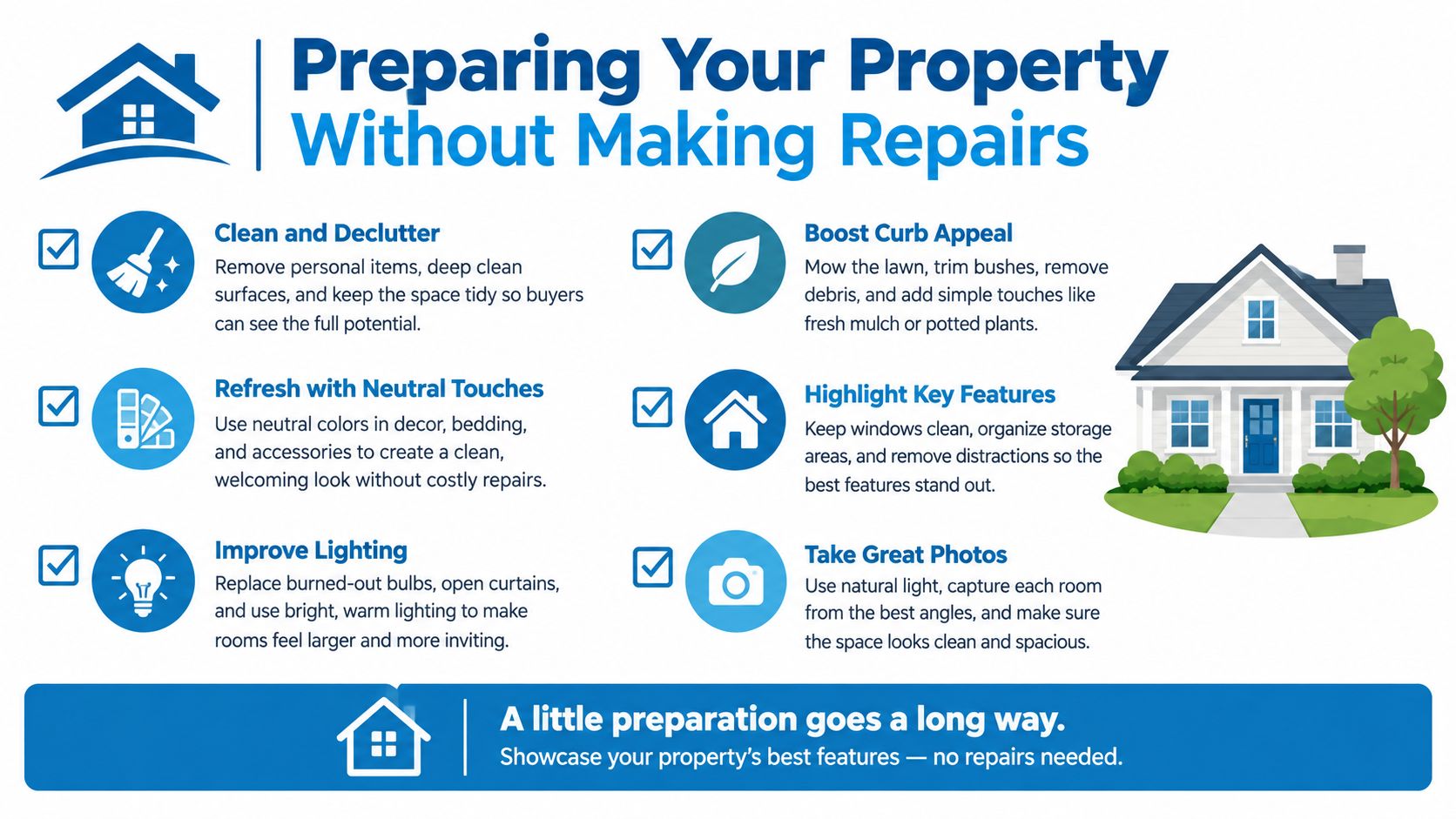
Start with access and visibility:
- Remove debris and excess belongings. Clear walkways, garages, utility areas, attics, and exterior access points so buyers can see the property and inspectors can reach major systems.
- Deep clean the main living areas. Cleaning does not fix deferred maintenance, but it helps buyers separate dirt, odor, and clutter from actual defects.
- Improve inspection access. Locate keys, label shutoffs if known, open gates, and make sure the electrical panel, water heater, attic entry, HVAC equipment, and crawlspace access are reachable.
- Handle obvious safety hazards if practical. Loose debris, exposed nails, blocked exits, or unstable stored items can distract buyers and create avoidable concern.
- Use clear marketing language. State that the property is offered as is, identify known condition issues accurately, and point to real strengths such as lot size, layout, location, or usable outbuildings.
Build a known-issues file
Before listing, put the property history in one file. Include prior insurance claims, roof and plumbing history, flood or water-intrusion records, permits, termite treatment, HOA notices, warranties, invoices, and contractor estimates. If records are missing, say so plainly. A partial file is better than implying you have a complete history when you do not.
This step protects the sale more than sellers expect. A roof evaluation or HVAC assessment does not obligate you to replace anything. It gives buyers a clearer picture of what they are buying and gives your agent consistent answers when questions come in. That matters even more for inherited homes, rentals, and absentee-owned properties where old emails, receipts, and service records are scattered.
Some national seller-cost studies report sizable average repair spending before and after listing, but that does not mean every as-is property should be pushed into a renovation cycle. In practice, the better middle ground is simple preparation, safe access, and organized documentation. That approach reduces uncertainty for buyers and helps sellers avoid preventable renegotiation later.
Navigating Florida Disclosure Requirements
The most damaging misconception in a Florida as-is sale is that the seller can disclose nothing. As is addresses repair obligations, not the duty to disclose known hidden defects.
Under the Florida Supreme Court's Johnson v. Davis standard, a seller must disclose facts that materially affect a property's value when those facts aren't readily observable and aren't known to the buyer. The Florida Realtors guide to real estate disclosure laws explains that this duty applies to residential property sold under an as-is contract, including known latent defects.
That can include known roof leaks, structural concerns, water intrusion, termite damage, significant electrical or plumbing problems, and other conditions that a buyer can't reasonably observe during an ordinary viewing. Don't assume that a buyer's inspection excuses an incomplete disclosure. The buyer may discover additional conditions, but the seller shouldn't withhold known material facts.
Put the history in writing
Florida law may permit verbal disclosure, but written records are safer and clearer. A written disclosure helps show what the buyer received before contract acceptance and gives everyone a common reference point. Use plain descriptions, identify dates when known, and attach supporting records rather than making broad statements such as “everything is fine.”
Flood history deserves separate attention in Palm Coast, St. Augustine, and other coastal Northeast Florida communities. Florida Statute 689.302 requires sellers to answer specific questions about known flooding that damaged the property during the seller's ownership, flood-damage insurance claims including National Flood Insurance Program claims, and flood-damage assistance including FEMA assistance. The statute includes overflow of inland or tidal waters, unusual or rapid runoff, surface-water accumulation from an established source, and sustained standing water caused by rainfall.
Disclosure is risk management, not an admission that the home is unsellable.
If you're unsure whether a fact is material or how to document it, consult a Florida real estate attorney. A listing agent can help organize records and communicate condition, but legal advice should come from a qualified attorney.
Pricing Strategy for As Is Homes
Pricing an as-is home in Northeast Florida is less about subtracting a repair estimate from a hoped-for retail number and more about reducing the reasons a buyer will walk away. Buyers price in repair costs, uncertainty, financing limits, time, and the risk that new information shows up during due diligence. A workable list price reflects what comparable buyers have chosen in the same area.
Start with the local comparison
A realistic pricing strategy starts at the neighborhood level. Palm Coast and St. Augustine do not move the same way, and even within Flagler County, buyer reaction can change sharply from one pocket to another. A house near the coast may raise different insurance and moisture concerns than a home in Flagler Estates or a newer Palm Coast subdivision. Those differences affect demand, showing activity, and how much condition discount buyers expect.
| City | Median Sale Price | Average Days on Market |
|---|---|---|
| Palm Coast | $350,000 | Not reported in the cited snapshot |
| St. Augustine | $450,000 | 91 days |
The Palm Coast median and year-over-year figure come from Redfin's Palm Coast housing market report cited above, which also reports the St. Augustine median and average marketing time in the cited data. These figures are snapshots, not a substitute for a property-specific pricing analysis. The better approach is to compare homes with similar size, lot characteristics, age, condition, flood exposure, and buyer appeal, then adjust for what a buyer is likely to discover before closing.
That last point matters in as-is sales. If a house is priced as though its condition questions will be ignored, the contract often becomes the place where the market corrects the mistake.
Account for financing limits
Financing affects price because it affects the buyer pool. Fannie Mae's property condition and quality guidance allows an appraisal to reflect the property's existing condition when defects are minor and do not affect safety, soundness, or structural integrity. Deferred maintenance still has to be recognized in the value conclusion.
More serious issues can narrow the field. If the roof, foundation, electrical, plumbing, or environmental condition raises safety or soundness concerns, a conventional buyer may face repair requirements before the loan can move forward. That can lead to price pressure, repair demands, or a canceled deal after weeks off the market.
Sellers usually have three pricing paths: list fully untouched, do limited safety and documentation prep, or make selective repairs where the return is clear. The right choice depends on net result. Compare likely sale price, preparation cost, carrying expense, time to close, and the odds that the buyer reaches the finish line. A lower cash offer can still lose to a financed offer if the financed buyer has stronger terms and a better chance of closing.
Managing Inspections and Buyer Contingencies
An as-is listing still has an inspection process. The buyer needs an opportunity to evaluate the property, and the contract controls how that opportunity works. In a Florida FAR/BAR As Is Residential Contract, the buyer's inspection-period right can be especially important.
Florida Realtors explains that Paragraph 12 allows the buyer to terminate during the negotiated inspection period at the buyer's “sole discretion,” with the deposit returned. The Florida Realtors guide to Florida real estate contract laws describes this as a significant buyer right. The exact dates and notice requirements depend on the contract, so sellers should read those provisions carefully with their agent and attorney.
Compare offers beyond the price
Suppose one offer is slightly higher but gives the buyer a longer inspection window, while another is modestly lower with a shorter period, stronger proof of funds, and fewer unresolved conditions. The higher headline price may not produce the better closing probability. An offer comparison should consider:
- Inspection period: How long can the buyer cancel under the contract?
- Financing type: Is the buyer using conventional financing, cash, or another loan structure?
- Proof of funds and approval: Can the buyer demonstrate the resources needed to close?
- Repair language: Does the offer preserve the as-is terms, or does it create additional negotiation room?
- Appraisal exposure: What happens if the lender's appraisal reflects deferred maintenance or required repairs?
- Closing timing: Does the proposed date fit the seller's move, estate, or carrying-cost needs?
You can decline repair requests, negotiate a credit where appropriate, or agree to a limited solution. The as-is clause doesn't prevent conversation, but it gives the seller a basis for deciding whether a request changes the deal.
An as-is contract isn't a guaranteed closing. It's a contract with a defined inspection risk that must be managed.
Before accepting an offer, disclose known conditions and make the property accessible for inspection. If the buyer cancels, document the notice and return of funds according to the contract. Avoid making informal promises about repairs or condition, especially when multiple owners, an estate, or an absentee seller is involved.
Partnering With a Local Real Estate Professional
As-is sales require more than placing a listing online. The agent has to position the property accurately, identify the buyers most likely to accept its condition, compare cash and financed offers, organize disclosures, and keep the transaction moving through inspection and appraisal.
That local perspective matters across Palm Coast, St. Augustine, Flagler Estates, and surrounding communities. A strategic listing agent can distinguish a cosmetic presentation issue from a problem that may affect conventional financing, then help the seller decide whether documentation alone is enough or whether one selective repair deserves consideration. Good marketing should show the home's genuine strengths without disguising its defects.
For an owner who lives elsewhere, a local professional can also coordinate access, records, vendors, inspections, and communication. For a downsizing homeowner or inherited-property seller, that organization can reduce the practical burden without forcing a renovation decision.
Marilynn Wolfe, LLC offers local guidance on home values, pricing strategy, marketing, contracts, inspections, and negotiations for sellers in Northeast Florida. Marilynn Wolfe is a Strategic Listing Agent with LPT Realty serving Palm Coast, St. Augustine, Flagler County, and nearby communities, including homeowners considering relocation, downsizing, and as-is sales.
If you're weighing whether to sell your Palm Coast or St. Augustine home as is, Marilynn Wolfe, LLC can help you compare preparation costs, local pricing, buyer demand, and contract risk before you list. Call 904-429-2829 or email marilynnwolfe.realtor@gmail.com for a practical conversation about your property's current condition and likely selling strategy.