

What if the buyers who'd love your Palm Coast home never book a showing because they scroll past it on their phone first?
That question sits at the heart of effective home sale marketing. Most sellers focus on what happens once someone walks through the front door. In Palm Coast real estate and St. Augustine real estate markets, the first decision happens much earlier, on a screen, often from another city or state. If your home doesn't earn attention there, the showing never happens.
Why Home Sale Marketing Matters in Today's Market
Consider two similar homes for sale in Flagler County. One goes live with clear photos, complete details, and a price that reflects recent Palm Coast home values. The other goes live with a few dim snapshots, a short description, and a price based on what a neighbor got in a different market. Both homes are technically listed. Only one is competing.
That's the difference a plan makes. Selling a home in Palm Coast isn't just about putting a sign in the yard and entering details into a database. It's about managing a two-stage funnel where digital visibility comes first and the physical viewing comes second.
The Digital Screening Comes First
Buyers relocating to Northeast Florida often start their search weeks before they visit in person. They compare Palm Coast, St. Augustine, and surrounding communities side by side, saving some listings and dismissing others in seconds. Your marketing has to answer their first questions fast. What does it look like, how does it live, what does it cost to own, and why should they see this one before the next one?
Local buyers behave the same way. Even someone moving across town in Flagler Estates will usually view a home online several times before asking for a tour. If the photos are confusing or key details are missing, they don't call to ask. They move on.
Practical rule: Treat the online listing as the first showing, because for most buyers, that's exactly what it is.
Why Generic Advice Falls Short Locally
National selling tips rarely account for how varied our area is. A historic home in St. Augustine, a canal-front home in Palm Coast, and a spacious lot in Flagler Estates attract different buyers for different reasons. Marketing that treats them the same wastes money and misses the audience most likely to act.
Good home sale marketing starts with property-specific decisions. You decide who the likely buyer is, what they'll care about most, and which facts and images will move them from scrolling to scheduling. Pricing strategy, preparation, and presentation all support that one goal.
When those pieces work together, marketing stops being a checklist and starts being an advantage. Your home enters the market with a clear position, reaches buyers who are qualified to appreciate it, and gives them a reason to act while interest is fresh.
Preparing Your Home Before the First Photo
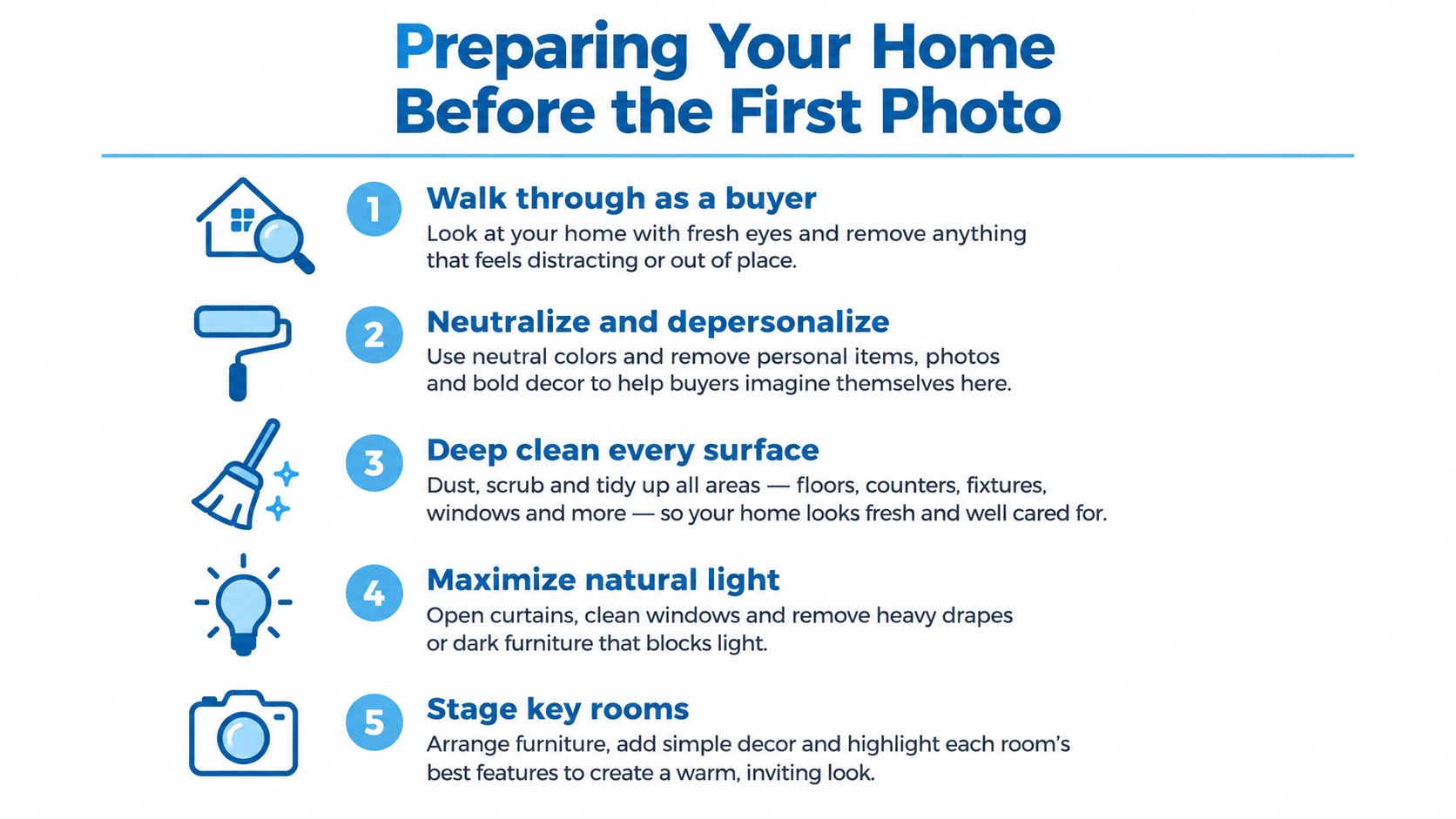
Preparation isn't about making your home perfect. It's about removing the distractions and doubts that stop a buyer from picturing themselves living there. Start by walking through your front door slowly, the way a buyer would, and note what you see in the first ten seconds.
That first impression carries through every photo. If a room feels crowded, dark, or overly personal in person, it'll feel worse on camera. Fix the feeling first, and the photography gets much easier.
Decide What Deserves Your Money
Not every project pays you back, and staging isn't automatically the answer for every listing. Recent industry reporting citing NAR data found that 49% of agents said staged homes spent less time on the market, while 29% said staging increased offered value by 1% to 10%, yet only 21% staged every listing and more than half did not stage at all, according to industry reporting on NAR staging findings. That variation tells you staging is a tool, not a rule.
Use a simple decision filter before you spend:
- Vacant or awkward rooms: Stage the living room, primary bedroom, and kitchen area so buyers understand scale and purpose.
- Lived-in and well-kept homes: Edit what you own first, then add only what's missing, such as fresh bedding or a cleared entry.
- Homes needing updates: Spend on cleaning, lighting, and visible repairs before furniture, because condition concerns outweigh decor.
The Preparation Sequence That Works
Start with repairs a buyer or inspector will notice immediately, such as dripping faucets, cracked caulk, sticking doors, and burned-out bulbs. Then declutter surfaces, depersonalize walls, and deep clean every room, including lanais and screened porches that matter so much to Florida buyers. Finish outside with trimmed landscaping, a clean entry, and a pressure-washed walkway if it needs it.
Don't hide a problem you know about. Buyers forgive age and honest wear far more easily than they forgive feeling misled.
Absentee owners and sellers with tenants need a different level of coordination, not a lower standard. Schedule access early, confirm who handles cleaning and lawn care, and photograph the home in its best realistic condition. If a home is occupied, honest, tidy photos will always outperform a delayed launch that misses active buyers.
In Flagler County real estate, outdoor living and natural light are part of the product, not extras. Open blinds, clean sliders, and clear the patio before photo day. You're selling how the home lives on a bright Florida morning, not just its square footage.
Photography and Visuals That Sell
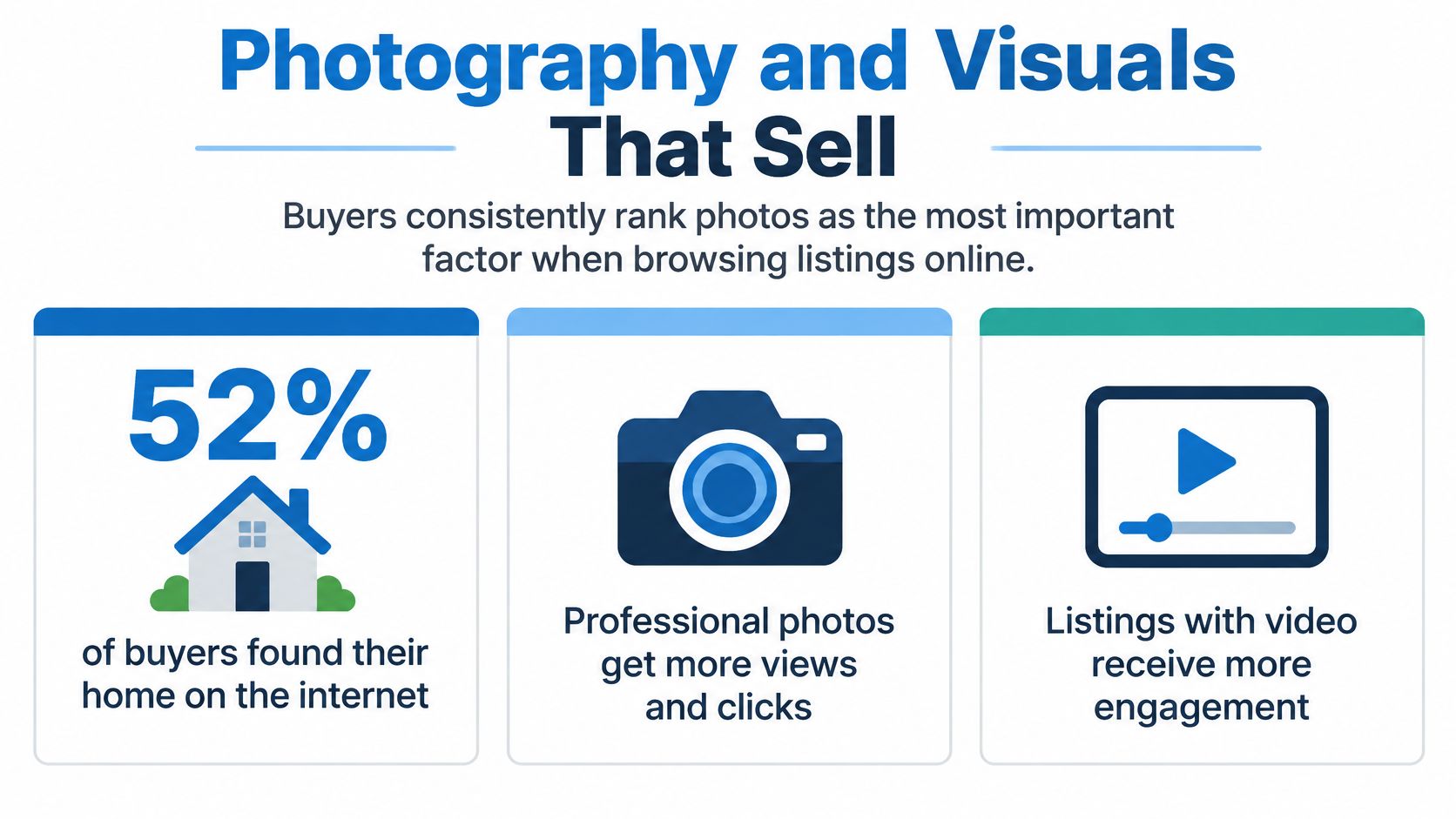
If preparation sets the stage, photography delivers the performance. Buyers browsing the St. Augustine housing market or Palm Coast listings make fast judgments based on images, and strong visuals have a documented connection to outcomes. A study of approximately 4,000 homes found that having at least one photo could increase sale price by as much as 3.9%, while interior photographs were associated with an increase of nearly 4% compared with about 1.9% for exterior photographs, and each additional photograph corresponded to roughly $150 to $200 in added sale value, as reported in NAR's Styled, Staged, Sold summary of the photography study. That's an association, not a guarantee, but it explains why professionals treat photos as a core asset, not an afterthought.
The takeaway for sellers is practical. Interior images deserve the most care because they show how a home lives. An attractive front exterior earns the click, but the kitchen, living spaces, and primary bedroom usually earn the showing.
What to Capture and How
A professional photographer should deliver consistent, high-resolution images that show rooms in a logical order, starting with the exterior and moving through the home the way a buyer would walk it. Include wide shots that show layout and a few closer details that show quality, such as updated fixtures, storage, or a well-kept lanai. In our coastal area, schedule photos when natural light is flattering and outdoor spaces look inviting, not washed out.
Consistency matters more than drama. Overedited skies, stretched rooms, and filters that change wall or floor colors create a mismatch at the showing. Buyers who feel misled by images rarely become more flexible on price. They usually become more cautious about everything else.
Video and virtual tours can help relocating buyers understand flow, especially for larger or unusual layouts. The short example below shows how a walkthrough format can support that understanding.
Treat those tools as supplements, never substitutes. Strong still photography does the heavy lifting in search results, saved listings, and shared links. If your budget forces a choice, fund excellent photos first, then add video or a tour when the layout, lot, or out-of-area buyer pool justifies it.
Creating a Listing That Stands Out
A standout listing doesn't shout. It answers questions so clearly that a qualified buyer feels confident booking a showing. That confidence comes from pairing strong images with a complete, accurate fact set.
Buyers value listing elements in a clear hierarchy, which gives you a sensible order for your effort. NAR's 2025 buyer survey shows photos ranked highest at 81%, followed by detailed property information at 77% and floor plans at 57%, according to the 2025 NAR home buyer and seller trend report. Build your listing in that same order and you'll spend time where buyers look.
Build the Complete Fact Set
Verify every detail before launch, not after the first inquiry exposes a mistake. Confirm room dimensions, lot size, year built, roof and HVAC ages if known, updates with dates, included appliances, taxes, HOA details, and required disclosures. Small inaccuracies chip away at trust, and trust affects how buyers interpret everything from condition to price.
A floor plan earns its place when photos alone can't explain the layout. Split-bedroom plans, additions, converted garages, and homes with flexible rooms all benefit from one. If buyers can't tell whether a room works as an office, guest space, or nursery, they'll often assume it doesn't work at all.
- Lead with livability: Explain how spaces connect and how an owner would use them day to day.
- Name real updates: Give dates and specifics instead of vague phrases like updated throughout.
- State what's included: List appliances, window treatments, or other items that convey so there's no guessing later.
Write Descriptions That Build Trust
Good copy sounds like a knowledgeable person describing a home honestly. It highlights genuine strengths, such as a screened lanai, a quiet street in Palm Coast, or proximity to the amenities a St. Augustine buyer values, without inflating them. Words like stunning and luxurious tell a buyer nothing. A sentence about morning light in the kitchen or storage in the primary suite tells them something they can picture.
Factual positioning isn't plain. It's specific, and specific is what serious buyers trust.
Avoid using description to paper over pricing or condition. If a home needs work, position it accurately for the buyer who wants that opportunity. Clear positioning attracts fewer disappointed visitors and more buyers who arrive already expecting what they'll see, which is exactly who writes a clean offer.
Getting Your Listing Seen Through Syndication
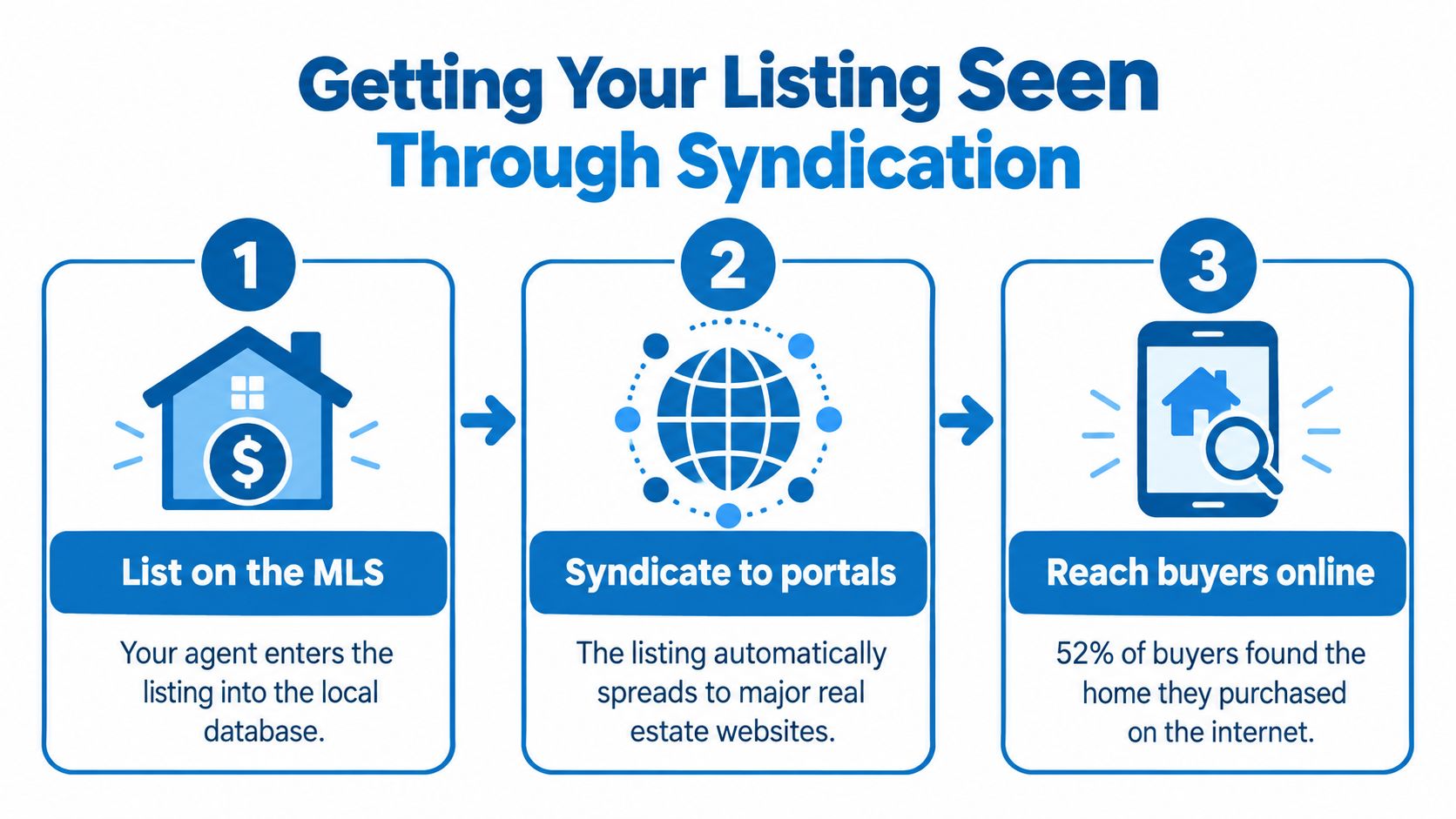
Once your listing package is complete, distribution determines who finds it. The National Association of REALTORS 2025 Profile of Home Buyers and Sellers reported that 52% of buyers found the home they ultimately purchased on the internet, compared with 27% who found it through a real estate agent, according to the 2025 Profile of Home Buyers and Sellers. That gap is why online syndication isn't a back-office detail. It's the main road to your buyer.
Syndication starts with the MLS, where your agent enters the listing into the local database other agents and portals draw from. From there, the listing spreads to major consumer sites such as Zillow, Realtor.com, Redfin, and Trulia, plus brokerage websites and your agent's own channels. Each step widens the audience, but only if the source information is right.
Consistency Across Every Platform
Check your listing on each major portal after launch. Photos should appear in the same order, the price and details should match, and the contact path should work. When one site shows different square footage or an old photo set, buyers don't assume it's a technical glitch. They wonder what else might be off.
This matters even more for relocating buyers comparing Palm Coast real estate market trends with options in St. Augustine and the wider region. They're often searching from out of state, saving homes across several communities, and planning a short, efficient visit. A complete, consistent listing is far more likely to make their tour list than one that requires extra detective work.
What Each Channel Actually Does
Think of the channels as having different jobs rather than treating them as identical exposure. The MLS reaches agents working with active buyers. Portals reach consumers searching on their own schedule. Your agent's website and social channels let you tell a fuller local story, including neighborhood context a portal can't provide.
A single platform is never enough because buyers don't all search the same way. Layered, accurate distribution gives your home multiple chances to be found by the same buyer at different moments in their search. That repetition, with consistent facts each time, is what turns a passing view into a saved listing and then a showing request.
Targeted Ads and Open Houses That Generate Interest
More exposure sounds like an obvious goal, and most sellers say they want it. Recent seller data shows that 74% consider reaching the largest possible audience very or extremely important, while 45% consider visibility on public sites essential, and 69% believe private or hidden listings benefit agents more than sellers, according to the 2025 Profile of Home Buyers and Sellers highlights. Those numbers point to a reasonable instinct. Sellers want broad, public visibility they can see and trust.
The trade-off is that broad doesn't always mean relevant. Poorly targeted exposure can produce plenty of views from people who'll never buy your home, along with repeated price objections that tell you nothing useful. The smarter question isn't how many people saw your listing. It's whether the right people saw it and acted.
Target the Buyer Who Fits the Home
Start by naming your most likely buyer segments. A low-maintenance Palm Coast home may suit downsizers and 55+ buyers relocating to Florida. A larger home near schools may suit move-up families already in Flagler County. A property with land or flexibility in Flagler Estates may appeal to buyers who value space over subdivision amenities.
Then match spending to those segments:
- Geographic targeting: Reach out-of-area buyers researching a move to Northeast Florida, not just local browsers.
- Life-stage targeting: Put downsizer-friendly features in front of audiences most likely to value single-level living and low upkeep.
- Retargeting: Reconnect with people who already viewed or saved your listing, since they've shown real intent.
Services such as Marilynn Wolfe, LLC build this kind of property-specific plan through pricing guidance, preparation advice, MLS syndication, and digital advertising, which is one example of how a Strategic Listing Agent structures promotion around a defined buyer rather than a generic audience.
Use Open Houses With a Clear Purpose
An open house works best as one piece of the plan, not the plan itself. It suits homes in visible locations, price ranges with strong local demand, and properties that show noticeably better in person than in photos. Prepare it like a showing, promote it through the MLS and social channels in advance, and capture visitor feedback systematically.
Set honest expectations with your agent beforehand. Neighbors and curious visitors will attend, and that's fine, because they sometimes know someone who's looking. What matters is follow-up. Every serious attendee should leave with complete information and an easy way to book a private tour, and you should hear what visitors said, not just how many came.
Tracking Results and Your Next Steps
Marketing you can't measure becomes marketing you can't improve. The first days after launch tell you whether your price, presentation, and targeting are working together, but only if you're watching the right signals. A practical workflow is to monitor showing requests, saves, inquiries, and feedback during the first 7 to 14 days, and because buyers searched for a median of 10 weeks, you should plan ongoing exposure rather than relying on a single launch announcement, according to the NAR 2025 profile highlights on buyer search behavior.
Views alone won't tell you much. A listing can collect views because it's new, because it's priced oddly, or because the lead photo is appealing while the rest disappoints. Saves, inquiries, and showing requests show intent. Offers, and the quality of feedback behind them, show whether the market agrees with your price.
Read the Signals and Respond
Ask your agent for a simple dashboard you can review together each week. It should show where inquiries came from, how many became showings, how many showings became offers, and what buyers said after touring. Buyer geography matters too, especially for absentee owners selling into a relocation-driven market like ours.
| Metric | What It Tells You | Action If Low |
|---|---|---|
| Saves | Buyers are interested enough to track the home | Improve the lead photo or opening description |
| Inquiries | Buyers want details or a tour | Check contact paths and add missing information |
| Showing requests | Online interest is converting to visits | Review price position and photo quality |
| Showing feedback | How the home compares in person | Address repeated comments on condition or layout |
| Offer conversion | Whether price and presentation align | Revisit pricing strategy with fresh comparable sales |
Patterns matter more than single comments. One buyer disliking a paint color is noise. Several buyers mentioning the same repair, layout concern, or price comparison is information you can act on, whether that means a small fix, a clearer floor plan, or an honest pricing conversation.
Weekly check: If you're getting views without showings, fix presentation or price. If you're getting showings without offers, listen hard to the feedback.
Because buyers search over many weeks, keep the plan alive after launch week. Refresh social promotion, follow up with agents who've shown similar homes, and make sure your listing still looks current and complete on every portal. New qualified buyers enter the Palm Coast real estate market constantly, and steady exposure is how your home meets them.
If you're curious what your home could sell for in the current market, you don't have to sort through all of this alone. A personalized look at Palm Coast home values, your likely buyer, and a preparation plan sized to your home will tell you far more than a generic checklist ever will.
If you're thinking about selling a home in Palm Coast, St. Augustine, or anywhere in Flagler County, Marilynn Wolfe with LPT Realty LLC can help you build a strategic marketing plan around pricing, preparation, and the buyers most likely to act. Reach out at 904-429-2829 or marilynnwolfe.realtor@gmail.com, or visit Marilynn Wolfe, LLC to request a personalized home value and local insight for your next step.