

What will your home net in Palm Coast right now? Many sellers start with the expected sale price, but the final amount depends just as much on title records, mortgage payoffs, Florida disclosures, prorations, negotiated credits, and the timing of each document. A strong home seller closing checklist starts weeks before the signing appointment, not when you receive the keys back from the buyer.
The order matters. First, confirm ownership and liens. Then obtain accurate payoff figures, organize Florida disclosures, prepare for inspections, review your seller net sheet, calculate prorations, plan the move-out and walkthrough, and protect your funds while reviewing the final documents. This process applies whether you're a move-up seller, an absentee owner, a 55+ homeowner downsizing, or someone selling in Flagler Estates, Palm Coast, St. Augustine, or another Northeast Florida community.
As a Strategic Listing Agent serving Palm Coast, St. Augustine, Flagler County, and surrounding areas, I encourage sellers to treat closing as a document and coordination process. A clean checklist won't eliminate every possible issue, but it can bring problems forward while there's still time to solve them.
1. Confirm Your Title, Liens, and Ownership Records
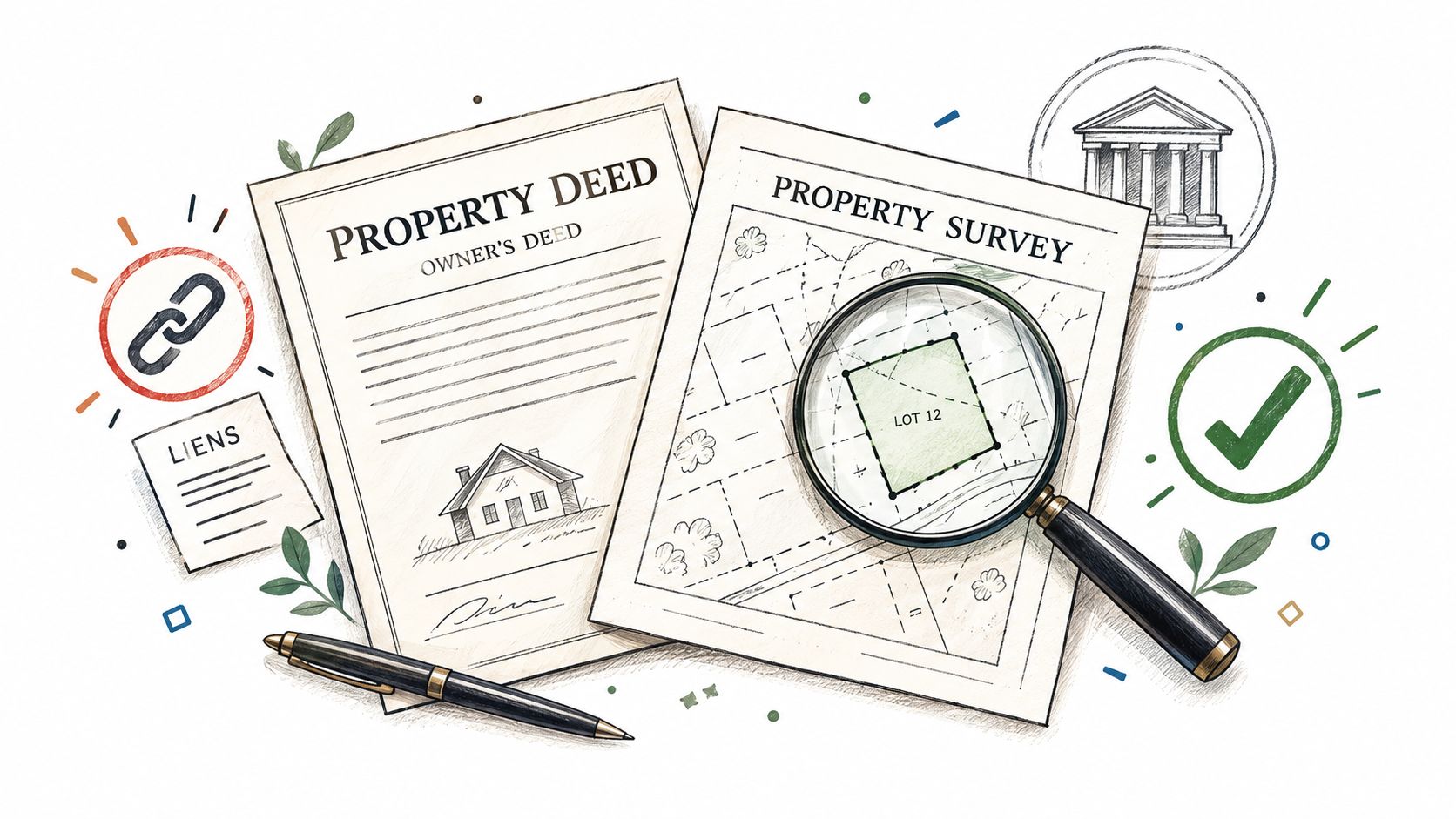
A buyer's title company needs to establish that you can transfer ownership of the property. That means reviewing public records in Flagler County or St. Johns County for mortgages, judgments, tax liens, code enforcement matters, unpaid association balances, contractor liens, easements, and other title concerns.
Start by locating your recorded deed, most recent survey, prior title paperwork, and records for improvements. Pools, screen enclosures, lanais, fences, additions, and converted spaces can create questions if permits or final inspections aren't easy to verify. In Flagler Estates and older parts of Palm Coast, sellers sometimes discover that an improvement was completed long ago but the supporting paperwork wasn't kept with the household records.
Practical rule: Don't wait for the buyer's title search to reveal a problem you could have identified before accepting an offer.
Documents to locate early
- Recorded deed: Confirm the legal names and ownership match the people who will sign.
- Survey and easements: Find the latest survey and any documents affecting access or boundaries.
- Permit records: Gather permits and final inspection records for pools, additions, fences, roofing, electrical work, and other improvements.
- Lien information: Ask the closing agent whether any old mortgage, judgment, assessment, or code issue needs additional research.
A seller in Palm Coast may find an old mortgage satisfaction that was paid but never properly recorded. A homeowner with a long-ago lanai project may still have the permit and final inspection card that answer the buyer's lender questions immediately. Those records can keep title clearance from becoming a last-minute negotiation.
2. Request an Accurate Payoff Statement and Plan Your Loan Payoff
Start with the lender, not the latest monthly statement. A mortgage balance can differ from the amount needed to release the lien because interest keeps accruing and the quoted payoff usually applies only through a stated date. Request a written payoff statement early, then order an updated figure if the closing date changes.
List every debt tied to the property before you estimate proceeds. A first mortgage, home-equity line of credit, second mortgage, or private lien may have separate instructions and processing times. Sellers who refinanced should also ask the closing agent to confirm that earlier loans were properly satisfied in the public records.
A move-up seller in St. Augustine requested figures for both a first mortgage and a HELOC and found the line balance was higher than expected. The discovery changed the seller's budget for the next home while there was still time to adjust plans.
Questions to settle before closing
- Payoff expiration: Through what date is the quoted amount valid?
- Daily interest: What per-diem interest applies if funding occurs later?
- Prepayment charges: Does the loan impose a fee for early payoff?
- Escrow balance: Will unused tax or insurance funds be refunded separately?
- Release documents: Has each prior mortgage satisfaction been recorded?
Send the payoff statement and lender account details to the closing agent well before the anticipated closing. Confirm that the lender has the correct payoff address, authorization, and delivery method. If wire instructions arrive by email, call a known number for verification. Never rely only on contact information contained in the message.
For an absentee owner in Flagler County, this check is especially useful because lender requests, title questions, and closing updates may be handled remotely. A Palm Coast 55+ downsizer may also receive an escrow refund after payoff. That refund is separate from the proceeds shown on the closing statement, so budget moving costs and funds for the next home accordingly.
3. Gather Required Florida Seller Disclosures
What could a buyer, insurer, or association manager learn about the property before closing? Florida sellers should collect known information early and keep it available throughout the transaction. Buyers need a clear account of the home's condition, history, taxes, association obligations, and known defects. Early disclosure may not prevent negotiation, but it gives the buyer time to arrange inspections, insurance, and financing without a late surprise.
A disclosure file should cover:
- Flood records: Gather known claims, repair invoices, mitigation work, and related insurance documents. This matters in coastal and low-lying areas around Palm Coast, St. Augustine, Flagler County, and Flagler Estates.
- Tax information: Provide relevant homestead exemption and assessment history details. These records can affect how a buyer estimates future ownership costs.
- Association documents: Request HOA or condominium estoppel information early. The closing agent needs confirmed dues, balances, and assessments before preparing the settlement figures.
- Improvement records: Add warranties, invoices, permits, and final inspection records for completed work.
- Known conditions: Describe issues you have identified plainly. Do not assume a buyer will overlook them or fail to discover them during inspections.
A Palm Coast seller with an older flood claim can give the buyer's insurance professional useful documentation before the contract period ends. For a Flagler County subdivision, requesting association information before listing can help prevent a delay when the title company needs confirmation of dues or assessments.
Use one clearly labeled folder rather than a collection of unrelated emails. Include the property address, document dates, and a short description of each item. Tell your agent when a record is unavailable instead of guessing or leaving a gap unexplained. A 55+ downsizer moving from St. Augustine may need extra time to locate older repair files, while an absentee owner should arrange secure digital access for the agent and closing team. Legal and tax questions belong with the appropriate professional.
4. Prepare for Inspections, Appraisal, and Repair Negotiations
Before listing, decide which conditions deserve attention and which should be documented for the buyer. In Northeast Florida, roof age, HVAC performance, water intrusion, electrical safety, plumbing, and moisture can affect buyer confidence, insurance decisions, or lender review. An appraiser considers the property's condition and comparable sales, while an inspector examines visible systems and defects. They serve different purposes.
Buyers may order a general inspection and a wood-destroying organism inspection, commonly called a WDO or termite inspection. A pre-listing inspection can reveal problems early, but it also creates a written record. Use it to make informed choices, not to promise that every aging component will be replaced.
Fix now: Address active leaks, safety hazards, failed systems, and small defects that could distract from the home's strengths. A move-up seller in Palm Coast may prefer to repair a minor issue before showings, while an absentee owner may need a local contractor and clear approval process.
Document instead: Keep receipts, warranties, service records, permits, and repair details together. A St. Augustine seller ordering a termite inspection before listing may be able to treat a small affected area and give the buyer documentation. A Palm Coast seller who replaces a failing water heater should retain the receipt and installation information.
Negotiate carefully: A credit, price adjustment, or agreed repair may fit the buyer's needs better than replacing a system before receiving an inspection report. A 55+ downsizer in Flagler County may value a defined credit because it avoids managing work during a move. Review any request with your agent and follow the contract's response deadlines.
Respond clearly and on time. The buyer may accept the condition, request a different remedy, or choose not to proceed. A home warranty can support some negotiations, but it does not replace accurate disclosure or necessary repairs.
Keep invoices and completion records accessible through the final walkthrough. The buyer may check agreed repairs before closing, so do not pack the paperwork in a moving box.
5. Review Your Seller Net Sheet and Closing Costs
The offer with the highest price isn't always the offer that leaves you with the most money. A seller net sheet converts the contract terms into an estimate of your proceeds after the mortgage payoff, commissions, title-related charges, taxes, credits, assessments, recording expenses, and other settlement items.
Fannie Mae explains that closing costs commonly range from 2% to 5% of the mortgage value, although a seller's actual proceeds depend on the contract, local taxes, commissions, title charges, payoff amounts, credits, and prorations. On a $300,000 mortgage, that range represents approximately $6,000 to $15,000 in closing costs, as shown in Fannie Mae's homebuying guidance. This is a planning range, not a substitute for a property-specific settlement statement.
Compare offers by net, not just price
Ask for a preliminary net sheet for each offer and update it after inspections or amendments. In Florida, the allocation of title-related charges can vary by local practice and contract. A county-specific review should address documentary stamps, title insurance responsibility, title-search and settlement fees, HOA or condominium estoppel charges, lien releases, commissions, mortgage payoff, taxes, and seller credits.
A Palm Coast homeowner may choose an offer with a slightly lower price because the buyer's concessions make the final proceeds stronger. A downsizing seller in Flagler Estates may use the net sheet to determine how much equity remains for the next home, moving costs, or other plans.
The number that matters is the amount you can reasonably expect after every agreed debit has been accounted for.
Ask the closing agent to put costs in writing. Review the preliminary figures against the signed contract and amendments, and ask about any line that doesn't make sense. Keep improvement and selling-expense records for your tax professional, since they may affect your basis and reporting.
6. Prorate Property Taxes, HOA Dues, and Utilities
Prorations are adjustments that divide expenses according to the closing date. They can be easy to overlook because the seller may have paid some bills through an escrow account, while the buyer will become responsible for the property after ownership transfers.
Property taxes, association dues, special assessments, utilities, and other recurring charges need to be reviewed with the closing agent. The final calculation may depend on the contract, the current bill, payment status, and the date used for closing. Florida sellers should ask for a written estimate rather than trying to calculate the credit from memory.
Confirm each recurring account
- Property taxes: Ask how the current tax period will be credited and whether any unpaid amount must be brought current.
- HOA or condominium dues: Confirm the association's status, transfer fees, estoppel information, and any assessment balance.
- Electric, water, and sewer: Arrange final readings and service transfers in writing.
- Insurance and escrow: Ask how prepaid amounts or escrow balances will be handled after payoff.
A Palm Coast seller closing in late summer may see a tax proration credit on the settlement statement, with the buyer later responsible for the full bill when it comes due. A St. Augustine homeowner relocating out of state can avoid duplicate utility charges by scheduling final readings and service changes around the transfer date.
Don't cancel essential services or property insurance before ownership has transferred unless the closing agent and your insurance professional confirm the appropriate timing. Notify your HOA of the closing and stop automatic payments after the final dues obligation has been confirmed. Set up USPS mail forwarding so refunds, bills, and official notices reach you.
7. Plan for the Final Walkthrough, Keys, and Move-Out Details
The final walkthrough is the buyer's opportunity to confirm that the property remains in the agreed condition and that negotiated repairs have been completed. Sellers should plan for the house to be empty and clean according to the contract, with included items left in place and no new damage from moving.
Start a week before closing. Walk through every room, closet, cabinet, garage, attic access, and exterior area. Remove personal property, complete the agreed cleaning, service the yard if required, and check that appliances and included fixtures remain where the contract expects them to be.
Prepare the handoff
- Keys and remotes: Label house keys, mailbox keys, garage remotes, gate devices, pool controls, and amenity access cards.
- Codes and manuals: Write down alarm, gate, smart-home, and utility access information, and leave appliance or system manuals in a visible location.
- Condition records: Photograph the home's condition after move-out and keep copies with your closing file.
- Timing: Confirm the walkthrough time and coordinate movers, cleaners, and access with your agent.
A 55+ homeowner in Palm Coast may need to coordinate a moving crew, cleaner, donation pickup, and final walkthrough within a tight schedule. An absentee owner in St. Augustine may need a local property manager or trusted representative to meet the buyer and deliver keys.
Move-up sellers should also coordinate possession carefully. If the purchase of the next home depends on the sale, ask early about temporary storage, closing timing, and access. A checklist can't change the contract, but it can prevent a last-minute scramble.
8. Protect Your Funds and Review Closing Documents Carefully
The final settlement statement should reconcile the entire transaction. Fannie Mae's closing guidance identifies the final settlement statement as evidence of settlement costs paid by the borrower and seller when applicable, and its post-closing documentation guidance includes the sales contract and addenda, final Closing Disclosure, escrow instructions, title documents, insurance records when applicable, and recorded mortgage or deed of trust. Review Fannie Mae's post-closing document guidance so you understand why retaining a complete file matters.
Request the preliminary settlement statement several days before signing. Compare it with your contract, amendments, payoff statements, repair credits, tax adjustments, association charges, commissions, title fees, and other agreed expenses. Every credit and payoff should appear as a traceable line item.
Protect your proceeds: Verify wire instructions by calling the title company at a known number. Never rely solely on emailed instructions.
Digital and hybrid closings can help relocating and absentee sellers, but they aren't the only workflow. An ALTA survey of title professionals reported that fully digital or hybrid closings represented 10% of transactions in 2022, compared with 7% in 2021. Fully digital closings accounted for 2.5%, hybrid closings approached 8%, and 61% of title and settlement companies offered some form of digital or remote closing. If you sign remotely, confirm identity verification, notarization, camera and audio requirements, time-zone scheduling, courier needs, and backup plans.
Bring valid government-issued photo identification and confirm whether every seller must attend. The deed transfers ownership, and sellers may also sign affidavits, disclosures, tax forms, and settlement documents. If a power of attorney is needed, have the title underwriter approve it before closing.
Keep signed documents, the settlement statement, improvement receipts, and sale records. For tax questions, speak with a tax professional about IRS Section 121, which may exclude up to $250,000 of gain for single filers or $500,000 for married couples who meet the ownership and use tests. The IRS home sale exclusion guidance provides the applicable federal framework.
8-Point Home Seller Closing Checklist Comparison
| Item | Implementation complexity | Resource requirements | Expected outcomes | Ideal use cases | Key advantages |
|---|---|---|---|---|---|
| Confirm Your Title, Liens, and Ownership Records | Moderate, public-record search and potential remediation | Title company/attorney, deed, survey, permit records, county clerk records | Clear title or identification of liens/issues to resolve | All sellers, especially older homes or unpermitted work | Prevents closing delays; builds buyer confidence |
| Request an Accurate Payoff Statement and Plan Your Loan Payoff | Low–Moderate, coordinate with lender and update figures as needed | Lender payoff statement, loan account numbers, escrow info, wire instructions | Accurate payoff amount and plan for lien satisfaction at closing | Sellers with mortgages, HELOCs, second liens, recent refinances | Reduces funding surprises; clarifies net proceeds |
| Gather Required Florida Seller Disclosures | Moderate, compile statutory and HOA documents | Disclosure forms, flood/claim records, HOA estoppel, repair histories | Regulatory compliance and transparent buyer information | Florida properties, HOA communities, flood-prone homes | Speeds underwriting/insurance review; reduces post-closing disputes |
| Prepare for Inspections, Appraisal, and Repair Negotiations | Moderate–High, inspections, appraisal, and negotiation cycle | Home/WDO inspectors, appraiser, contractors, receipts/warranties | Identified defects and negotiated repairs or credits | Older homes, termite-prone regions, homes with known issues | Proactive fixes reduce buyer requests; smoother negotiations |
| Review Your Seller Net Sheet and Closing Costs | Low, prepare estimates and verify closing customs | Agent/closing agent, payoff figures, tax rates, fee schedules | Clear estimate of net proceeds for offer comparison | All sellers comparing offers or planning finances | Helps compare offers accurately; minimizes surprises |
| Prorate Property Taxes, HOA Dues, and Utilities | Low–Moderate, proration calculations and service coordination | Closing agent, tax bills, HOA statements, utility meter readings | Fair cost allocation and timely service transfers | Mid-year closings, escrowed taxes, HOA communities | Prevents billing disputes; ensures continuous services |
| Plan for the Final Walkthrough, Keys, and Move-Out Details | Low, logistics and organization before closing | Moving/cleaning services, key list, labeled remotes, agent coordination | Smooth handoff and satisfied buyer at walkthrough | Move-up/downsizing sellers, absentee owners | Positive handoff impression; reduces last-minute issues |
| Protect Your Funds and Review Closing Documents Carefully | Moderate, document review and fraud-prevention steps | Settlement statement, ID, verified wire instructions, tax records, attorney | Secure proceeds, correct settlement, and tax-ready records | All sellers, remote closings, high-value transactions | Prevents wire fraud; catches settlement errors; aids tax reporting |
Your Closing Checklist, Ready When You Are
A smooth closing usually comes from small tasks completed in the right order. Begin with ownership records, title documents, open permits, surveys, and any lien or association information. If the property is in Palm Coast, Flagler Estates, St. Augustine, or another Northeast Florida community, give the closing agent enough time to investigate issues that may not be obvious from the listing file.
Next, request written payoff statements for every mortgage, HELOC, and other secured loan. Confirm the payoff dates, daily interest, release requirements, and contact information. A payoff that is slightly outdated can change the proceeds, especially if the closing date moves.
Organize Florida seller disclosures before negotiations become time-sensitive. Gather flood claim information, repair records, warranties, permits, association documents, and other property details. Transparency gives buyers and their professionals the information they need to evaluate the home and can prevent avoidable delays.
Prepare for inspections, appraisals, WDO reviews, and repair discussions with a plan. Some items should be repaired before listing, while others are better handled through documentation, a credit, or a contract adjustment. Your decision should reflect the home's condition, buyer expectations, insurance concerns, and the terms of the offer.
Then review a written seller net sheet. Compare offers by expected proceeds rather than the purchase price alone, and update the figures after inspection credits or amendments. In Palm Coast real estate, St. Augustine real estate, and Flagler County real estate, local customs and negotiated allocations can affect the final number, so ask the closing agent to explain every major charge.
Before signing, confirm tax, HOA, assessment, and utility prorations. Plan the final walkthrough, complete the move-out, gather keys and access codes, and keep the property in the agreed condition. Absentee owners should arrange local help, while move-up sellers and 55+ downsizers should coordinate movers and possession dates carefully.
Finally, review the settlement statement line by line, independently verify wire instructions, confirm the signing method, bring identification, and retain copies of everything. These are the steps that turn an estimated sale into a documented transfer with a clear record of authority, payment, title, and possession.
If you're considering selling and want to understand your likely proceeds, I'm happy to prepare a personalized home value review and discuss the Palm Coast real estate market, St. Augustine housing market, or nearby communities. Contact Marilynn Wolfe at LPT Realty at 904-429-2829 or marilynnwolfe.realtor@gmail.com for practical guidance suited to your property and plans.
Marilynn Wolfe, LLC offers thoughtful pricing strategy, local market insight, and clear guidance from preparation through closing for sellers in Palm Coast, St. Augustine, Flagler County, and surrounding areas. If you want help organizing your home seller closing checklist or estimating your net proceeds, visit Marilynn Wolfe, LLC to connect.