

If you're preparing to sell in Palm Coast, St. Augustine, Flagler County, or a surrounding community, you may be wondering whether professional photography is really necessary. After all, buyers can visit the property in person. But most buyers decide whether a home deserves their attention before they ever schedule a showing, often while scrolling through listings on a phone.
That makes real estate marketing images part of your pricing and positioning strategy, not a decorative extra. The right images can help buyers understand the home, compare it with competing properties, and feel confident enough to take the next step. The wrong images can make a well-maintained property look ordinary, confusing, or even misleading.
Why Listing Photos Drive Buyer Decisions
A buyer scrolling through Palm Coast real estate listings may see several homes that appear similar in price, size, or neighborhood. The first image becomes the introduction. If it's dark, crooked, cluttered, or poorly chosen, the buyer may move on without reading the description.
The same thing happens with St. Augustine real estate. A home might have an attractive lanai, updated kitchen, or peaceful outdoor setting, but those features won't help if the opening photo fails to create interest. Online presentation determines which homes receive a closer look, especially for relocating buyers who may be researching from another city or state.
Eye-tracking research gives this behavior useful context. More than 95% of viewers reportedly look first at the exterior photo for about 20 seconds, while buyers spend about 60% of their viewing time on photos, compared with 20% on the description and 20% on agent remarks, according to Illinois REALTORS® coverage of online listing behavior.
That doesn't mean every home needs luxury styling or dramatic editing. It means the image sequence needs to answer the buyer's first questions quickly. What does the property look like from the street? Is the layout easy to understand? Does the condition appear consistent with the asking price? Can the buyer picture daily life there?
Professional photography has also been connected with measurable sales outcomes. One widely cited industry summary reports that homes with professional photos sell 32% faster, with average time on market falling from 123 days to 89 days, and that listings in the $200,000 to $1 million range can close for $3,400 to $11,200 more. Those figures appear in this real estate photography statistics summary.
Practical rule: Treat the first image as a pricing signal. It should make the home look inviting, accurate, and worth investigating.
The broader industry also reflects how central listing imagery has become. A U.S. analysis estimated real estate photography revenue at $268.3 million, with approximately 6,591 businesses in 2024 and a 0.6% compound annual growth rate over the prior five years, as reported by IBISWorld's real estate photography industry analysis. For a homeowner, the practical takeaway is simple. Photography is now a standard part of a serious marketing package, not an optional upgrade reserved for high-end homes.
Planning the Perfect Property Shot List
A Palm Coast buyer may first see your home from a phone, tablet, or MLS search page. The photo sequence must answer practical questions quickly: what does the property look like from the street, how do the rooms connect, and which features justify the asking price? Treat the gallery as a guided showing, not a folder of unrelated snapshots.
Start with the exterior. Select a front elevation photo taken in flattering, natural light, with the driveway, landscaping, covered entry, and approach visible when they help explain the property. For homes in St. Augustine or Flagler Estates, the surrounding character may deserve equal attention.
Choose an attractive hero image without changing the home's identity. A dramatic sky or unusually vivid color should not determine the lead photo if the result gives buyers a misleading impression. They should recognize the property when they arrive.
Build a sequence buyers can follow
After the exterior, present the interior in a logical order. A remote buyer should understand how the main living areas connect, while a local buyer should see the features that matter in this market.
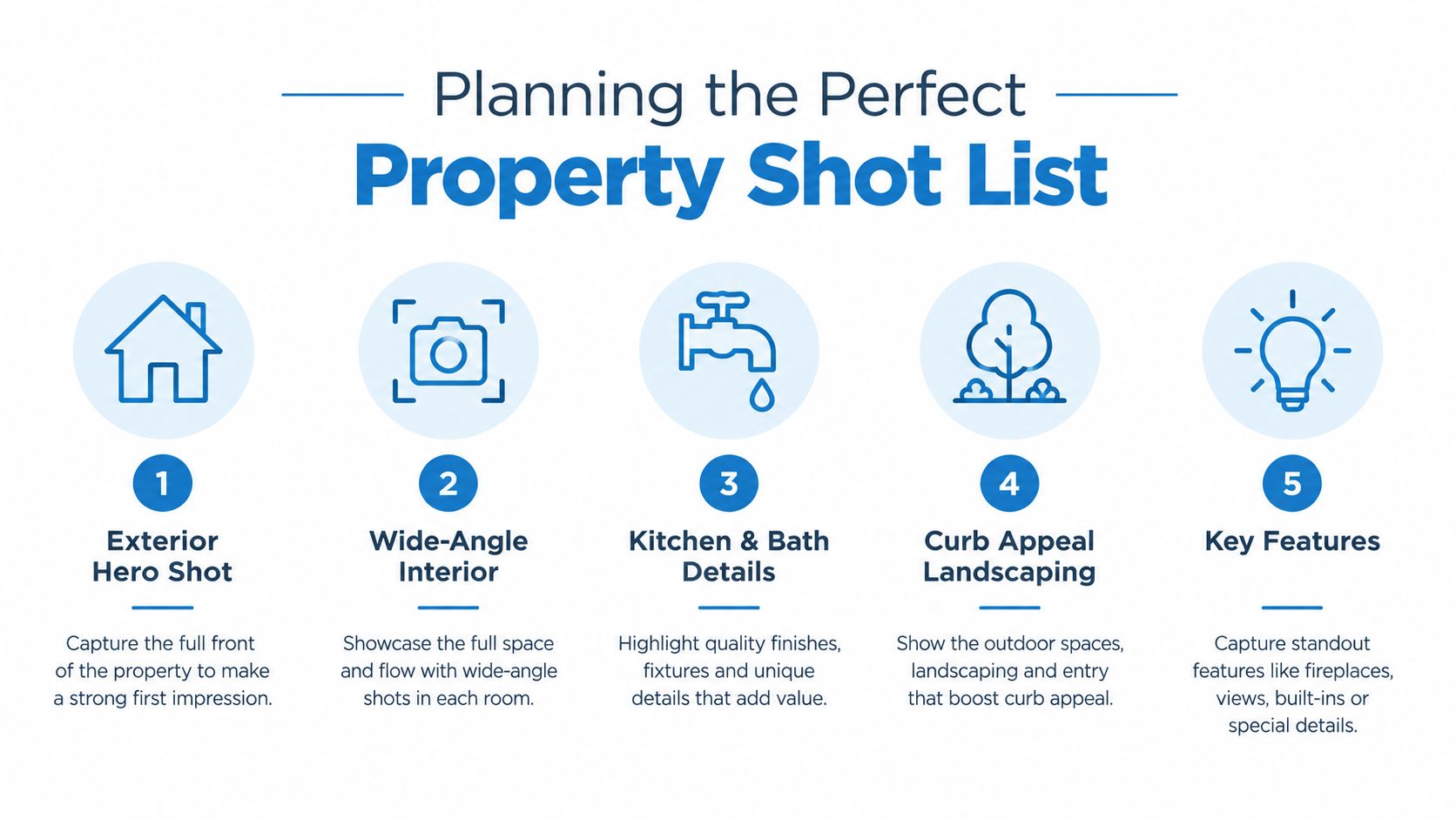
Use this shot list:
- Exterior hero shot: Show the front of the home, entry, and immediate curb appeal.
- Wide-angle interior: Capture the main living spaces with straight vertical lines and a realistic sense of scale.
- Kitchen and bath details: Show counters, cabinetry, fixtures, finishes, and useful storage.
- Outdoor living: Include the lanai, pool area, patio, or screened enclosure when those features belong to the property.
- Key features: Add bedrooms, offices, laundry areas, garages, views, upgrades, and distinctive architectural details.
Plan the gallery for every channel where the listing may appear. The first image must work as a small mobile thumbnail, while wider interior views should remain clear on an MLS page and on social media. Use natural Florida light, open blinds, turn on appropriate fixtures, and watch for reflections in mirrors, televisions, appliances, and glass doors.
Make clarity part of the marketing
Sharp images affect how buyers judge condition. In the Illinois REALTORS survey, the sharpest 10% of photos sold at or above list price 44% of the time, compared with 13% for average-sharpness images, according to the Illinois REALTORS® survey summary. The comparison does not promise a particular result, but it gives sellers a clear standard: poor focus can reduce confidence before a buyer reads the description.
Before the appointment, clear countertops, limit furniture, remove personal items, and address distractions that pull attention from the property. Keep the home accurate. Do not conceal material defects, and do not let ordinary clutter dominate the frame.
In a Palm Coast listing, clear pool toys from the lanai and stage the kitchen counter before the photographer arrives, rather than trying to fix both during the shooting appointment.
Navigating MLS Rules and Image Compliance
A beautiful image can still create problems if it doesn't meet MLS requirements. The Multiple Listing Service is not just a place to upload whatever looks good. Local systems may regulate the number of photos, what the photos show, how they're edited, and whether the listing broker has permission to publish them.
Some MLS guidance requires a property photograph within 1 day after entry and at least one front-building image when an existing structure is present. The same guidance says agents can't reuse photos or virtual tours from a previous listing agent without written permission from the image owner, as explained in the MLS Listings rules and regulations FAQ.
That requirement affects more than the agent. Sellers who assume old listing photos can automatically be carried forward may discover that the images belong to a prior photographer, brokerage, or listing agent. A fresh marketing plan should confirm both compliance and usage rights before the listing goes live.
Check quantity before uploading
Photo minimums can also be specific. One MLS rule summary requires at least six unique images for single-family, townhouse or condo, multi-family, high-rise condo, and residential lease listings. Lots and acreage listings need at least one photo, while entering only one or two photos for non-lot listings is prohibited and subject to a $100 fine, according to this MLS rule summary.
The exact rules can vary by MLS, so homeowners should ask the listing agent which system applies to the property. A sparse gallery may not only look incomplete. It may also create a compliance issue or reduce the listing's usefulness on connected real estate portals.
Keep images accurate and clean
MLS rules commonly restrict branding and misleading presentation. One rule set requires photos to provide a true and accurate picture of the property, prohibits lifestyle photos featuring people, and doesn't accept pools as water-view photos. Another prohibits signs, frames, collages, and watermarks, except for text used strictly to identify location, as described in Stellar MLS photo rules.
That means your social media graphic may not be appropriate as an MLS image. Logos, agent contact details, decorative borders, and promotional text can interfere with syndication or violate local rules. Prepare separate versions when needed, one compliant set for MLS and additional channel-specific assets for approved marketing use.
The Risks of AI Editing and Virtual Staging
AI editing can make a room look brighter, cleaner, or more furnished. That doesn't make every alteration appropriate for a listing.
The important distinction is between correcting a photograph and changing the buyer's understanding of the property. Adjusting exposure so a dark room looks natural is different from removing a permanent structure, adding a water view, changing flooring, enlarging a room, or digitally inserting features that don't exist.
This matters in Palm Coast and St. Augustine, where buyers may be comparing homes remotely before arranging travel. If the online image suggests one property and the in-person experience reveals another, the seller may lose credibility before the conversation even reaches price.
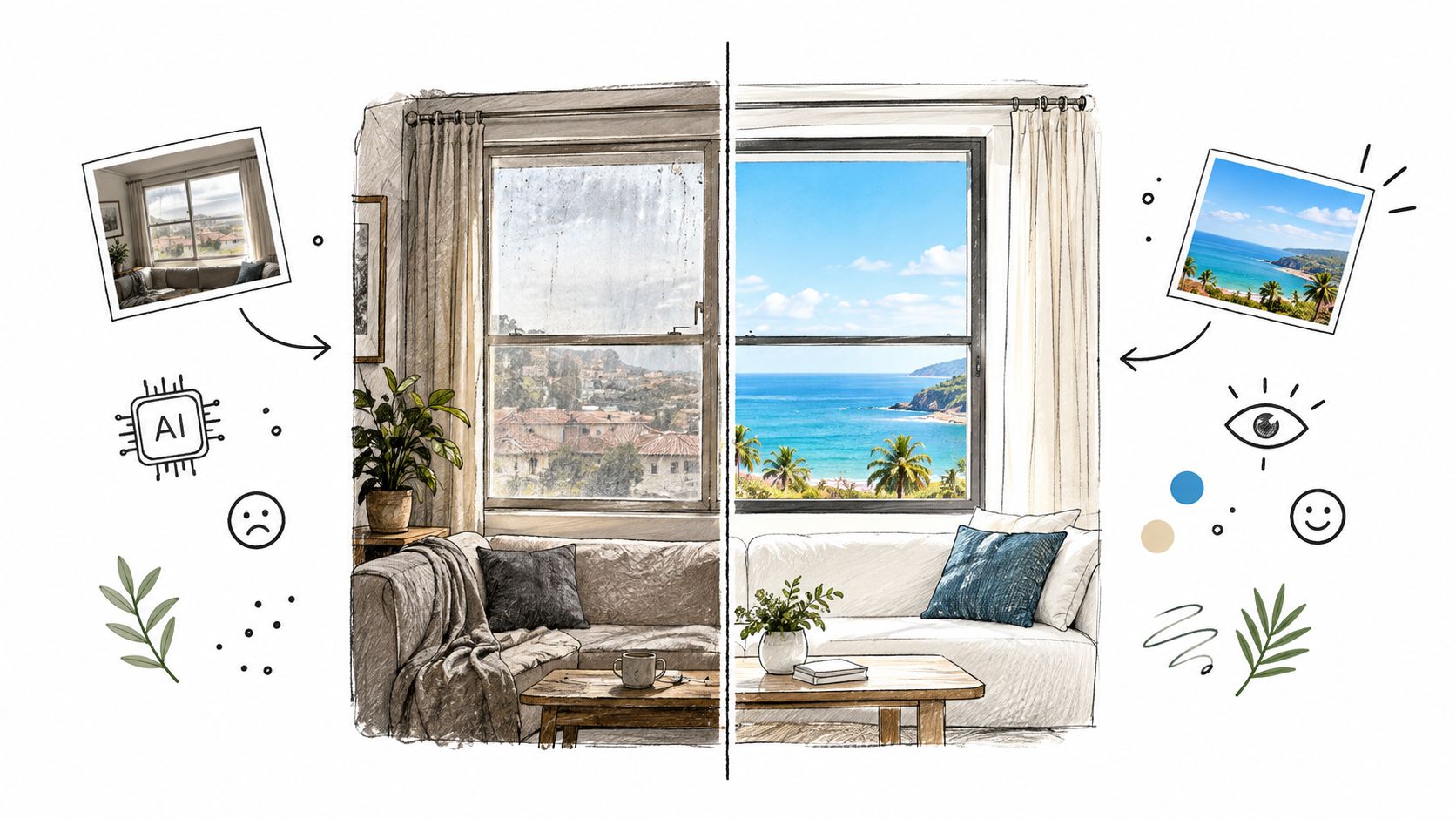
Coverage of the emerging trend reports that AI-staged or heavily edited images can create disappointment, wasted travel time, and more buyer verification through Street View or video walkthroughs. A 2026 report cited in The Cool Down's coverage of AI staging concerns says staged listings sold 18% faster, 79% of buyers want video before visiting, and only 18% of agents provide it. Those figures are from the cited report, not a guarantee for any local listing.
A separate 2026 industry commentary notes that California AB 723 treats undisclosed AI-altered listing photos as a misdemeanor, as discussed in Redfin's analysis of how professional photos affect buyer mentality. Laws and MLS policies differ by location, but sellers shouldn't wait for a dispute to ask whether an alteration needs disclosure.
Trust matters more than spectacle. Buyers should see the home at its best, not a version they can't find when they arrive.
Virtual staging can still help buyers understand how an empty room might function. Label it clearly, pair it with an unstaged image when appropriate, and never use it to conceal condition or invent a feature. The same standard should apply to AI HDR, sky replacement, virtual renovations, and AI-generated video.
Managing Copyright and Photographer Agreements
Paying for photography doesn't automatically mean you own every right to the files. In many real estate arrangements, the photographer retains copyright and grants the agent, brokerage, or seller a defined license for specific uses.
That license may cover the current MLS listing and related marketing. It may not cover a future listing, a different agent, a paid advertisement, a brochure, a social media campaign, or a new brokerage relationship.
The National Association of REALTORS® guidance on photographs in MLSs states that listing brokers should own or have authority to publish submitted photographs before sending a listing to the MLS. NAR also explains that listing photos receive copyright protection and that misuse can lead to costly claims involving agents, brokerages, and MLSs.
Read the license before the camera arrives
Ask the photographer or listing agent to clarify these points in writing:
- Permitted channels: Can the images appear on MLS, syndicated portals, the agent's website, social media, email, print materials, and virtual tours?
- Duration: Does the license end when the listing expires or remain available after closing?
- Future use: Can the homeowner use the files if they change agents or relist the property?
- Editing rights: May the agent crop, resize, brighten, or create platform-specific versions?
- Ownership and delivery: Who owns the copyright, and will the seller receive high-resolution files?
NAR's guidance identifies reading the photographer's licensing agreement as the essential first step. If a photo will be reused, request permission in writing rather than relying on a verbal understanding.
Absentee owners should pay particular attention to this issue because they may coordinate a sale from outside Florida. Move-up sellers and downsizing homeowners also benefit from confirming reuse rights before they approve a photography package. Clear terms prevent an avoidable conflict when the home moves between MLS, Zillow, social channels, print pieces, and virtual tour platforms.
Next Steps for Your Local Home Sale
Strong real estate marketing images work best when they support the rest of the listing strategy. For a home in Palm Coast, St. Augustine, Flagler County, Flagler Estates, or a nearby community, the presentation should reflect the property's actual condition, the likely buyer, the neighborhood setting, and the pricing plan.
That means preparing the home before the photographer arrives, selecting an exterior image that earns attention, organizing the gallery so buyers can follow the layout, and checking every image for MLS compliance and usage rights. It also means tailoring the package for the way buyers browse across listing portals, social media, virtual tours, and mobile devices.
As a Strategic Listing Agent with LPT Realty, Marilynn Wolfe serves Palm Coast, St. Augustine, Flagler County, and surrounding areas with guidance on pricing strategy, preparation, market insight, and marketing coordination. She works with homeowners, absentee property owners, move-up sellers, downsizing and 55+ clients, relocating buyers, and new construction buyers who need clear local direction.
If you're curious what your home could sell for in the current market, I'm always happy to share a personalized home value and local insights. Visit Marilynn Wolfe, LLC to discuss your property, your goals, and a thoughtful plan for presenting it to buyers.
Marilynn Wolfe, LLC offers local pricing guidance, listing preparation, and coordinated visual marketing for homeowners in Palm Coast, St. Augustine, Flagler County, and surrounding communities. Visit Marilynn Wolfe, LLC to start a conversation about your home value and selling strategy.