

Will the appraisal support the price your Palm Coast buyer agreed to pay? Many sellers assume a clean home and a strong offer settle that question, but an appraiser must support value with the property's condition, documentation, and recent closed sales. In a fast-moving part of Flagler County, those sales can reflect yesterday's market while your contract reflects today's negotiation.
That's why home appraisal preparation is a pricing protection strategy, not just a cleaning project. The right preparation helps the appraiser verify improvements, access every area, and find relevant evidence for the agreed price. The same approach applies whether you're selling in Palm Coast, St. Augustine, Flagler Estates, or a surrounding community.
Why Home Appraisal Preparation Matters in Palm Coast Right Now
A Palm Coast seller may receive a strong offer after careful pricing and attractive marketing, then face an uncomfortable question when the appraisal is ordered. If the valuation comes in below the contract price, the buyer's financing can become more difficult, and both parties may need to reconsider the terms.
Appraisal risk becomes more visible when prices move quickly. In a typical year, roughly 8% to 12% of home appraisals come in below the contract price, and that share can rise to 15% to 20% during rapid-appreciation periods, partly because appraisers rely on closed comparable sales that may lag the current market by 3 to 6 months. See the discussion of appraisal timing and contingencies in this appraisal contingency overview.
Palm Coast and St. Augustine sellers need to think beyond list price. A buyer's offer may reflect current competition for a well-presented home, while the appraisal relies on transactions that closed earlier. Presentation won't replace market evidence, but neglected maintenance, incomplete records, or inaccessible spaces can make it harder for the appraiser to support the value that the contract requires.
Practical rule: Prepare the home so the appraiser can verify its condition, improvements, and most relevant market context without having to guess.
More than 95% of U.S. home buyers include an appraisal contingency, and around 78% of appraisals conducted under that contingency land within 2% of the agreed purchase price, according to this appraisal contingency guide for buyers and sellers. These appraisals are typically scheduled within 1 to 2 weeks after an accepted offer, leaving sellers a short window to address visible concerns and assemble useful information.
For homeowners considering selling, downsizing, relocating, or moving up, preparation protects more than a number. It can protect your negotiating position, your timeline, and the next purchase that depends on this sale.
How Appraisers Determine Value and What They Look For
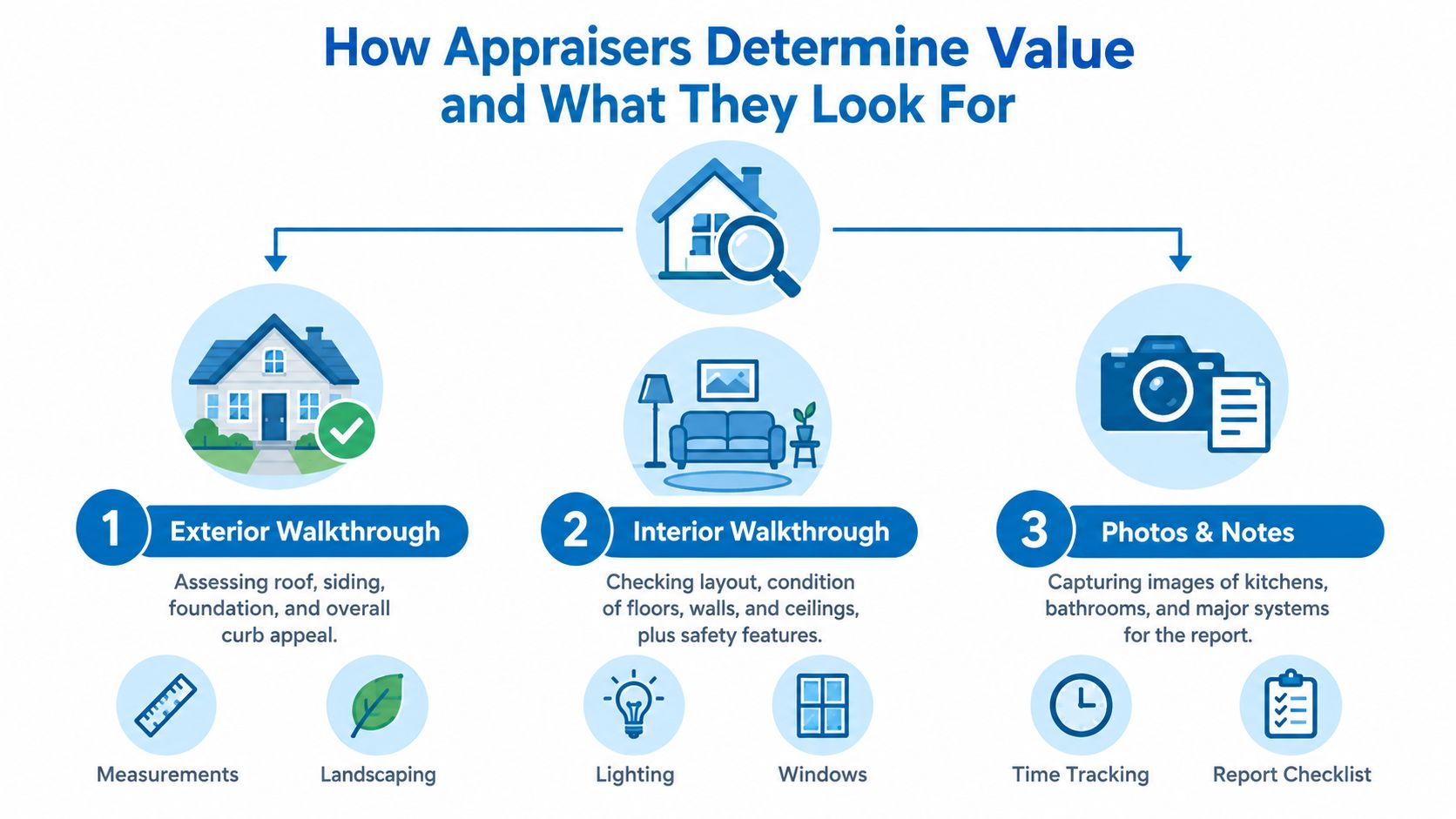
An appraiser doesn't walk through the home and assign a value based on appearance. The process combines a property inspection, photographs and notes, and analysis of recent local sales.
The property inspection
The visit generally begins outside. The appraiser observes the site, exterior condition, roof visibility, siding, foundation indicators, driveway, landscaping, and overall presentation. Inside, the appraiser reviews the layout, finished areas, room count, condition, major systems, and visible improvements.
The appraiser typically photographs kitchens, bathrooms, main living areas, below-grade spaces when present, and examples of updates or deterioration. Interior and exterior photographs, measurements, and observations help form the factual foundation of the report. This home appraisal checklist from Investopedia describes the inspection and comparable-sales process, including the use of the Uniform Residential Appraisal Report.
The report and market evidence
After inspecting the property, the appraiser compares it with recent sales from the subject's market area. The strongest evidence comes from homes with similar physical and legal characteristics, rather than properties that merely look attractive online.
Your estimates of value, renovation enthusiasm, or memories of what you paid won't substitute for verifiable facts. An appraiser needs to identify the property accurately, understand its condition, and reconcile its features with local closed-sale evidence. That's why a permitted addition, documented roof replacement, or correctly recorded finished area can matter more than a new decorative accent wall.
The appraiser's report is prepared for the lender, not as a marketing opinion. Sellers should make the property easy to inspect and provide concise information without trying to direct the conclusion.
Exterior and Interior Tasks That Support Your Appraised Value
The most useful pre-appraisal work usually addresses safety, function, and condition. Broad remodeling can consume time and money without producing comparable-sale support, while a visible leak or broken handrail can create an avoidable concern.
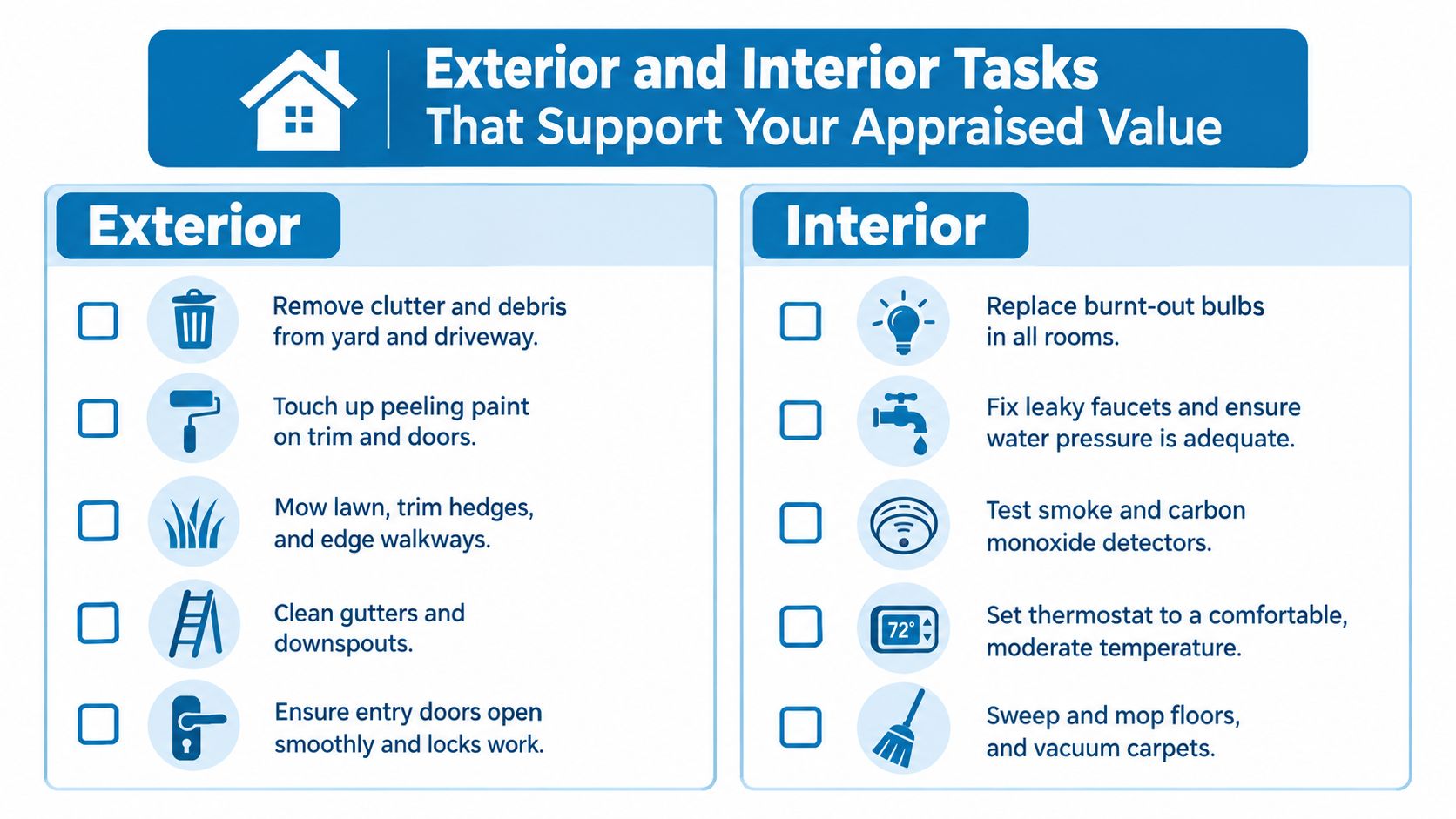
Start outside, where the property makes its first physical impression. Mow, trim, remove yard debris, and pressure-wash walkways, driveways, porches, or siding where appropriate. Palm Coast's coastal environment can make exterior upkeep especially noticeable, so pay attention to salt exposure, weathered trim, surface staining, and drainage around the home.
Prioritize visible maintenance
Replace burned-out bulbs, fix leaks, clear clutter, and make sure doors and windows operate properly. Touch up peeling paint on trim and entry doors, but don't launch a major renovation just to impress the appraiser.
A Flagler County home doesn't need to look staged for a magazine. It needs to look cared for, accessible, and safe. Clean floors, clear countertops, bright rooms, and functional fixtures help the appraiser inspect the property without distractions.
Check health and safety concerns
For FHA-related transactions, obvious health and safety problems can require attention. These may include broken windows, missing handrails, garage-door auto-reverse problems, drainage or grading concerns, exposed hazards, and certain lead-based paint defects in homes built before 1978. HVAC, electrical, plumbing, roofing, and access should also be in safe working order, as outlined in this FHA appraisal health and safety checklist.
Use this order of operations:
- Fix active problems: Address leaks, unsafe steps, broken windows, exposed hazards, and malfunctioning safety equipment.
- Restore function: Test doors, locks, lights, plumbing fixtures, HVAC, garage doors, and essential systems.
- Improve presentation: Mow, trim, clean, declutter, and brighten the rooms the appraiser will photograph.
- Skip speculative remodeling: Don't assume a last-minute cosmetic project will return its full cost in the appraisal.
This same standard serves homes in Palm Coast, St. Augustine, and Flagler Estates. Clean presentation supports the inspection, but reliable condition and documented work provide the stronger foundation.
Organize Your Documentation and Make Your Home Fully Accessible
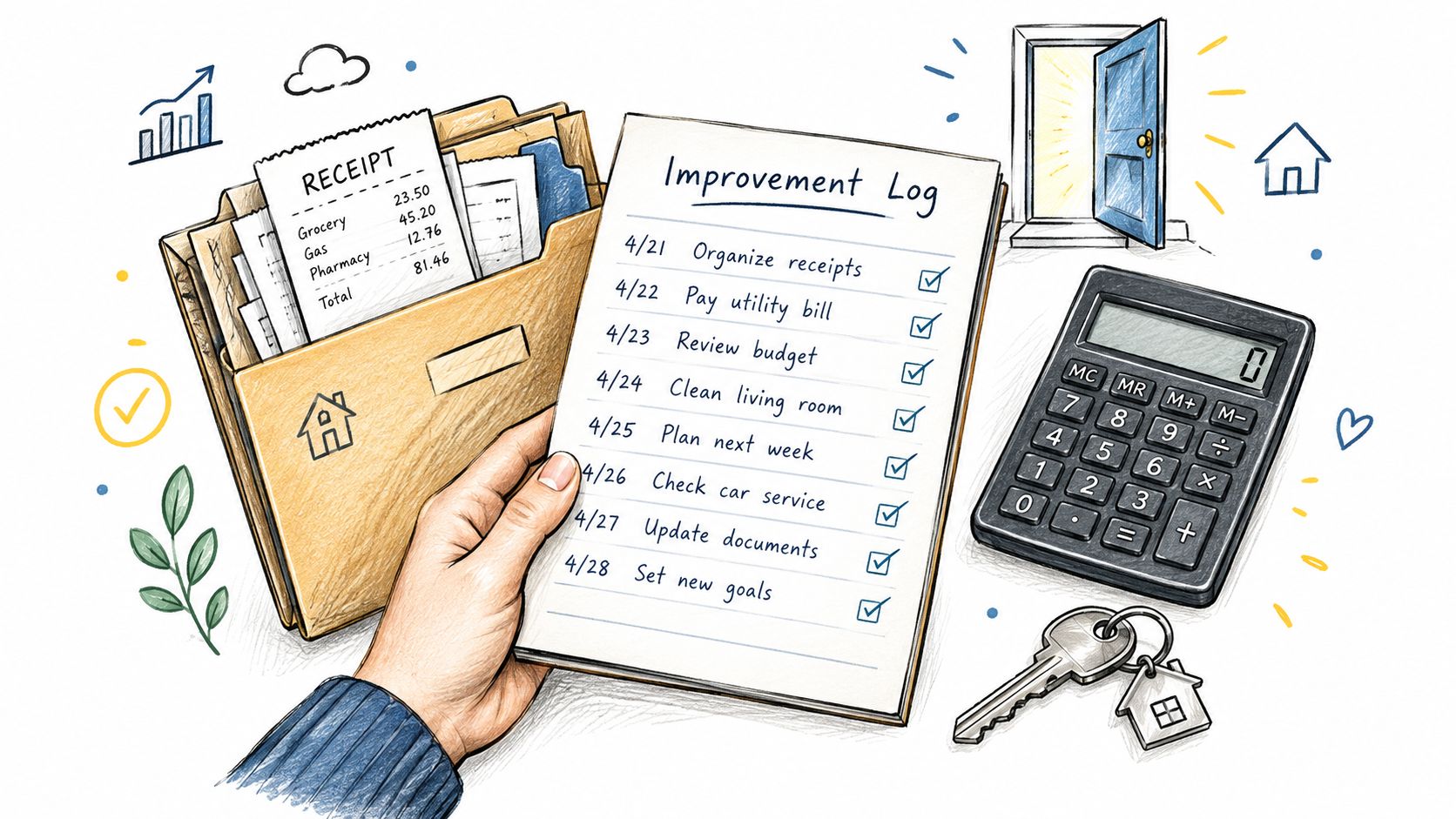
Paperwork can protect improvements that aren't obvious from a quick walk-through. Create a one-page improvement log listing the project, approximate completion date, cost, contractor or service provider when available, permit information, and relevant receipts.
Include system ages and service records for major work such as roofing, HVAC, electrical, plumbing, additions, conversions, and structural changes. A concise packet gives the appraiser facts to review without requiring a long conversation or a tour led by the homeowner.
Build a useful one-page log
The home appraisal preparation checklist from Banks Valuation also recommends gathering improvement dates, approximate costs, permits, service records, and receipts for major work. Keep the format simple:
- Project: Describe the improvement in plain language.
- Timing: Record the approximate date completed.
- Documentation: Attach permits, invoices, warranties, or service records.
- System information: Note installation or replacement details for major components.
- Property records: Confirm the stated square footage, room count, and improvements against available public or lender records.
The purpose is documentation, not persuasion. An appraiser should be able to distinguish a permitted conversion from an informal description, and a completed renovation from an unfinished project.
Remove access barriers
Open every room, attic or crawlspace entry, garage, and outbuilding. Move stored items away from panels, equipment, and doors so the appraiser can inspect and photograph relevant areas.
Incomplete access can limit the appraiser's ability to verify condition and support a conclusion. Before the appointment, make sure utilities are operating, pets are secured, and keys or remotes are available.
The video below offers another visual reminder of how preparation and organization fit into the appointment.
How to Prepare Strong Comparable Sales for Your Palm Coast Home
A polished home helps the appraiser understand condition. Comparable sales support the price itself. Sellers and listing agents should assemble evidence from the subject property's market area, not only choose the highest nearby sale.
Appraisal guidance favors comparable properties with similar site characteristics, room count, finished area, style, condition, and legal characteristics. Closed sales within the last 12 months should be used when possible, while a focused package of 4 to 6 recent closed sales from roughly the last 6 months can help present the local context efficiently. These criteria are explained in Fannie Mae's comparable-sales guidance.
For a Palm Coast property, the right comparison may come from the same neighborhood or a closely competing community. A St. Augustine home should be compared with properties that share its market characteristics, not automatically with a Palm Coast sale because both are in Northeast Florida. Flagler Estates homes require the same discipline, especially when lot size, construction type, access, and finished area differ.
A practical Flagler County comparison
| Comp Criteria | Why It Matters for Your Appraisal |
|---|---|
| Similar market area | Buyers compare homes competing for the same demand, not just homes within a broad county boundary. |
| Similar finished area and room count | These features help the appraiser measure functional similarity. |
| Comparable lot and site characteristics | Lot size, location, access, and site utility can affect buyer appeal and value. |
| Similar style and construction | A concrete-block coastal home may not be a useful match for a substantially different property type. |
| Similar condition and improvements | Renovated, dated, and partially updated homes may require meaningful reconciliation. |
| Recent closed transaction | A closed sale provides actual market evidence, unlike an active listing or an asking price. |
Avoid handing over a stack of listings selected only because they support your preferred number. The better package is short, relevant, and factual. Include the address, sale date, sale price, size, room count, lot characteristics, condition notes, and a brief explanation of why each property resembles yours.
The practical challenge is appraisal lag. When current contract prices move ahead of recorded sales by 3 to 6 months, preparation and local market interpretation become more important. Your agent can identify whether a recent sale is competitive and explain differences without trying to influence the appraiser's independence.
Final Walkthrough and Next Steps Before the Appraiser Arrives
The day before the appointment, walk through the home with a practical eye. Check cleanliness, lighting, odors, access, visible maintenance, and the condition of the exterior. Confirm that the improvement log is printed, permits and receipts are organized, and the comparable-sales summary is ready.
On the day of the visit, open all areas, secure pets, turn on necessary utilities, and make keys, remotes, or access instructions available. Give the appraiser the documentation packet at the beginning, answer questions directly, and allow the inspection to proceed without hovering.
Final verification list
- Exterior: Yard, entry, walkways, siding, windows, doors, drainage, and visible equipment are orderly and functional.
- Interior: Rooms are accessible, lights work, leaks are addressed, and clutter isn't blocking measurements or photographs.
- Records: Improvement dates, costs, permits, receipts, warranties, and service information are together.
- Property facts: Square footage, room count, additions, conversions, and recorded improvements have been checked for consistency.
- Market support: Relevant closed sales from Palm Coast, St. Augustine, Flagler Estates, or the appropriate surrounding market area are clearly summarized.
Fannie Mae's appraisal quality guidance emphasizes accurate property identification, condition observations, and credible market evidence. That reinforces the central point: preparation should make the facts easier to verify, not attempt to manufacture value.
As a Strategic Listing Agent serving Palm Coast, St. Augustine, Flagler County, and nearby communities, Marilynn Wolfe helps homeowners connect preparation with pricing strategy. That perspective matters for absentee owners who need local coordination, move-up sellers balancing two transactions, and 55+ homeowners deciding whether downsizing or relocating makes financial sense.
If you're reviewing Palm Coast home values, planning to sell in St. Augustine, or comparing Flagler County real estate market trends, start before the offer arrives. A prepared home gives you more control when the appraisal becomes part of the transaction.
Marilynn Wolfe, LLC offers local pricing guidance, preparation planning, and comparable-sales support for homeowners selling in Palm Coast, St. Augustine, Flagler County, and surrounding communities. Visit Marilynn Wolfe, LLC to request a personalized home value and discuss a practical strategy for protecting your sale price.