
Are you comparing canal-front homes by the view alone? That's the mistake that can turn an appealing waterfront purchase in Palm Coast, St. Augustine, or Flagler County into an expensive ownership surprise. The right question isn't only, “Can I see the water from the backyard?” It's, “What will this property cost to insure, maintain, access, and eventually sell?”
Florida canal-front homes for sale offer a lifestyle that inland properties can't match. Buyers may want a dock, boat lift, fishing access, or just the privacy and scenery that come with a water-facing lot. Sellers can benefit from that appeal, but only when they document the property's infrastructure and price it according to the quality of the water access, seawall, elevation, and insurance profile.
Understanding Your Options for Florida Canal Front Homes For Sale
A buyer relocating to Northeast Florida may start with a simple search for canal-front homes in Palm Coast or St. Augustine. Then the questions become more specific. Is the canal navigable? Does it connect to the Intracoastal Waterway? Can a boat pass under nearby bridges? Is the water tidal, freshwater, or primarily part of a stormwater system?
Florida's waterway scale explains why waterfront property attracts so much attention. The Florida Department of Transportation's waterway system plan reports approximately 1,540 navigable miles of intracoastal and inland waterways statewide, excluding about 825 miles of coastal shipping lanes. The network includes canals, rivers, bays, and connected waterways that support boating, fishing, recreation, and marine access.
That figure provides useful context, but it doesn't tell you what a particular backyard canal can do. A canal may look substantial from a listing photograph yet have limited depth, restrictive bridge clearance, tidal limitations, vegetation, or no practical route to open water.
The lifestyle benefit needs a property-level test
For buyers, I recommend separating waterfront appeal into three categories:
- View and setting: Does the home offer privacy, scenic water views, and outdoor enjoyment?
- Water utility: Can the buyer safely use the canal for the vessel and activities they have in mind?
- Infrastructure responsibility: Who maintains the seawall, dock, lift, shoreline, and related improvements?
Those distinctions matter in Palm Coast real estate, especially for buyers comparing newer construction with established waterfront neighborhoods. They also matter to absentee owners and downsizing sellers who may not be familiar with the condition of a seawall or the records attached to a dock.
Practical rule: Treat the canal as part of the property's infrastructure, not as a decorative feature.
A well-positioned home with documented access and sound shoreline improvements can attract serious buyers. A home with an uncertain seawall, unclear easements, or exaggerated boating language can lose momentum quickly, even if the interior is beautifully updated.
Freshwater vs Saltwater Canals in Palm Coast
Palm Coast buyers need to identify the canal type before they compare properties. Freshwater canals and saltwater canals serve different purposes, and the difference affects water levels, maintenance, boating utility, and the way a listing should be marketed.
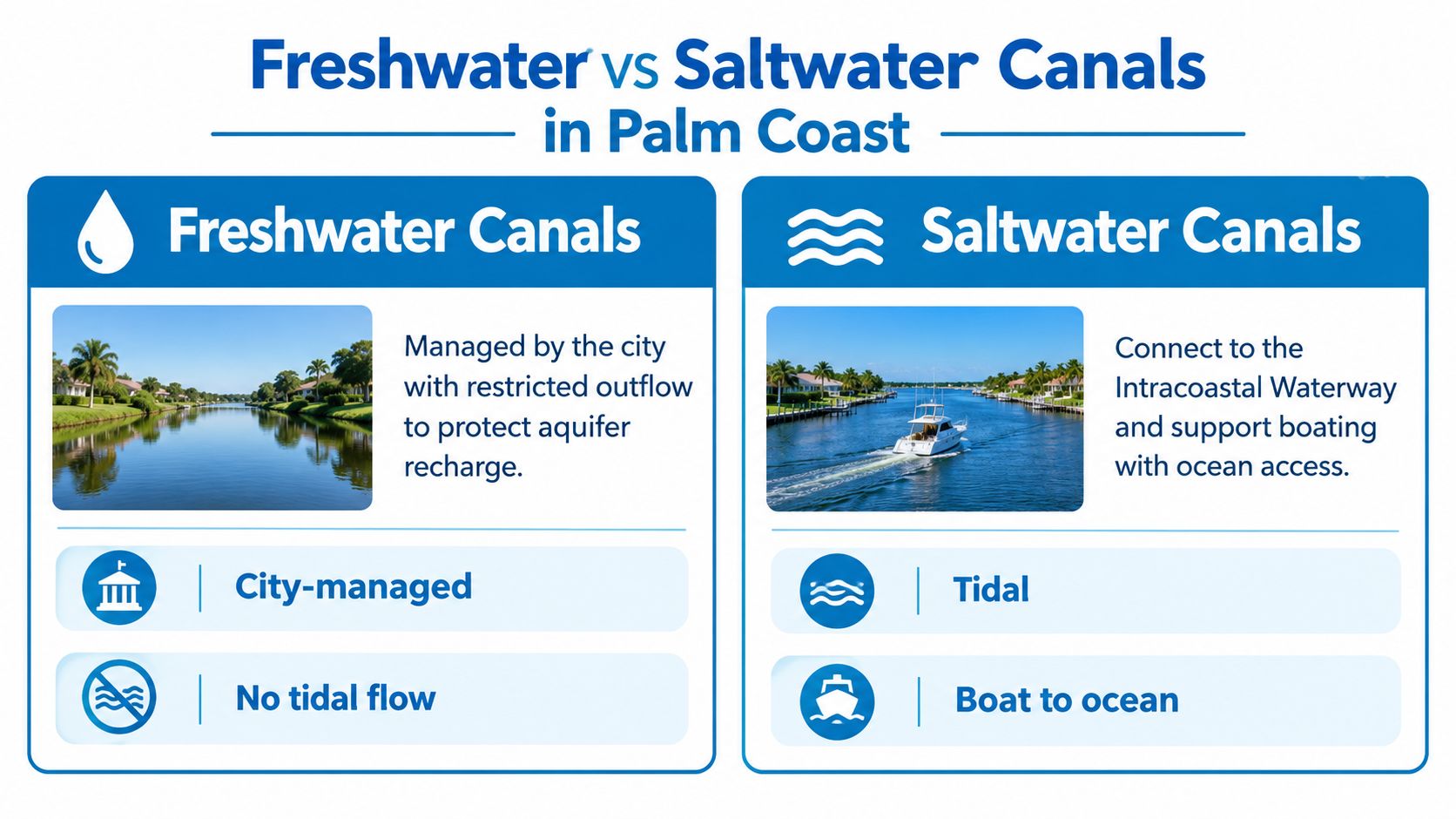
The City of Palm Coast's canal guidance describes freshwater canals as manmade waterways that convey stormwater and connect bodies of water. Their levels are controlled largely by rainfall, and the city may lower them for maintenance or before a major storm event. The city also states that freshwater canals should remain approximately 80% clear of vegetation, which means appearance and access can depend partly on municipal maintenance.
Freshwater canals require realistic expectations
A freshwater canal may be attractive for views, wildlife, kayaking, and drainage infrastructure, but it shouldn't automatically be marketed or purchased as an ocean-access property. Water levels can change, vegetation can affect passage, and sediment or debris may reduce usable capacity in portions of the system.
Ask the seller, city, and appropriate local offices:
- Is the canal navigable at the water level normally maintained?
- Does the canal connect to another navigable waterway?
- Can water levels be lowered for maintenance or storm preparation?
- Does vegetation or sediment affect the intended use?
- Are dock, lift, or shoreline improvements permitted?
Saltwater canals require a different review. Tidal influence may change the boating experience, but it doesn't eliminate the need to confirm depth, bridge clearance, route, dock restrictions, and maintenance responsibility. Buyers should never assume that “saltwater” means unrestricted access to the Intracoastal Waterway or Atlantic Ocean.
Palm Coast's saltwater canal history also deserves attention. In its saltwater canal study results, the city reported that some canals were built before the Florida Department of Environmental Protection was established in 1993, and the lack of earlier permits complicated evaluation. Future dredging would require regulatory review, including decisions about allowable depth and permitting.
That makes the specific canal more important than the neighborhood label. A buyer interested in a boat lift or larger vessel should verify the route at low tide, inspect available records, and avoid assuming that future dredging will solve an access problem.
Critical Inspections for Seawalls and Access
A seawall is a structural asset with a limited service life. It's also a potential liability. Buyers should review it with the same seriousness they apply to the roof, foundation, electrical system, or plumbing.
Start by requesting the seawall's construction date, engineering records, repair history, warranties, permits, and inspection reports. Then determine whether the wall sits on private property, along a public canal right-of-way, or in an area where maintenance responsibility is shared or restricted.
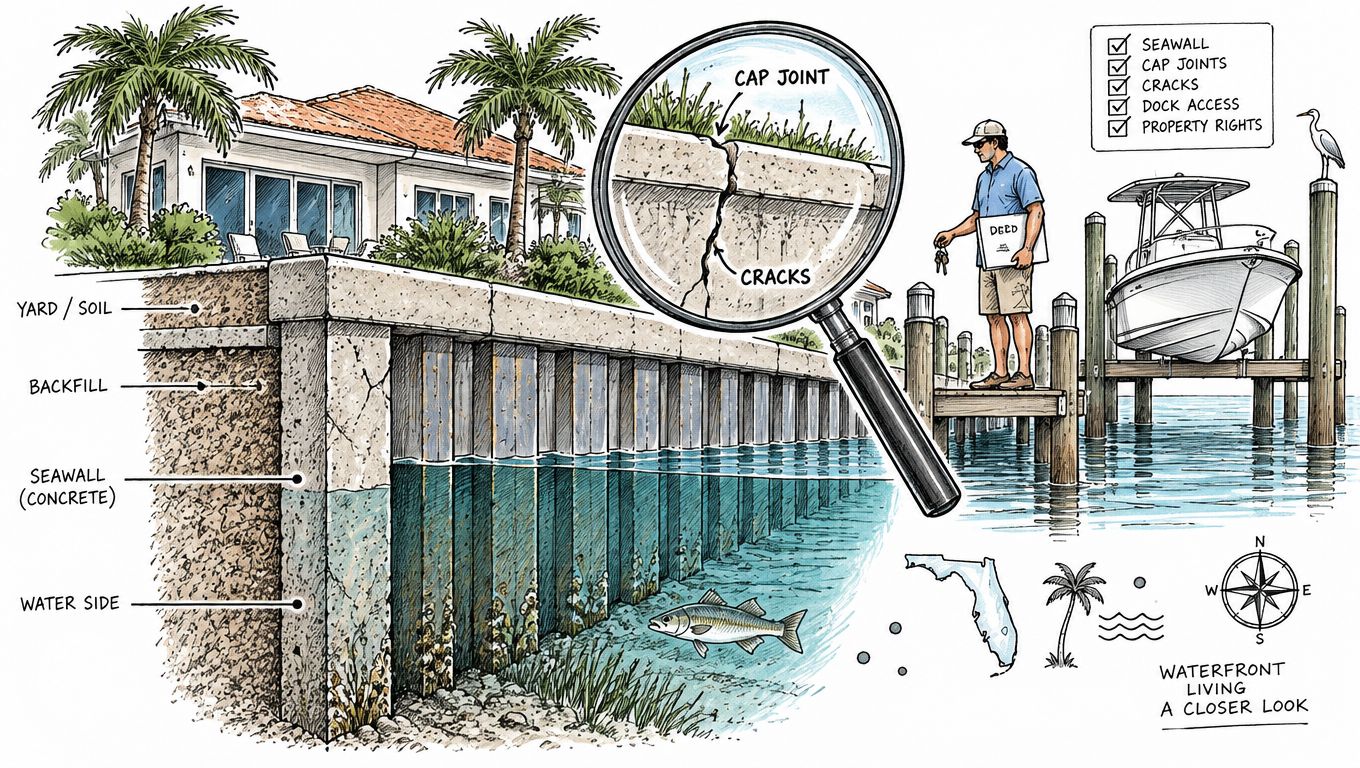
Florida law generally requires a coastal construction permit before constructing, reconstructing, or materially altering seawalls and other shore-protection structures below the mean high-water line, as explained in Florida Statutes Section 161.041. Local permit packages may require a boundary or elevation survey, engineered seawall and pile plans, dredge or environmental approvals, and post-construction documentation.
What the inspection should establish
A practical review should answer these questions:
- Who owns the wall and who maintains it? A buyer needs more than a visual impression of the shoreline.
- Is there evidence of movement, erosion, soil loss, or drainage failure? These issues can affect patios, pools, foundations, and docks.
- Can the wall be repaired or replaced under current rules? Replacement may involve state, county, city, water-management-district, or federal review.
- Are dock and lift improvements legal? Projection, setbacks, pile placement, easements, and the surveyed property line can all matter.
- Is the canal usable for the buyer's intended vessel? Check depth, bridge clearance, tidal conditions, and restrictions at low tide.
Buyer advice: Don't accept “deep water” or “ocean access” as sufficient proof. Verify the route, permits, and physical conditions yourself.
Sellers should assemble these records before listing. Documentation can reduce uncertainty during inspections and help an agent explain why one canal-front property deserves a different price from another nearby home. Buyers should make the contract and inspection process contingent on reviewing these materials, along with flood-zone information and insurance availability.
Flood Zones and Insurance Costs Explained
The list price is only the starting point for canal-front affordability. Buyers should calculate a total carrying cost that includes standard homeowners insurance, flood insurance, wind-related coverage, deductibles, seawall maintenance, dock repairs, and flood-mitigation work.
A 2020 Florida flood-risk analysis reported that approximately 35% of Florida's 8.9 million homes faced at least minor flood risk. It also reported that about 10% of homes, roughly 900,000 properties, faced severe or extreme flood risk, while about one in five Florida homes was located in a FEMA special flood-hazard area at that time.
Those statewide figures don't determine the risk for one Palm Coast, St. Augustine, Flagler County, or Flagler Estates property. They do show why buyers shouldn't rely on a listing description or a casual visual assessment.
Elevation and flood zone affect the budget
FEMA maps use hydrologic and hydraulic studies, rainfall and storm-tide data, topography, and canal or stream-flow information. A property's zone, finished-floor elevation, foundation, distance to water, flood type, rebuilding cost, and claims history can all influence insurance requirements and premiums.
Flood coverage is generally separate from a standard homeowners policy. The Florida Office of Insurance Regulation's flood guidance explains that high-risk areas have at least a 1% annual chance of flooding, and federally regulated or insured lenders generally require flood insurance for mortgaged properties in those areas. Moderate- and low-risk areas have a lower mapped probability, but flooding can still occur.
The FEMA-based county guidance for high-risk Zone VE areas explains that the mapped hazard includes storm-wave effects and can represent at least a 1% annual flood probability, equivalent to at least a one-in-four chance over a 30-year mortgage under the cited guidance.
Request the insurance quote before finalizing an offer. The Florida flood insurance cost overview reports a median NFIP single-family premium of about $776, while county medians range from roughly $400 to more than $3,400. Risk Rating 2.0 considers elevation, foundation, distance to water, flood type, and rebuilding cost, so similar-looking homes can carry very different premiums.
For sellers, documented elevation information, mitigation features, prior claims, seawall records, and current insurance details can make the property easier for a qualified buyer to evaluate.
Neighborhood Spotlights St Augustine and Flagler County
Which community fits your priorities, and what will the waterfront cost after closing? Palm Coast, St. Augustine, Flagler County, and nearby areas offer distinct versions of canal-front living. Choose based on boating access, neighborhood character, construction age, historic setting, and the property's full ownership burden, not the view alone.
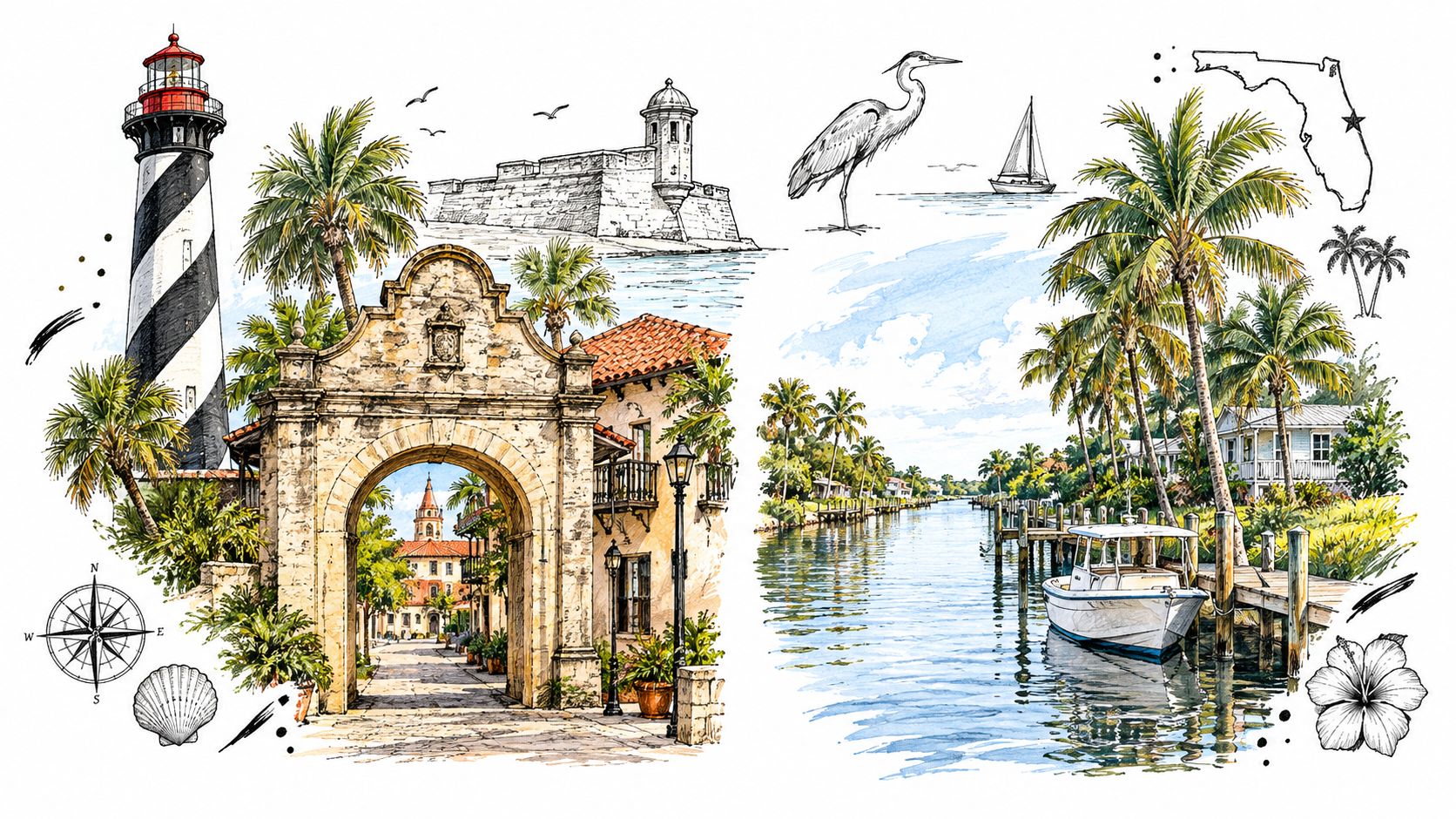
Palm Coast gives buyers a wide range of planned communities, freshwater canals, saltwater canals, and homes built around outdoor living. It suits buyers who want quieter streets, newer construction, or room for a dock and entertaining. Verify every parcel's water access, seawall condition, and maintenance history. A waterfront address does not guarantee navigable boating access.
St. Augustine offers a different setting, with historic character, Spanish-style architecture, established neighborhoods, and access to cultural and coastal amenities. Values and ownership costs can change sharply by location, waterway, elevation, construction type, and available flood documentation. Buyers should compare the property's insurance profile and shoreline obligations before treating charm or proximity to town as sufficient value.
A Palm Coast and St. Augustine market overview provides broad local context, but canal-front buyers need a property-specific comparison. Review recent comparable sales alongside seawall records, dock permits, flood history, insurance quotes, and expected maintenance. Those details can change the actual cost of ownership more than interior finishes.
Flagler County gives buyers more property types and land settings to compare. Flagler Estates may suit buyers seeking larger lots and a slower pace, while Palm Coast offers established canal neighborhoods and municipal stormwater systems. For new construction, confirm drainage design, elevation, shoreline ownership, and future maintenance responsibilities before assigning a premium to water access. Choose the neighborhood only after the projected insurance, seawall, and upkeep costs fit the budget.
Working with a Local Expert for Your Real Estate Goals
Canal-front real estate requires better preparation than a standard inland listing. The seller needs a pricing strategy based on actual access, seawall condition, elevation, insurance profile, updates, and buyer demand. The buyer needs a property review that goes beyond square footage, finishes, and water views.
For sellers in Palm Coast, St. Augustine, Flagler County, and surrounding communities, preparation should begin before photography. Gather permits, seawall records, dock and lift documentation, elevation certificates, flood-insurance information, prior claims, and maintenance invoices. If you're an absentee owner, appointing a local professional to coordinate inspections and records can prevent avoidable delays.
For buyers, request an insurance quote early and verify the parcel through official records. Flagler County explains that FEMA Flood Insurance Rate Maps generally show flood zones and community base elevations, but an accurate parcel-specific determination should come from the insurance company or local floodplain manager. Its Flagler County flood-zone information also describes how buyers can locate an unincorporated parcel through the Property Appraiser and activate the FEMA FIRM layer.
The right questions improve the decision
A useful consultation should address:
- Pricing: How does this home compare with nearby canal properties that have similar access and infrastructure?
- Condition: What do the seawall, dock, lift, roof, drainage systems, and mechanical equipment records show?
- Insurance: What coverage is required, what coverage is prudent, and what quotes can a buyer obtain before contract deadlines?
- Lifestyle fit: Is the waterway appropriate for boating, fishing, kayaking, or primarily for scenery and outdoor enjoyment?
- Exit strategy: Will the same documentation support resale when the owner moves, downsizes, or relocates?
Marilynn Wolfe, LLC works through LPT Realty LLC with homeowners, buyers relocating to Northeast Florida, new construction clients, move-up sellers, downsizing homeowners, and absentee property owners. The service focuses on local pricing strategy, marketing preparation, contract guidance, inspections, and neighborhood insight across Palm Coast, St. Augustine, Flagler County, and nearby communities.
The best Florida canal-front homes for sale aren't defined by the view alone. They combine usable access, credible documentation, manageable insurance, sound shoreline infrastructure, and a price that reflects the full ownership picture.
If you're considering selling a canal-front home, Marilynn Wolfe, LLC can help you organize the property records, evaluate Palm Coast home values, and position the listing around verified features rather than assumptions. Visit Marilynn Wolfe, LLC for local guidance, or call 904-429-2829 or email marilynnwolfe.realtor@gmail.com to discuss your property and next steps.