

If you're wondering what your Palm Coast home could sell for today, the more important question may be this: what strategy will protect your final proceeds while attracting serious buyers early? Selling a home in Northeast Florida is no longer a matter of placing a sign in the yard and waiting for competing offers. Inventory is rebuilding, buyers have more room to negotiate, and the difference between a well-positioned listing and an overpriced one can shape the entire transaction.
For homeowners in Palm Coast, St. Augustine, Flagler County, and nearby communities, pricing, presentation, and early momentum now work together. That includes absentee owners who need local coordination, move-up sellers managing two transactions, and 55+ homeowners weighing a simpler next chapter. Here's how to sell a home with realistic expectations and a local plan.
Why Selling in Palm Coast and St Augustine Feels Different Right Now
A Palm Coast homeowner may look at an older sale and remember how quickly homes moved during the pandemic boom. That experience can make today's market feel unusually slow, even when the property is well maintained. Nationally, homes typically took around 51 to 64 days to sell during much of 2025, depending on the month and source, with Realtor.com reporting 51 days in May, 53 in June, 58 in July, 60 in August, 62 in September, and 63 in October. By December, the figure had risen to 73 days according to Realtor.com's 2025 housing data.
The broader lesson applies to Palm Coast real estate and the St. Augustine housing market. Homes spent only 30 days on the market in April 2022, compared with 51 days by May 2025, a 46% increase from that low point, according to HomeAbroad's housing market analysis. Buyers today are more likely to compare condition, price, insurance considerations, financing, and concessions before committing.
Local perspective: A slower market doesn't mean buyers have disappeared. It means sellers need to give buyers a clear reason to choose their property.
Lifestyle demand still matters across Palm Coast, St. Augustine, Flagler Estates homes, and surrounding communities. Buyers relocating to Northeast Florida may be comparing established resale homes with new construction, while local owners may be moving closer to family, downsizing, or seeking a different layout. The right strategy depends on the specific neighborhood, property condition, competition, and likely buyer profile, not on a national headline.
How to Price Your Home to Attract Serious Buyers Early
The list price is a launch decision, not a test of how much a seller hopes to receive. I begin with recent comparable sales and then examine active competition in the same local buyer pool. A home in Palm Coast shouldn't be priced from a broad county average if nearby listings offer newer roofs, updated kitchens, or different community amenities. The same principle applies when comparing St. Augustine real estate with Flagler Estates or another distinct area.
A practical pricing review should consider:
- Recent sold properties, with attention to location, size, condition, updates, and sale timing.
- Current competing listings, because buyers are choosing among what they can see today.
- Property-specific costs, including repairs, insurance concerns, and likely concessions.
- The first 14 days, when showing activity, inquiries, and offer quality reveal whether the launch price is connecting with the market.
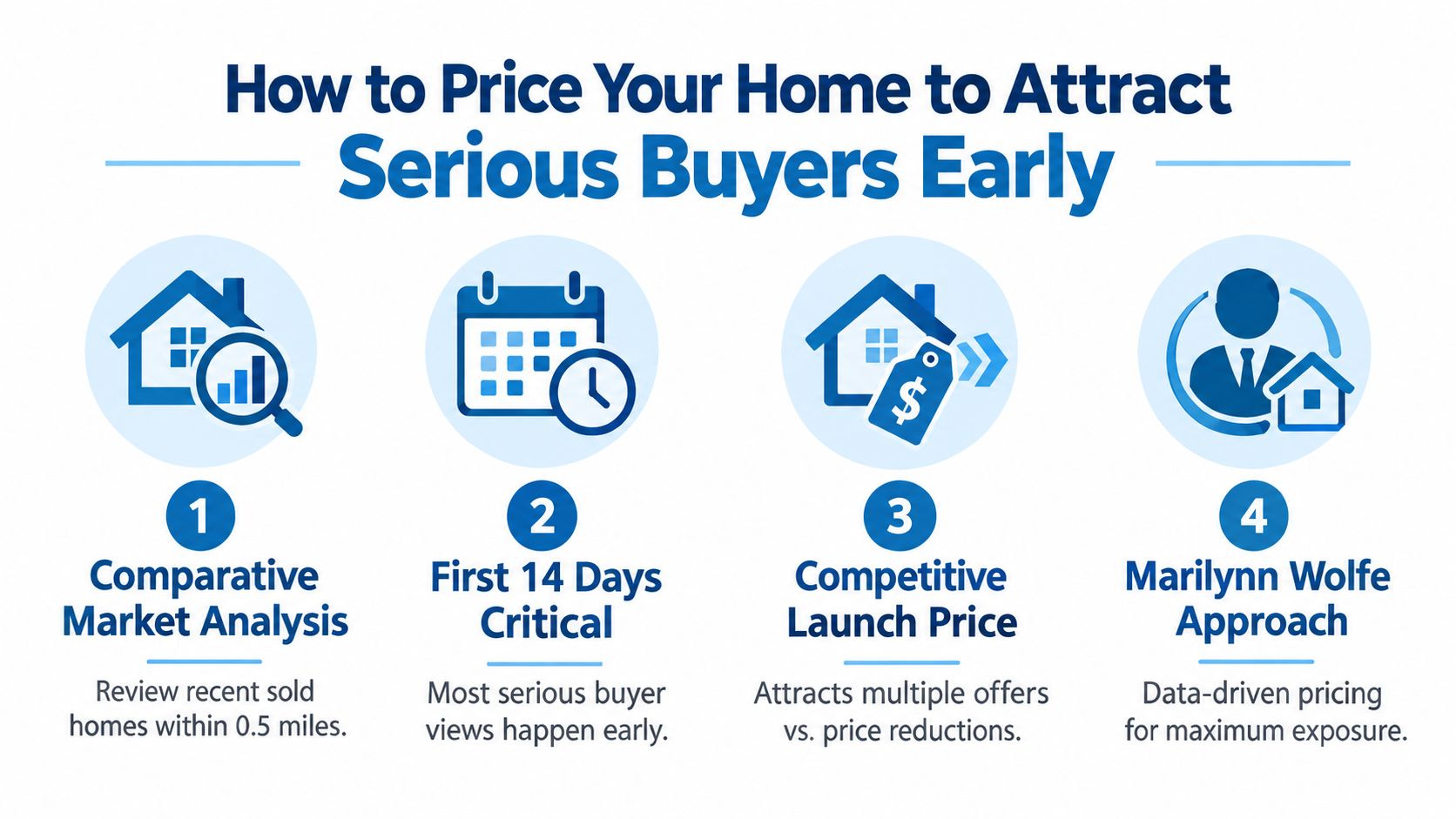
The cost of overpricing is lost negotiating power. One 2026 analysis found well-priced homes averaged 63 days on market, while overpriced listings averaged 121 days, a 58-day difference, as reported by Preferred Properties. A listing that sits can become associated with stale marketing, hidden defects, or seller inflexibility, even when the home itself is attractive.
Watch the early signals without reacting emotionally. Strong inquiries and showing requests with no offers may point to condition or terms. Very little activity may indicate price, presentation, or both. If the home needs a change, making a thoughtful adjustment early is usually more effective than waiting through repeated weak feedback.
Preparing and Staging Your Home for Maximum Impact
A buyer forms an impression before discussing the floor plan. In Palm Coast and St. Augustine, that impression starts with the exterior, entry, natural light, flooring, kitchen, bathrooms, and the overall sense of maintenance. Major renovations aren't automatically the answer. Focus first on visible distractions that make buyers question what else may be wrong.
Use this room-by-room approach:
- Clear the surfaces: Remove excess furniture, countertop items, personal collections, and crowded closet contents.
- Clean with purpose: Pay particular attention to windows, baseboards, floors, kitchens, bathrooms, and areas where Florida humidity may be noticeable.
- Improve brightness: Open curtains, replace tired bulbs, and use warm lamps where rooms feel dim.
- Handle minor repairs: Fix leaky faucets, loose hardware, chipped paint, sticking doors, and other easy-to-see flaws.
- Arrange for movement: Position furniture so buyers can walk naturally through the home and notice important features.
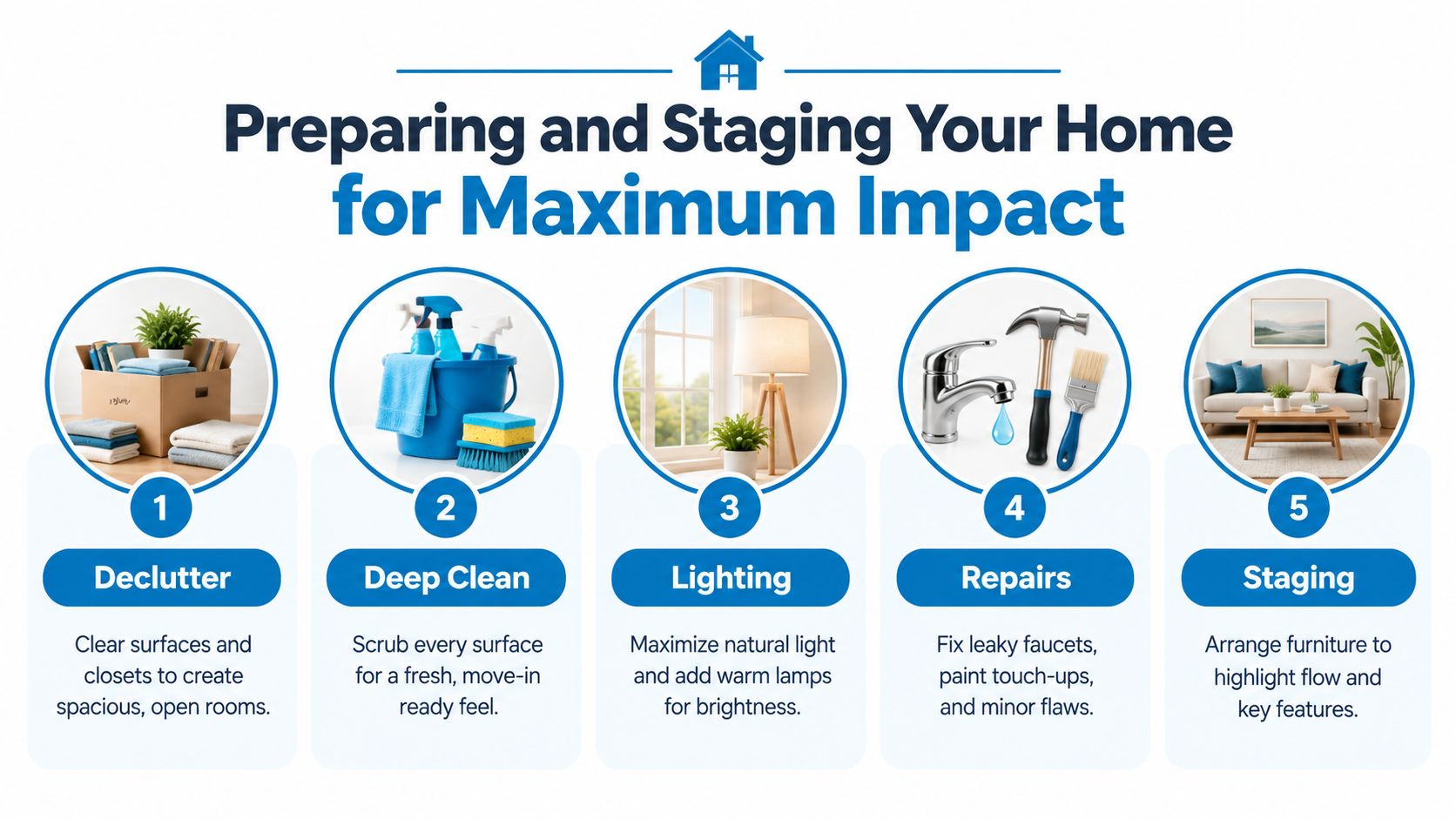
Staging should be finished before photography and the first showing window, not after the listing has already struggled. The National Association of Realtors reported that 49% of sellers' agents said staging reduced time on market, while 29% said it increased the dollar value offered by 1% to 10%, according to its home staging report.
Independent staging data summarized by DDH Home reported staged homes averaging 23 days on market versus 47 days for non-staged homes, a 51% reduction. That source also reported weaker results when staging was delayed until after a property had been sitting, including average time on market rising to 38 days, showing requests dropping to 4.1, and final sale price reaching 95.3% of list price after two weeks.
For absentee owners, a local agent or trusted vendor can coordinate cleaning, landscaping, repairs, photography, and access without requiring repeated trips. Downsizing sellers may benefit from removing furniture before deciding whether additional work is necessary.
Marketing and Showings That Reach Ready Buyers
Good marketing doesn't compensate for poor pricing, but it can make a correctly positioned home easier to understand and compare. Professional photography should show the home's scale, natural light, outdoor spaces, storage, and features that matter to buyers relocating to Palm Coast or St. Augustine.
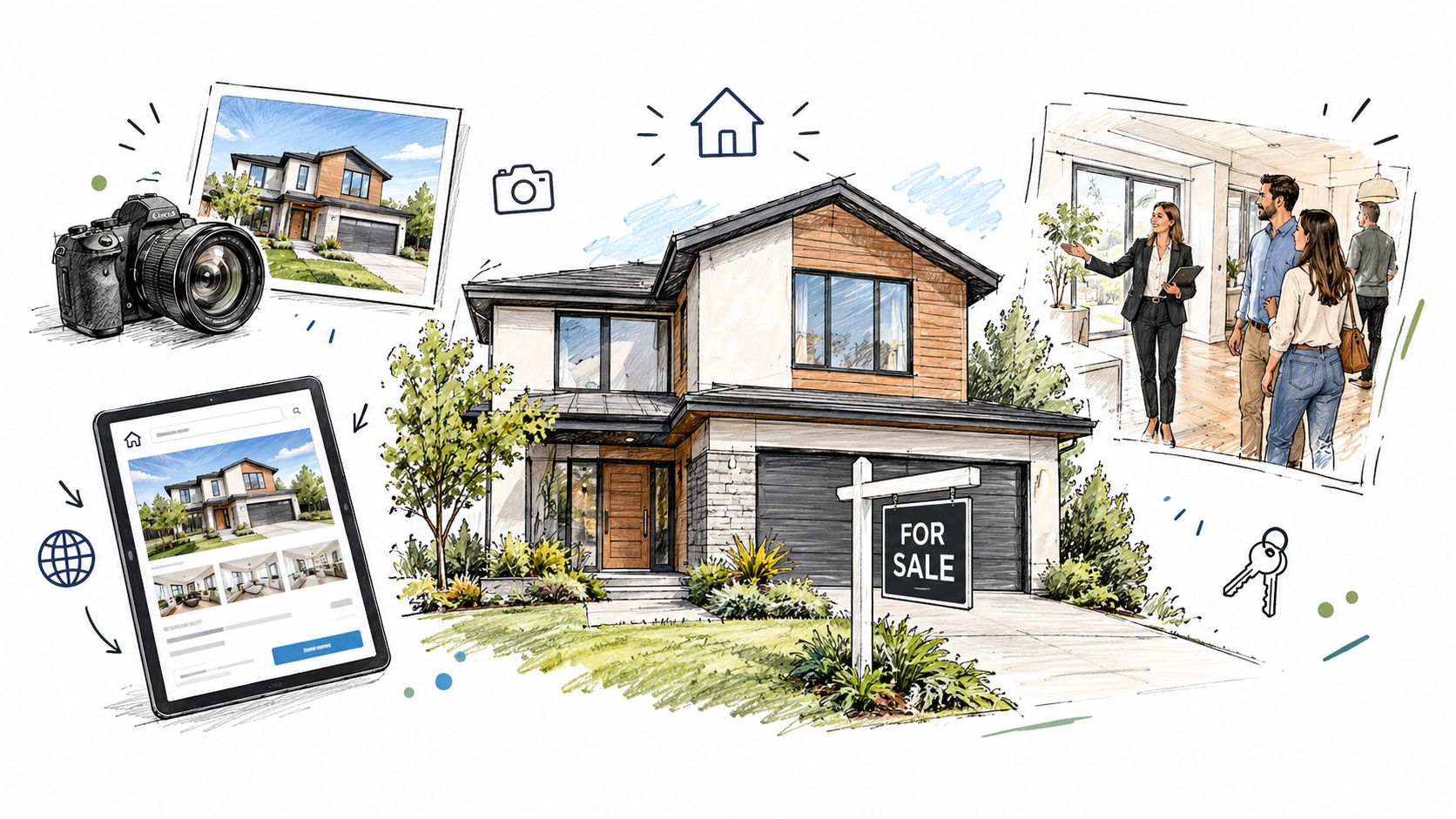
The listing should answer practical questions before a showing. Describe improvements accurately, explain community features where relevant, and make the location useful to someone unfamiliar with Flagler County. A resale home competing with new construction needs clear positioning, such as established landscaping, completed window treatments, mature surroundings, or immediate availability, when those features apply.
Showings also need a system. Keep the home ready during the initial launch, respond promptly to scheduling requests, and collect feedback that separates repeated buyer concerns from one-off preferences. Open houses can support visibility, but they shouldn't replace private showings or precise online presentation.
A flexible schedule helps, especially for move-up households and owners still living in the property. For a vacant home, reliable access and clean presentation matter even more. Marketing reaches buyers, but consistent access gives those buyers a fair chance to decide.
The visual plan should be supported by a clear explanation of the selling process:
Evaluating Offers and Negotiating for Your Best Net Proceeds
The highest offer isn't always the strongest offer. Compare the cash you expect to keep, the certainty of the buyer's financing, inspection and appraisal terms, closing timeline, and requested concessions.
| Offer Element | What to Compare |
|---|---|
| Price | Does it reflect realistic market value and your net proceeds? |
| Financing | How strong is the preapproval, and what conditions remain? |
| Contingencies | Which inspection, appraisal, sale-of-home, or financing protections apply? |
| Closing date | Does the timeline work for your move, purchase, or relocation? |
| Concessions | What credits or buyer costs reduce the amount you keep? |
| Compensation | How is buyer-agent compensation addressed in the offer? |
Current guidance commonly places total commissions around 5.57% to 5.70%, with the fee negotiated between the parties rather than treated as a fixed standard, according to Offerpad's 2026 commission overview. Seller closing costs commonly add another 1% to 3%, while repairs and concessions can further reduce proceeds, as discussed in Opendoor's selling guidance.
The 2024 NAR settlement changed the process: buyer-agent compensation is no longer displayed on the MLS, and buyers must sign representation agreements before touring homes, according to AgentSorted's commission guide. Sellers should evaluate that issue as part of the complete offer, not as an afterthought.
Ask for a net sheet for each serious offer. A faster closing at a slightly different price may leave you in a better position than a higher offer burdened by repairs, credits, uncertainty, or a long timeline. The right comparison is not list price against list price. It's expected proceeds, risk, and convenience.
From Inspection to Closing With Confidence
Once you accept an offer, keep the transaction moving through a simple checklist. Florida buyers commonly pay close attention to roofs, electrical systems, plumbing, air conditioning, windows, drainage, moisture, and other maintenance concerns. Inspection negotiations don't have to become personal. Review the request, separate safety or function issues from cosmetic preferences, and decide whether a repair, credit, or adjusted term makes practical sense.
An appraisal can create a second conversation about value. If the result doesn't support the contract price, the parties may need to revisit price, financing, cash contributions, or other terms. Your listing agent should keep communication organized among the buyer, lender, title company, inspectors, contractors, and closing professionals.
Absentee owners need dependable local coordination, including access for inspections and repairs. Sellers moving into a new home or downsizing should confirm the closing timeline, utilities, possession terms, and document-signing arrangements early. Title work and the settlement statement deserve careful review before signing.
For homeowners asking how to sell a home without unnecessary stress, preparation and communication do most of the work. Marilynn Wolfe, LLC offers local pricing guidance, marketing coordination, offer analysis, and transaction support for sellers in Palm Coast, St. Augustine, Flagler County, and surrounding communities.
Marilynn Wolfe can help you evaluate Palm Coast home values, build a pricing and presentation plan, and compare offers by their likely net proceeds rather than headline price alone. Visit Marilynn Wolfe, LLC to request personalized local insight for your home, whether you're selling, downsizing, relocating, or coordinating a sale from out of the area.