
Are you comparing the purchase price of a new home with the list price of a resale, without comparing what each home may cost you after closing? That gap matters in Palm Coast and St. Augustine, where a new community may offer modern efficiency and builder incentives, while an older home may offer an established neighborhood, a larger lot, or a shorter commute.
The right answer to why buy a new construction home is not “because everything is new.” It depends on how long you plan to stay, how much maintenance risk you can absorb, whether the location fits your daily life, and whether the builder contract protects your budget. New construction can be an excellent fit for relocating buyers, move-up households, downsizers, and 55+ homeowners, but it still requires careful due diligence.
Understanding the Appeal of New Construction
A buyer relocating to Palm Coast might compare two very different options. One is an older resale home in an established neighborhood with mature landscaping, a familiar street pattern, and a price that appears attractive at first glance. The other is a new build with clean finishes, a contemporary floor plan, and no immediate list of cosmetic projects waiting in the background.
The resale may have character and a convenient location, but the buyer could also be evaluating an aging roof, an older HVAC system, dated bathrooms, and windows that need attention. The new home offers a simpler first move. The buyer chooses finishes, schedules the move, and starts using the home without coordinating a series of renovations before settling in.
What buyers are really seeking
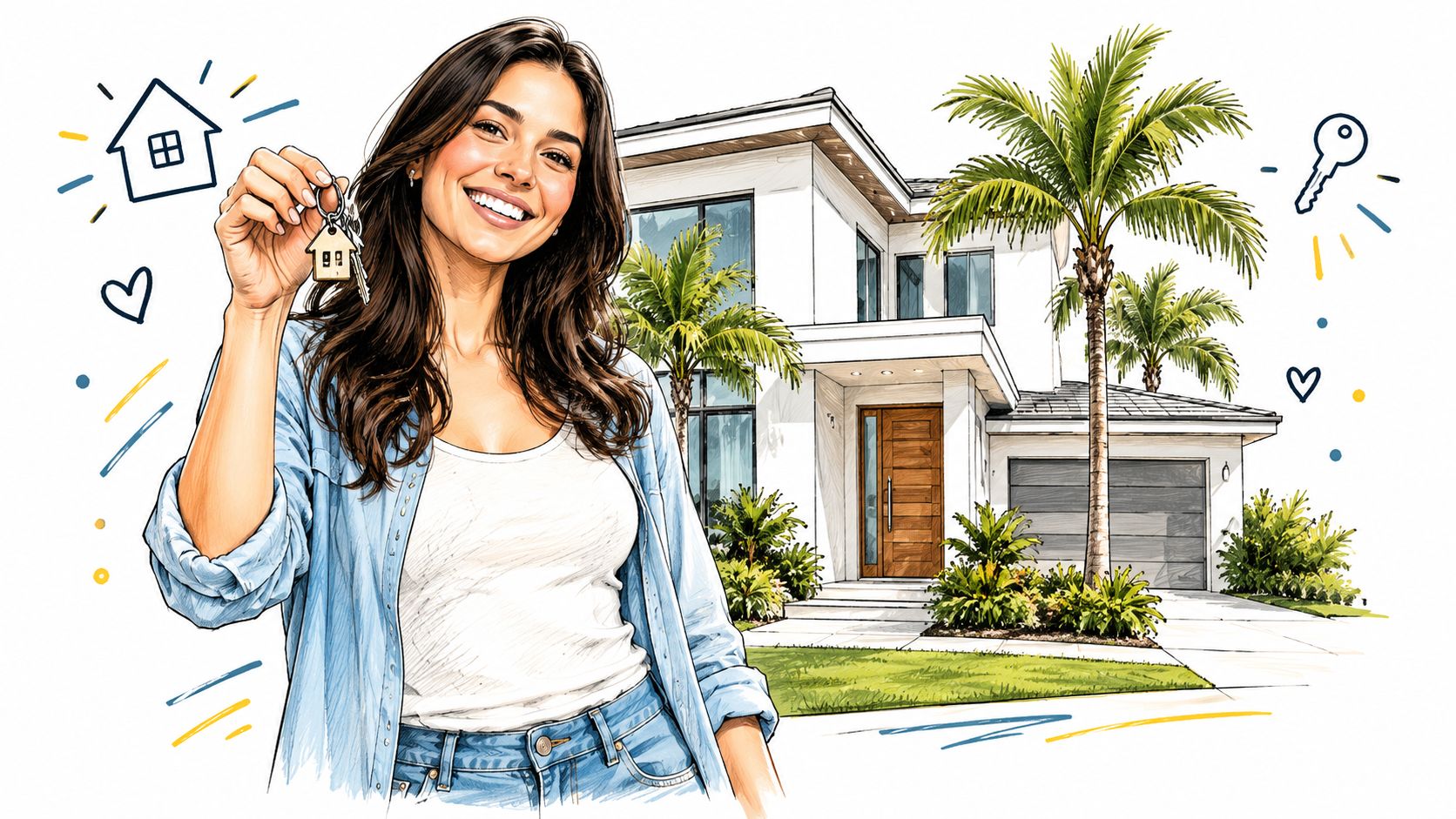
New construction appeals to more than a desire for untouched countertops and new appliances. In a Homes.com 2026 survey of more than 3,000 American housing decision-makers with budgets of at least $250,000, 35% said they wanted a larger home or more space, 32% cited financial readiness, and 25% pointed to health and safety standards as a reason to choose new construction over resale. The findings are reported in Homes.com's 2026 buyer preference release.
The same survey found that 74% of buyers wanted a home office and 49% wanted a second office, which reflects how households now use rooms for remote work, hobbies, study, and flexible guest space. That can be difficult to recreate in an older Palm Coast or St. Augustine home without sacrificing a bedroom or taking on a renovation.
Practical rule: Compare the home you can use immediately with the resale home you would need to modify. The cheaper starting point isn't always the lower-stress choice.
A new home also gives buyers a clearer starting point for maintenance. That doesn't mean defects are impossible, and it doesn't eliminate the need for inspections. It does mean the buyer is less likely to inherit a long history of postponed repairs, mismatched improvements, or systems installed by several previous owners.
The Long-Term Financial Benefits of New Homes
The financial case for new construction becomes clearer when the ownership period extends beyond the closing date. A buyer who plans to remain in the same Palm Coast, St. Augustine, or Flagler County home for a decade should evaluate utilities, major systems, and maintenance alongside the purchase price.
A 2026 Realtor.com analysis found that a buyer of a new home could save $25,335 over the first 10 years compared with buying a 20-year-old home. The analysis attributes the difference largely to lower energy use and fewer major replacement expenses, as explained in the Realtor.com total-cost analysis. Those savings don't guarantee that every new home will cost less to own, but they show why the initial price premium shouldn't be the only comparison.
Efficiency starts with the building envelope
New homes are generally designed around current energy requirements, improved air sealing, modern windows, and HVAC systems selected for the structure. RESNET reported that 2024 new single-family homes rated through the HERS program averaged a HERS Index of 55, corresponding to about 45% better efficiency than the 2006 IECC baseline. The same RESNET data trends report states that roughly one-third of new U.S. single-family homes were HERS-rated that year.
For a household moving from an older property, the practical benefit may appear through more consistent indoor temperatures and lower heating, cooling, and electrical demand. In Northeast Florida, where air conditioning is a major part of daily comfort, the condition of the envelope and HVAC design deserves close attention.
Replacement timing changes the budget
Older homes can bring immediate capital expenses. A roof, water heater, HVAC system, or electrical component may function during the showing and still be approaching the end of its useful service life. New construction generally postpones those replacement cycles, although homeowners still need to budget for ordinary upkeep.
Builder incentives can also affect the initial calculation. Some builders offer reduced interest rates or assistance with closing costs, but buyers should compare the full loan terms, base price, lot charges, upgrades, and long-term payment rather than focusing on one advertised incentive.
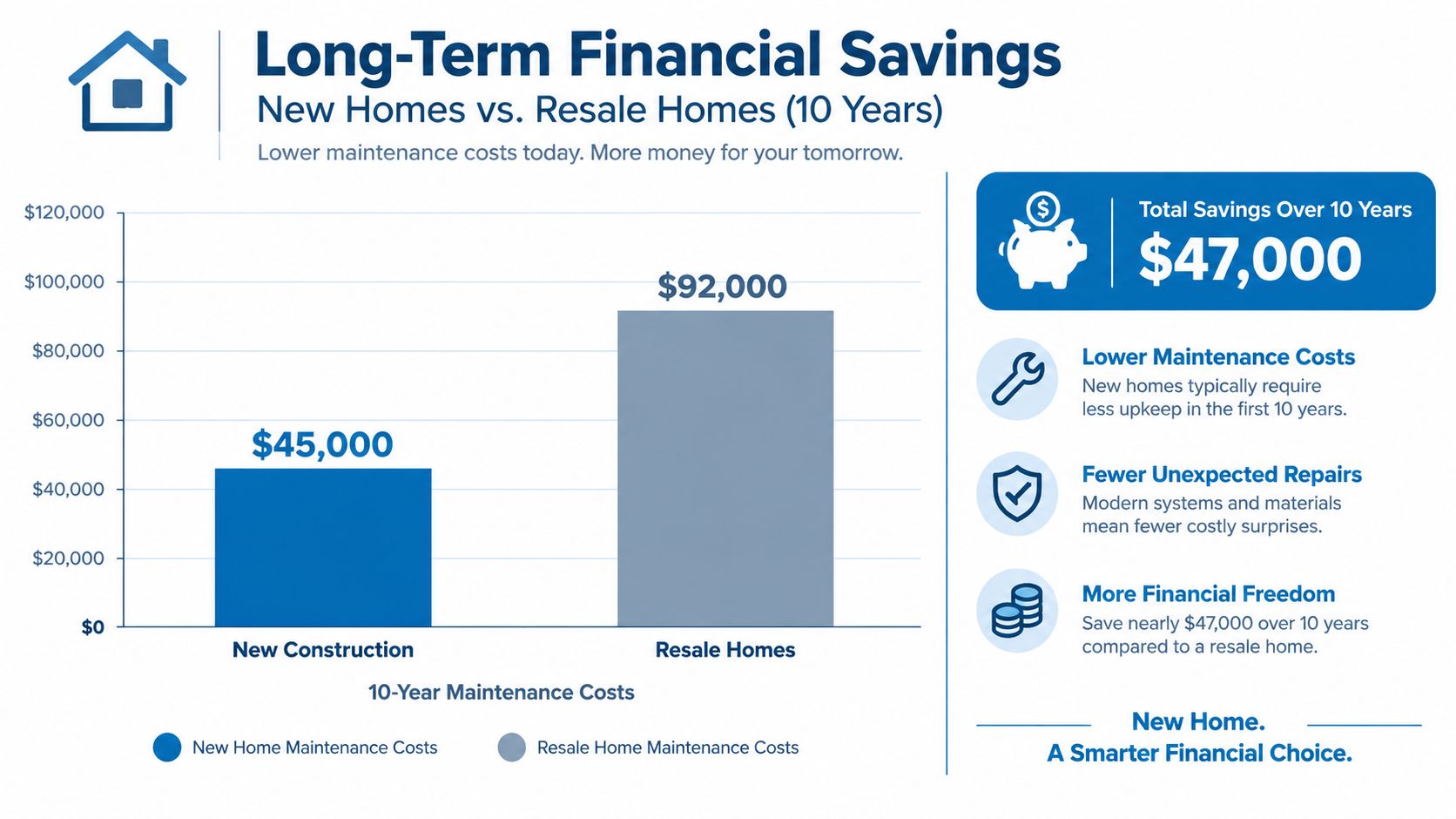
A new home works best financially when the buyer intends to keep it long enough to benefit from lower operating costs and reduced near-term replacement risk. If the purchase requires stretching the budget beyond a comfortable level, those savings may not justify the added financial pressure.
Customization and Modern Living Standards
The strongest lifestyle argument for new construction is control over how the space functions. A resale buyer may find a desirable location in Flagler County but accept a closed kitchen, limited storage, or a single small room that must serve as an office and guest space. A new community may offer floor plans designed around how households use rooms today.
In Palm Coast, a buyer comparing a popular open-concept plan with an older resale should look beyond finishes. The important questions include whether the office has a door, whether the kitchen connects naturally to the living area, whether the primary suite provides privacy, and whether storage works for daily life. A beautiful model home doesn't matter if the actual plan creates traffic problems or leaves no space for work equipment.
New build choices and resale compromises
| New construction option | Resale alternative |
|---|---|
| Select from available floor plans and finish packages | Adapt the existing layout or renovate |
| Add structural features before construction is complete | Work around existing walls, wiring, and plumbing |
| Choose a dedicated office or flexible room | Convert a bedroom, dining room, or bonus area |
| Start with new appliances and systems | Confirm the age and condition of existing systems |
Customization has limits. Builders may offer several layouts, but the buyer must work within approved plans, selection deadlines, and upgrade pricing. Model homes also display features that may not be included in the base price, so every buyer should request an itemized list of included features, lot premiums, and upgrades.
For relocating buyers, this clarity can be valuable. Someone moving to St. Augustine for work may prioritize a quiet office and a manageable commute. A downsizer may prefer a single-level layout, fewer stairs, and lower upkeep. A move-up buyer may need a second office or a larger gathering space without taking on a full renovation.
A useful comparison: Don't ask only whether the new home looks better. Ask whether it removes compromises that would affect your routine every day.
The tradeoff is that established resale neighborhoods often provide mature trees, completed amenities, and a stronger sense of place. New communities can offer clean streets and current designs, but buyers should visit at different times of day and assess traffic, nearby construction, and the route to schools, shopping, employment, and the coast.
Navigating Inspections and Builder Warranties
New construction should never be treated as inspection-free. The construction process creates several opportunities to identify problems before materials conceal the work, and a buyer's independent inspector can provide a perspective separate from the builder's team.
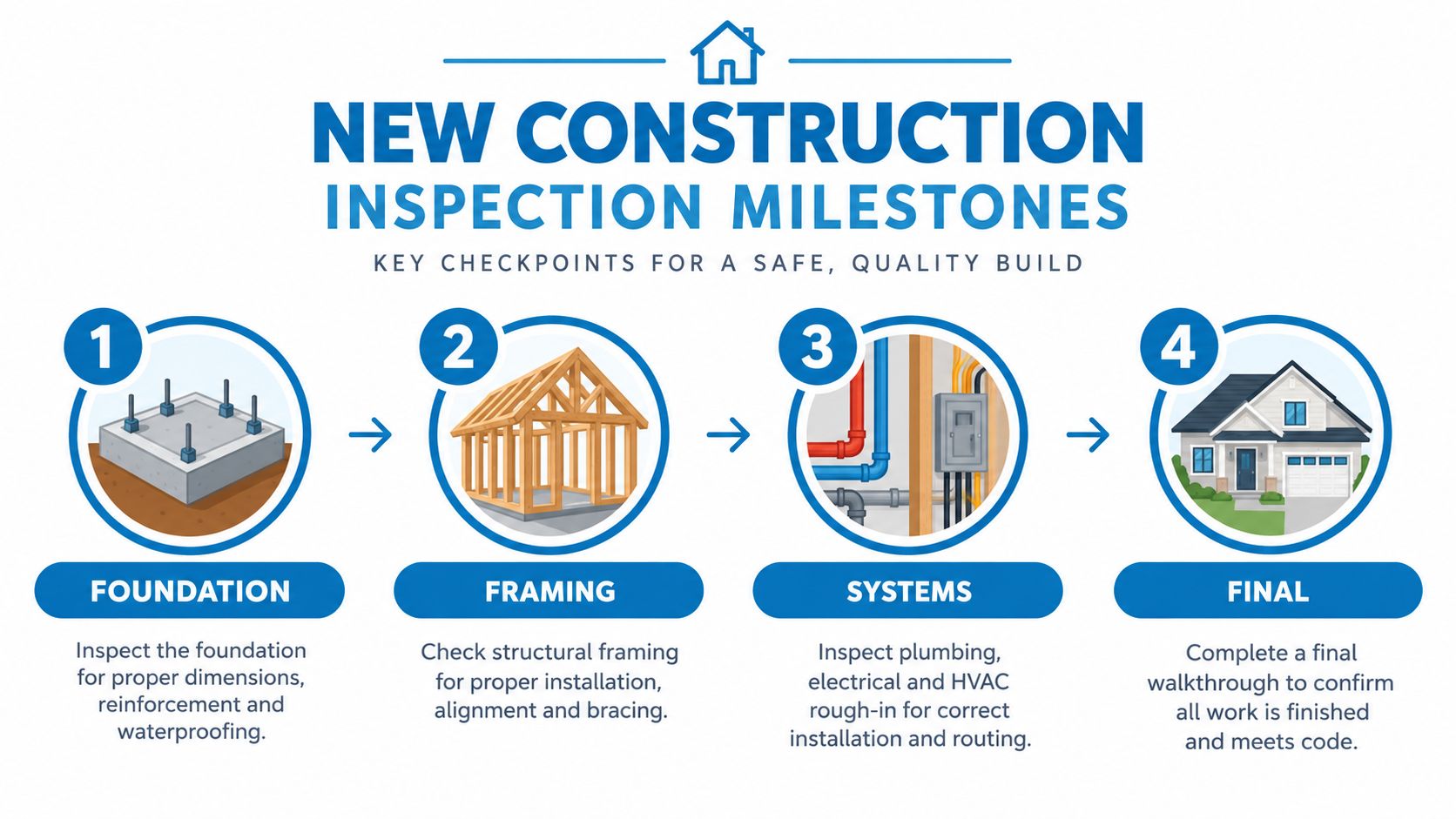
The inspection rhythm may include a check before the foundation is poured, another before drywall, a final inspection before closing, and an additional inspection about 11 months after closing to identify warranty issues. This sequence is outlined in Rocket Mortgage's guide to phase inspections.
Four checkpoints deserve attention
Foundation: Confirm that the site, foundation work, and visible drainage conditions match the plans and local requirements before the next stage covers the work.
Framing and rough-ins: Before drywall, inspect framing, plumbing, electrical, and HVAC rough-ins. Photograph accessible wiring and pipes so you have a reference for future maintenance.
Final systems check: Test HVAC operation, plumbing fixtures, electrical outlets, doors, windows, appliances, and garage components. A final inspection should produce a written punch list, not just a quick walk-through.
Warranty review: Schedule the later inspection before the builder's applicable warranty period ends. Read the warranty documents carefully, including exclusions, submission procedures, and responsibilities for maintenance.
The final walkthrough needs a checklist
Buyers should look for cracked tile, missing grout, paint flaws, unfinished trim, missing outlet covers, uneven flooring, nail pops, water stains, and doors or windows that don't operate properly. The NewHomeSource final inspection checklist also emphasizes checking plumbing, electrical outlets, and HVAC operation.
Exterior conditions matter just as much. Inspect the roof, flashing, gutters, downspouts, grading, and water flow around the home. The InterNACHI residential inspection standards specifically address drainage and recommend that downspouts direct water at least four feet away from the foundation.
A warranty is useful only when the buyer documents the issue and follows the required process. The U.S. Government Accountability Office has reported that a large share of defects in new homes were not corrected by builders, even though most buyers were at least somewhat satisfied. That is why independent inspections, dated photographs, written requests, and careful follow-up matter in Palm Coast and St. Augustine new construction.
Common Pitfalls and Hidden Costs to Watch
The phrase “new construction” can create a false sense of financial certainty. A new home may have lower near-term maintenance exposure, but the contract, appraisal, lot, location, and upgrade decisions can still create meaningful risk.
The most overlooked issue for first-time buyers is the appraisal gap. A builder contract may make the buyer responsible for the difference if the home appraises below the agreed purchase price. The lender typically bases its loan on the appraised value, so the buyer may need to bring additional cash to closing. The mechanics of this risk are explained in this guide to appraisal clauses in builder contracts.
The advertised price isn't the complete price
A base price may not include the lot location, selected finishes, structural changes, appliances, or other upgrades. Buyers should ask for a complete purchase worksheet and confirm which features appear in the model home but not in the standard package.
The broader market also complicates the idea that new homes are always more expensive per square foot. In Q2 2026, the median listing price for a newly built U.S. home was $450,256, while new homes sold for about $202 per square foot compared with $212 for existing homes nationally, according to CNBC's housing analysis.
That comparison doesn't settle the decision. Builders are responding by shrinking floor plans and moving farther from urban centers, which may mean a smaller lot, a longer drive, fewer mature trees, or less access to established services.
Location can outweigh the floor plan
A new community near Palm Coast may provide a modern layout but sit farther from the activities or employment centers that shape your week. In the St. Augustine area, a lower price per square foot may come with a longer commute or a neighborhood that is still developing.
Buyers should compare the complete lifestyle cost:
- Commute: Drive the route during the hours you expect to travel.
- Lot and privacy: Check setbacks, neighboring homes, drainage, and outdoor space.
- Community maturity: Ask what future phases, roads, or nearby development may be planned.
- Resale flexibility: Consider whether the floor plan and location will appeal to future buyers.
The new option may still be the right choice. It shouldn't win on price per square foot alone.
Making the Right Choice for Your Family
A new build makes sense when lower near-term maintenance risk, modern efficiency, and a functional layout matter more than mature landscaping or an established location. It can be especially appealing to a relocating household, a move-up buyer who wants space without remodeling, or a downsizer who values a simpler starting point.
A resale may be the better fit when location, lot size, neighborhood character, or proximity to established amenities carries more weight. An older home also deserves a complete inspection and a realistic repair budget, but its known condition can sometimes be easier to evaluate than a builder contract filled with allowances, upgrades, and appraisal provisions.
Before choosing in Palm Coast, St. Augustine, Flagler Estates, or another surrounding community, compare the total budget, expected time in the home, commute, floor plan, maintenance exposure, inspection plan, warranty terms, and cash available for a possible appraisal gap. A thoughtful comparison is more useful than assuming either new or resale is automatically superior.
Marilynn Wolfe, LLC offers local guidance on Palm Coast real estate, St. Augustine real estate, builder contracts, inspections, pricing strategy, and relocation decisions. If you're comparing a new community with a resale home or planning to sell before you buy, visit Marilynn Wolfe, LLC for practical insight and a personalized conversation.