
Thinking about buying a home with a septic system in Flagler County? It can be a smart purchase, as long as you know how the system works, how to check it before closing, and what upkeep looks like once the keys are yours.
Across Palm Coast, Bunnell, Flagler Estates and the rural edges of St. Johns County, you’ll find homes on city sewer and homes on their own septic tanks, sometimes only a few miles apart. Buyers moving from places with sewer everywhere often don’t think to ask until the inspection period is already running.
What changes the answer is the property itself: the age of the system, the lot, whether the home also uses a private well, and how much time your contract gives you to check it all.
Start with these questions:
- Is this home on septic or sewer? Confirm it in writing before you make an offer, not after.
- When was the system last pumped and inspected? Ask the seller for receipts and any permit records.
- Does the home also have a private well? If it does, plan a water test alongside the septic inspection.
These six steps walk you from the first showing to life after closing, each with a local decision point and a practical test you can run.
1. Confirm How the Home Handles Wastewater
A listing can say a lot about the kitchen and very little about what happens when you flush. That one detail shapes your inspection plan and your long-term costs.
For homes inside city limits, the City of Palm Coast Utility is the place to confirm which services reach a specific address. In unincorporated Flagler County and rural St. Johns County, the seller’s records and the county health department are your best sources.
Say you’re touring a home on a larger lot in Flagler Estates and another in a Palm Coast section closer to town. One may be on septic and a well, the other on city water and sewer. Comparing them fairly means knowing that up front.
Ask before you write the offer
Your agent can request this from the listing side early. If you’re still narrowing areas, start with Flagler Estates homes and land or Palm Coast homes and neighborhoods.
- Check the listing details. Look for the sewer and water fields, then verify them, since listing fields can be wrong.
- Ask for the seller’s records. Pumping receipts, repair invoices and permits tell you how the system has been cared for.
- Find the tank and drainfield. Knowing where they sit matters for a future pool, shed or driveway.
Your test: For every home on your short list, write down “septic or sewer” and “well or city water” before you schedule a second showing.
2. Understand How a Septic System Works
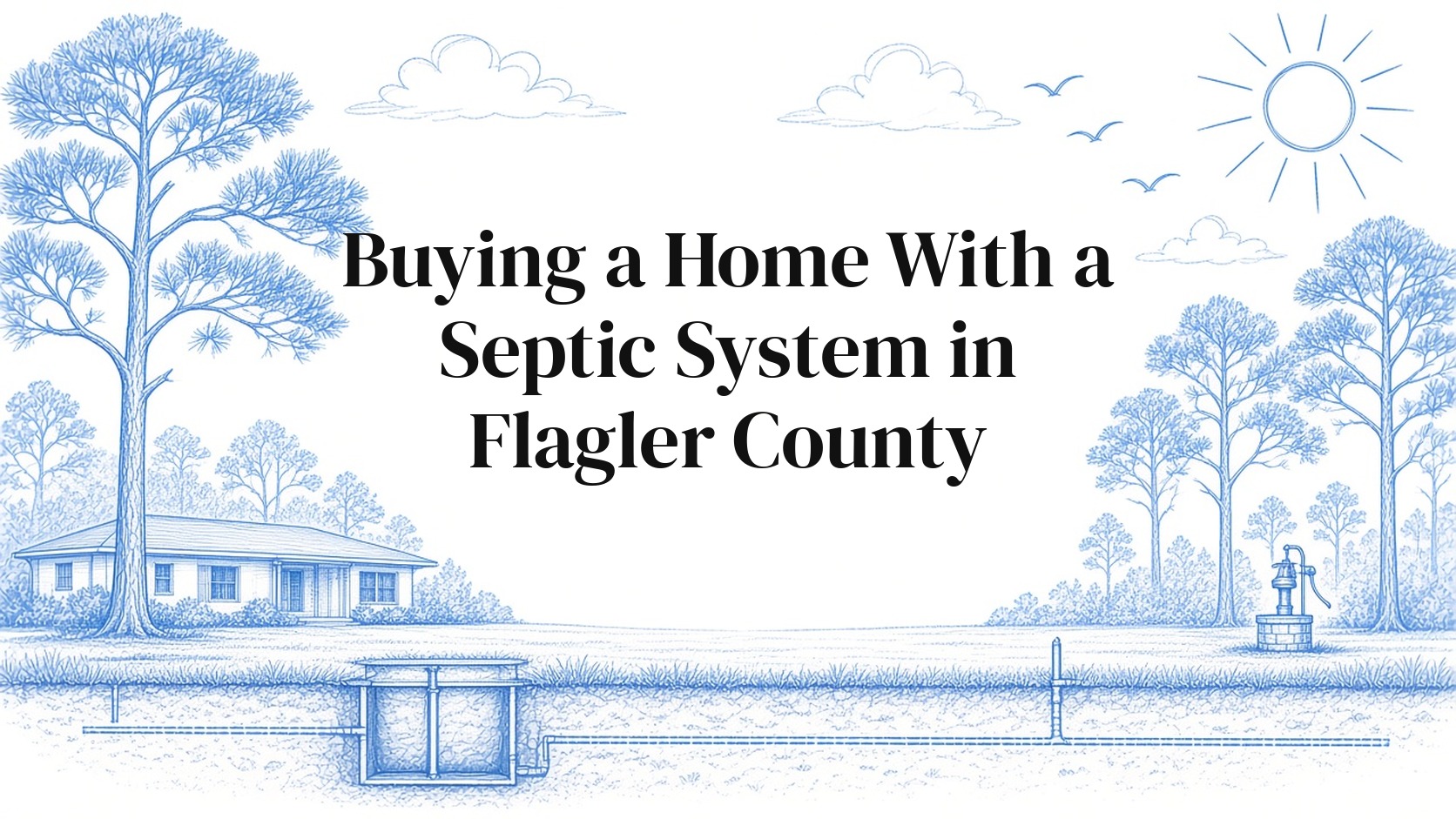
A septic system is a small treatment plant in your yard. Wastewater flows into a buried tank, solids settle, and the liquid moves out to a drainfield where the soil finishes the job.
The EPA’s septic system overview explains the parts and why the soil matters. In Florida, the Florida Department of Environmental Protection’s Onsite Sewage Program notes that permitting and inspection of septic systems is handled by the Environmental Health section of the Florida Department of Health in each county.
Say you’re relocating from a city where sewer was a given. The biggest shift is that you are now responsible for the system, and good habits keep it working.
Learn the three parts before the inspection
- The tank. It holds wastewater long enough for solids to settle and needs pumping on a schedule.
- The drainfield. It spreads treated water into the soil and should stay clear of heavy traffic, structures and deep roots.
- Any pumps or alarms. Some systems have electrical parts that need more frequent checks.
Septic rule: A system you understand is a system you can budget for.
Your test: Ask the seller or inspector to show you where the tank lid and drainfield are on the property.
3. Schedule a Separate Septic Inspection
A general home inspection looks at the house. It often does not include a full septic evaluation, so you’ll usually book that separately.
Say you’re buying a 1990s home in Palm Coast on septic. A septic professional can open the tank, check the levels and look for signs of trouble in the drainfield, which a walk-through can’t do.
Fit it inside your inspection period
Septic companies can book up, so call as soon as your offer is accepted. Our guide to the due diligence period explains how that window works.
- Book early. Schedule the septic inspection the same day you schedule the home inspection.
- Ask what’s included. Find out whether the tank will be pumped and whether the drainfield is evaluated.
- Get it in writing. A written report helps if you need to negotiate a repair or credit.
Your test: Before you sign, count the days in your inspection period and confirm a septic company can come within them.
4. Test the Water If the Home Has a Well
Many rural homes pair a septic system with a private well. That means the water you drink is your responsibility too.
The EPA’s private well guidance recommends testing a private well every year for total coliform bacteria, nitrates, total dissolved solids and pH. The county health department can tell you what else is worth testing for locally.
Say you’re buying acreage near Bunnell or in Flagler Estates. A water test during your inspection period gives you a baseline and peace of mind before closing.
Check the well and the septic together
- Order a water test. Use a certified lab and follow its sampling instructions.
- Look at the layout. Ask how far the well sits from the septic tank and drainfield.
- Ask about the equipment. Find out the age of the well pump and any water treatment system.
Your test: If the listing mentions a well, add a water test to your inspection list the day your offer is accepted.
5. Plan for Upkeep After Closing
Owning a septic system is mostly about steady, simple habits. The upkeep is predictable once you know the schedule.
The EPA’s septic care guide says the average household system should be inspected at least every three years by a septic professional, and household tanks are typically pumped every three to five years. Systems with pumps or other mechanical parts need checks more often.
Say you’re planning a pool or a detached garage in Palm Coast. The EPA also advises against building on the drainfield without checking with a local designer or permitting authority, so map it before you design.
Build a simple care routine
- Keep a service log. Note every pumping and inspection date so you’re never guessing.
- Watch what goes down the drain. Grease, wipes and harsh chemicals are hard on any system.
- Protect the drainfield. Keep cars, structures and deep-rooted trees off it.
Your test: After closing, put the next inspection date on your calendar before you unpack the last box.
How Septic, Sewer and Well Checks Compare in Flagler County
| Check | What It Tells You | When to Do It | Who Usually Does It |
|---|---|---|---|
| Sewer or septic confirmation | How the home handles wastewater | Before you make an offer | Your agent, the seller, the city utility |
| Septic inspection | Tank condition, levels and drainfield signs | During the inspection period | A septic service professional |
| Private well water test | Bacteria, nitrates and other basics | During the inspection period, then yearly | A certified lab |
| General home inspection | The house, roof and major systems | During the inspection period | A licensed home inspector |
Frequently Asked Questions About Buying a Home With a Septic System
Is it a bad idea to buy a house with a septic system?
No. Many good homes in Flagler and St. Johns counties use septic. The key is a separate septic inspection before closing and steady upkeep after.
Who handles septic permits in Florida?
According to the Florida Department of Environmental Protection, permitting and inspection of septic systems is handled by the Environmental Health section of the Florida Department of Health in each county.
How often does a septic tank need pumping?
The EPA says household tanks are typically pumped every three to five years and inspected at least every three years. Your inspector can suggest a schedule for the specific system.
Should I test the well water too?
Yes, if the home has a private well. The EPA recommends yearly testing for total coliform bacteria, nitrates, total dissolved solids and pH.
Your Next Step Toward a Confident Purchase
A septic system shouldn’t scare you away from the right home. Ask early, inspect thoroughly and keep up with care, and it simply becomes part of owning a home in Northeast Florida.
Get guidance before making commitments
- Your short list of homes. We’ll confirm sewer, septic and well details for each one.
- Your timeline. It helps plan an inspection period that leaves room for every check.
- Your plans for the property. A pool, workshop or addition can depend on where the drainfield sits.
Marilynn Wolfe is a real estate professional with LPT Realty, LLC serving Palm Coast, St. Augustine, Flagler County and nearby Northeast Florida communities. To talk through a home you’re considering, visit the Buyers page, call 904-429-2829, or email marilynnwolfe.realtor@gmail.com. Selling first? Start with a free comparative market analysis of your current home.
Buying in Flagler or St. Johns County is easier with someone who asks the right questions early. See what clients say on the Testimonials page, or visit Marilynn Wolfe LLC | LPT Realty.