
Buyers in Florida should budget roughly 2% to 5% of the purchase price for closing costs, but Florida-specific taxes and Northeast Florida insurance realities can push the cash needed to close higher than that headline range. Sellers face a different calculation: what matters is the net amount left after the mortgage payoff, taxes, fees, and any negotiated credits.
You may be comparing a Palm Coast home with another property at the same price, or planning to sell in St. Augustine and use the proceeds to buy elsewhere. The sale price alone won't tell you how much cash you'll need or what you'll walk away with. Loan size, insurance, tax timing, title charges, and contract terms all affect the settlement statement.
For buyers, the useful question is not just “What percentage are closing costs?” It's “How much verified cash must I have available, and which parts of that amount are negotiable, refundable, recurring, or location-dependent?” For sellers, it's “After settlement, what will I net?”
What Homeowners Need to Know Before They Sign
A buyer can agree on a purchase price, make a down-payment plan, and still be short at closing if they haven't accounted for prepaid insurance, tax reserves, and Florida-specific charges. A seller can receive an offer at a price that looks right for Palm Coast real estate, then discover that mortgage payoff, prorated taxes, and credits leave less than expected. Closing costs aren't one flat percentage that tells both sides what they'll pay.
Fannie Mae's consumer guidance says closing costs typically range from 2% to 5% of the mortgage amount, while its analysis of about 1.1 million conventional home-purchase loans acquired in 2020 found state median costs of $4,316 to $10,416, or 1.17% to 4.06% of the sale price. The figures use different denominators, and actual amounts vary by location and transaction. That's why a down-payment estimate or a broad national rule can't substitute for a local, itemized calculation. Fannie Mae's closing-cost guidance offers a useful starting point, not a final cash-to-close figure.
Start with the settlement statement
For a buyer, separate loan charges, title and settlement expenses, taxes, prepaids, and escrow deposits. For a seller, start with the expected sale proceeds, then subtract the mortgage payoff and costs allocated to the seller under the contract. Two homes with the same sale price can produce very different cash positions because the owners have different loan balances, tax timing, insurance needs, and negotiated credits.
Practical rule: Ask for the complete dollar amount needed at closing, not just a percentage or a down-payment figure.
That means looking at the buyer's Loan Estimate and the seller's net sheet together with the contract terms. The sections below walk through the buyer-side charges, Florida taxes, payment allocations, seller proceeds, and the timing of final disclosures. If you're selling, focus especially on the seller settlement and tax sections. If you're buying in Palm Coast, St. Augustine, Flagler Estates, or a surrounding community, start with the buyer costs and cash-to-close discussion.
What Buyers Pay at Closing
Your lender quotes a rate for a St. Augustine purchase, but the closing statement includes more than the lender's bill. Appraisal charges, title work, prepaid interest, and insurance reserves all affect the dollars you must bring. Compare those amounts separately before deciding which loan offer costs less.
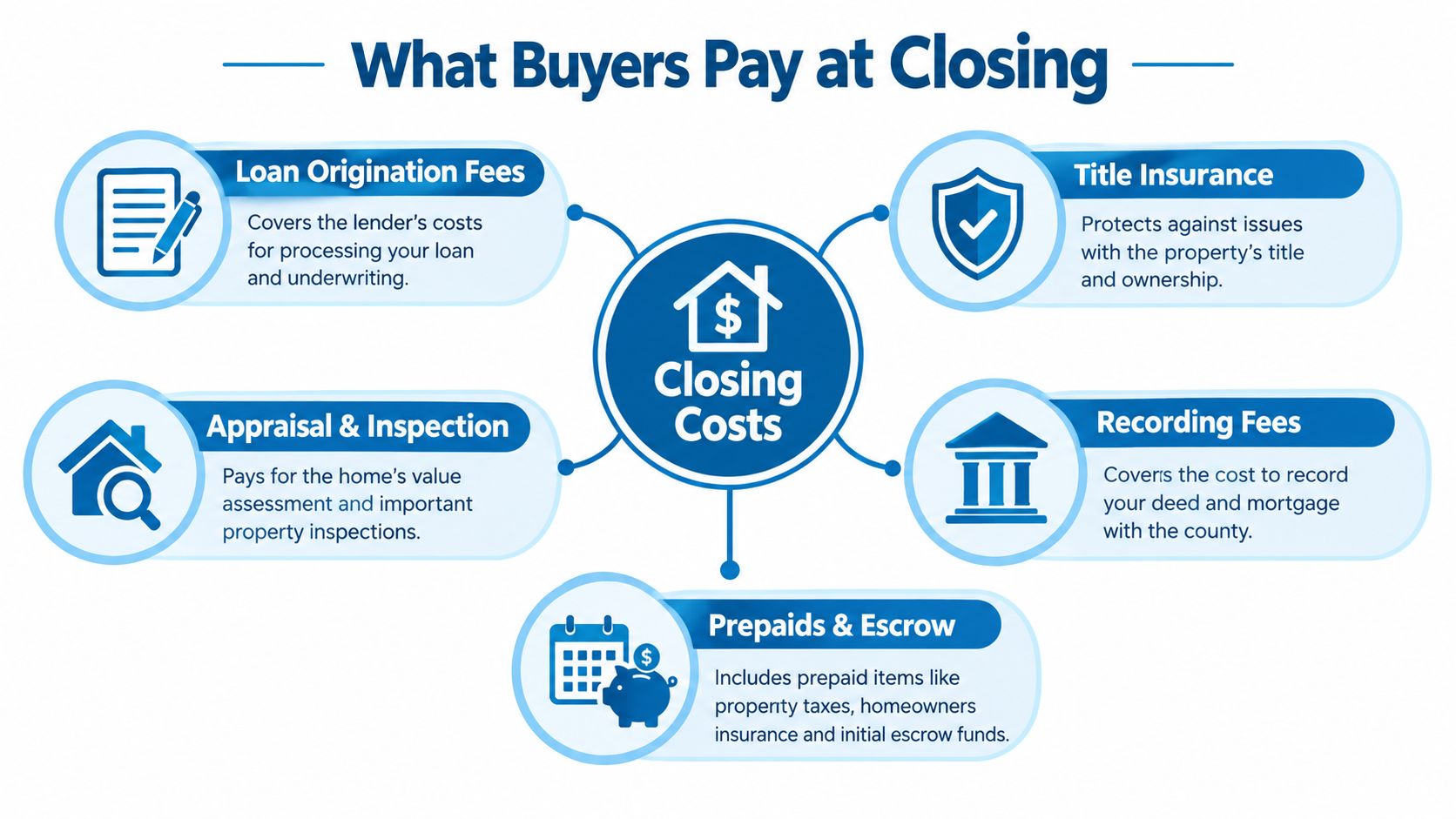
Three types of charges to separate
Lender costs: Review origination, underwriting, credit-report, and appraisal charges. Ask the lender to identify services you can shop for. Compare points alongside the interest rate: paying more upfront for a lower rate changes both your closing bill and the cost of keeping the loan.
Title and settlement costs: Request an itemized quote for title search, title insurance, settlement services, and recording. Check each charge against the contract's payment allocations. In Northeast Florida, confirm who pays each item with your settlement agent rather than assuming the buyer covers every title-related expense.
Prepaids and escrow: Separate prepaid interest and insurance premiums from deposits held for future tax and insurance bills. These dollars still leave your account at closing, even though they do not all pay for closing-day services. For coastal properties, get insurance quotes that address wind and any flood coverage before relying on an escrow estimate.
Keep Florida documentary stamp and intangible taxes visible as separate line items.
Use Fannie Mae's analysis and calculator as an initial budgeting tool, then replace estimates with transaction-specific quotes. The Freddie Mac guide to mortgage costs explains disclosure categories and shoppable services. Compare Loan Estimates line by line, and ask lenders to explain differences in fees and reserve assumptions before you choose.
Florida-Specific Closing Costs Buyers Often Miss
Florida buyers should separate charges based on the property's sale price from charges based on the mortgage amount. That distinction matters in Palm Coast, St. Augustine, and elsewhere in Flagler and St. Johns counties. A cash buyer won't have a mortgage-based intangible tax, while a financed buyer may owe it in addition to deed documentary stamp tax.
In most Florida counties, including Flagler and St. Johns, documentary stamp tax on a deed is $0.70 for every $100, or fraction of $100, of consideration. Consideration generally reflects the amount paid or agreed to be paid, not just the buyer's down payment. A $400,000 sale produces $2,800 in deed documentary stamp tax before other transaction expenses. The Florida Department of Revenue's deed tax guidance identifies Miami-Dade County as an exception to the general rate structure.
The mortgage-based charge
Florida's nonrecurring intangible tax applies to an obligation secured by Florida real property. The rate is 2 mills, or 0.002 of the secured debt. For example, financing $320,000 means an intangible tax of $640, calculated as $320,000 × 0.002. The Florida Department of Revenue's intangible tax guidance explains the charge.
| Florida-specific closing-cost example | Purchase price | Documentary stamp tax on deed | Mortgage amount | Intangible tax | Combined Florida-specific fees |
|---|---|---|---|---|---|
| Financed purchase | $400,000 | $2,800 | $320,000 | $640 | $3,440 |
| Cash purchase | $400,000 | $2,800 | $0 | $0 | $2,800 |
This example isolates the two Florida taxes; it doesn't include lender, title, recording, prepaid, or escrow charges. The taxes are predictable, but the contract determines how the deed tax is allocated between buyer and seller. Confirm the county, contract terms, and itemized estimate rather than assuming every Florida closing uses the same arrangement.
Who Pays Each Closing Fee
Before you accept an offer in Northeast Florida, ask the settlement agent to show how its terms affect both sides of the closing statement. Local conventions influence who pays title and transfer-related expenses, but the signed purchase contract controls the allocation. A familiar fee can become your responsibility when the parties negotiate different terms.
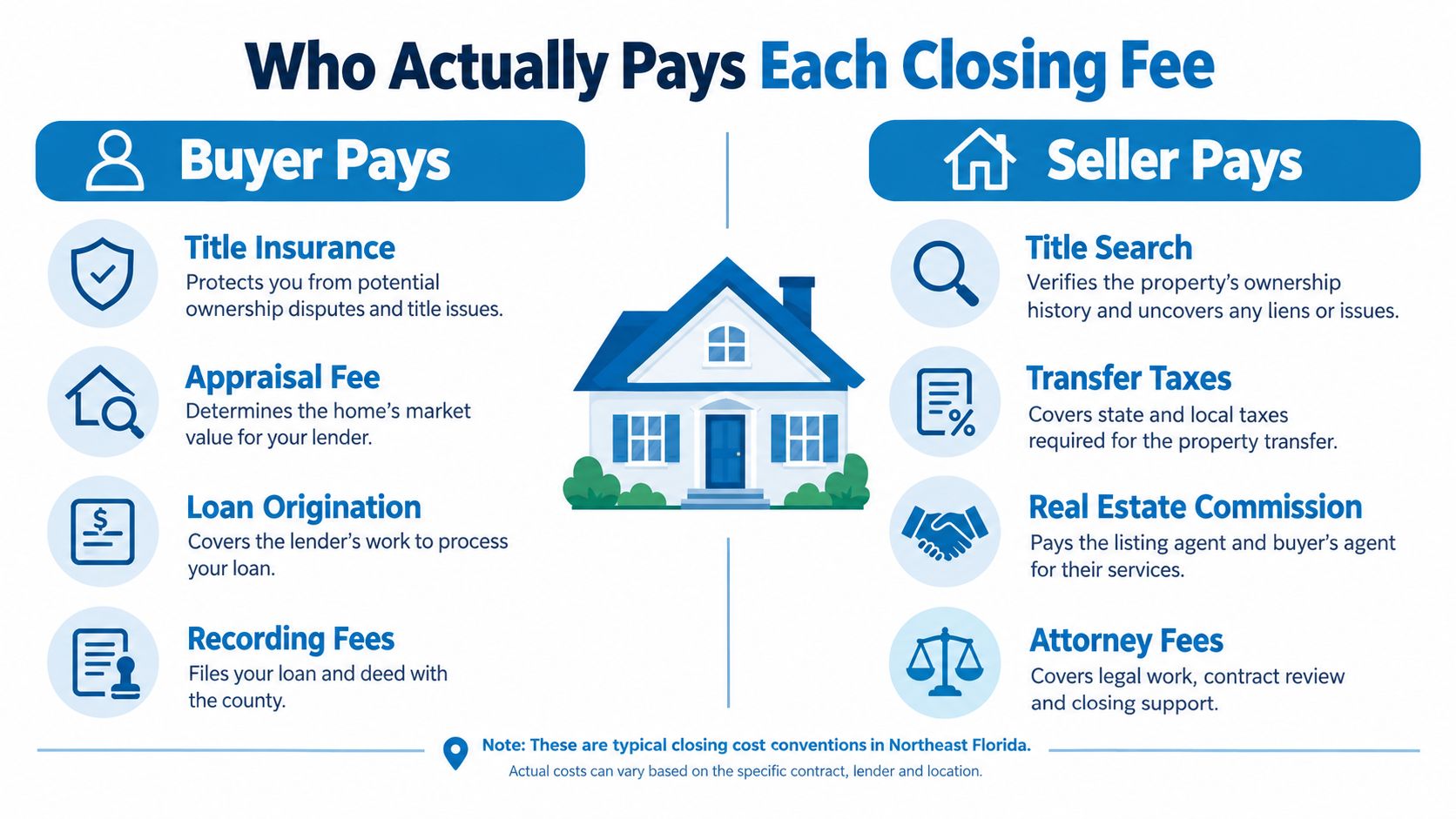
Buyers commonly pay financing charges, including appraisal and loan origination. Check the contract for responsibility for title insurance, title work, recording fees, and transfer taxes. Property taxes are typically prorated for each party's ownership period through closing, and association properties may carry HOA or condominium estoppel fees. Ask the settlement agent to identify the payer for each line before you rely on the estimate.
The Freddie Mac explanation of closing-cost categories provides background on the charges; your contract and itemized settlement estimate establish how they fit into this transaction.
Credits can change the cash split
A seller credit can reduce the buyer's cash needed at closing while leaving the sale price unchanged. Repair credits and contributions toward buyer closing costs can be negotiated, including on new construction. The expense still exists. The lender and contract may restrict how a credit can be applied, so confirm its permitted use before counting it toward your closing funds.
Compare offers using price, title allocation, credits, and repair terms together. Ask for a side-by-side estimate showing the buyer's remaining cash requirement and the seller's net proceeds under each offer.
Judge the credit by what it changes in dollars. For buyers, that means the amount still due after permitted credits are applied. For sellers, it means the proceeds left after the agreed contribution. A headline price or flat closing-cost percentage cannot settle that comparison.
What Sellers Should Plan For at Settlement
A seller's sale price is not the amount they take home. To estimate proceeds, start with the contract price and subtract the mortgage payoff, commission agreed in the listing and sale terms, seller-paid title or settlement charges, deed documentary stamp tax if allocated to the seller, prorated property taxes, association fees, repair credits, and any contribution toward the buyer's costs.
The final number can vary sharply between two Palm Coast homes with the same sale price. One owner may have a smaller mortgage payoff and no negotiated credits; another may owe more on the loan, pay an HOA estoppel fee, or have agreed to address repairs. For an absentee owner or a downsizer coordinating a purchase, those differences can determine how much money is available for the next step.
Keep the tax records separate from the cash calculation
Cash proceeds and taxable gain are related but not interchangeable. The mortgage payoff affects the cash distributed at settlement; tax calculations use a different framework. IRS guidance says selling expenses reduce the amount realized, while certain costs connected with acquiring the property may be included in adjusted basis. Examples include legal fees for title or contract preparation, recording and survey fees, transfer or stamp taxes, and owner's title insurance. IRS Publication 523 outlines the treatment.
Keep the purchase closing statement, records of capital improvements, sale settlement statement, and documents supporting selling expenses. Don't assume every charge on the settlement statement is deductible or belongs in basis. If the home has been rented, depreciated, or has unusual financing, ask a tax professional to review the details.
A useful seller net sheet is a decision tool, not a promise of final proceeds. Update it when the payoff, credits, prorations, or contract terms change.
When Each Cost Becomes Official
Mortgage costs move from estimates to final disclosures over the course of the transaction. The Loan Estimate is an early, standardized view of the proposed loan and expected costs. The Closing Disclosure provides the final loan terms and settlement figures, giving buyers a formal opportunity to check the numbers before closing.
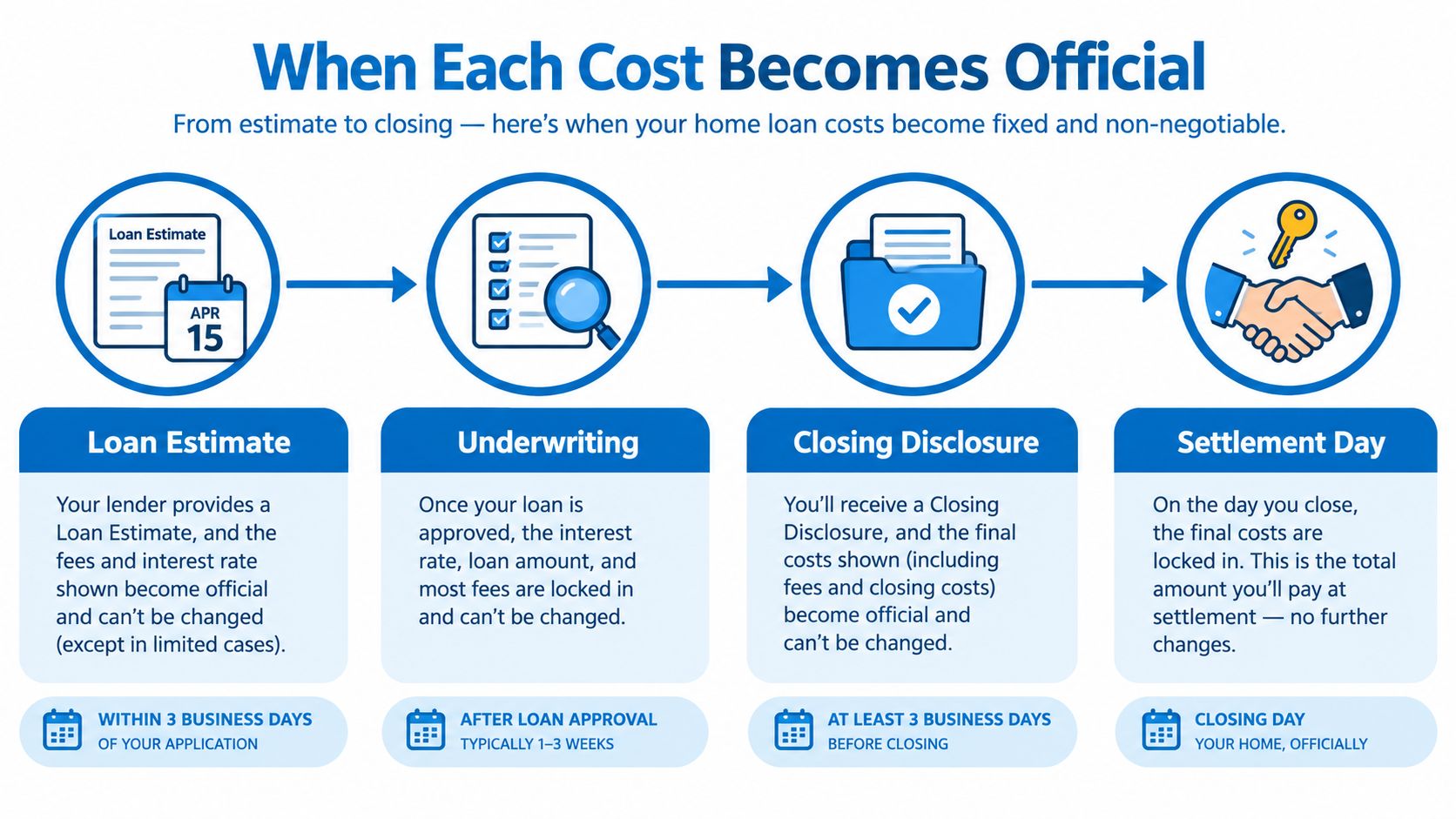
The Consumer Financial Protection Bureau's Loan Estimate guidance says a lender must provide a three-page Loan Estimate within three business days after receiving a mortgage application. The borrower must receive a five-page Closing Disclosure at least three business days before closing.
Use the review period actively
When the Closing Disclosure arrives, compare it with the earlier estimate and the purchase contract. Check the final loan terms, projected payments, closing costs, and the parties who pay and receive money at settlement. Confirm credits, title and recording charges, taxes, prepaids, and escrow deposits. Ask for an explanation if a number differs from what you expected.
The review window isn't a reason to wait until the last moment to discuss costs. Raise questions as soon as you see the Loan Estimate, and update your budget if insurance, property details, or contract terms change. A clear explanation before signing is better than discovering a discrepancy while arranging funds for settlement.
The standardized forms also help borrowers compare loan costs separately from other expenses. That can reveal whether a lower advertised rate comes with points or origination charges that change the total. Keep the final disclosure with your closing records.
The Cash-to-Close Gap Most Buyers Miss
A buyer can budget for lender, title, and recording charges yet still arrive short if they ignore prepaids and escrow reserves. Those amounts may not be fees for a closing service, but they count toward the funds the buyer must bring. Cash-to-close is the number to plan around.
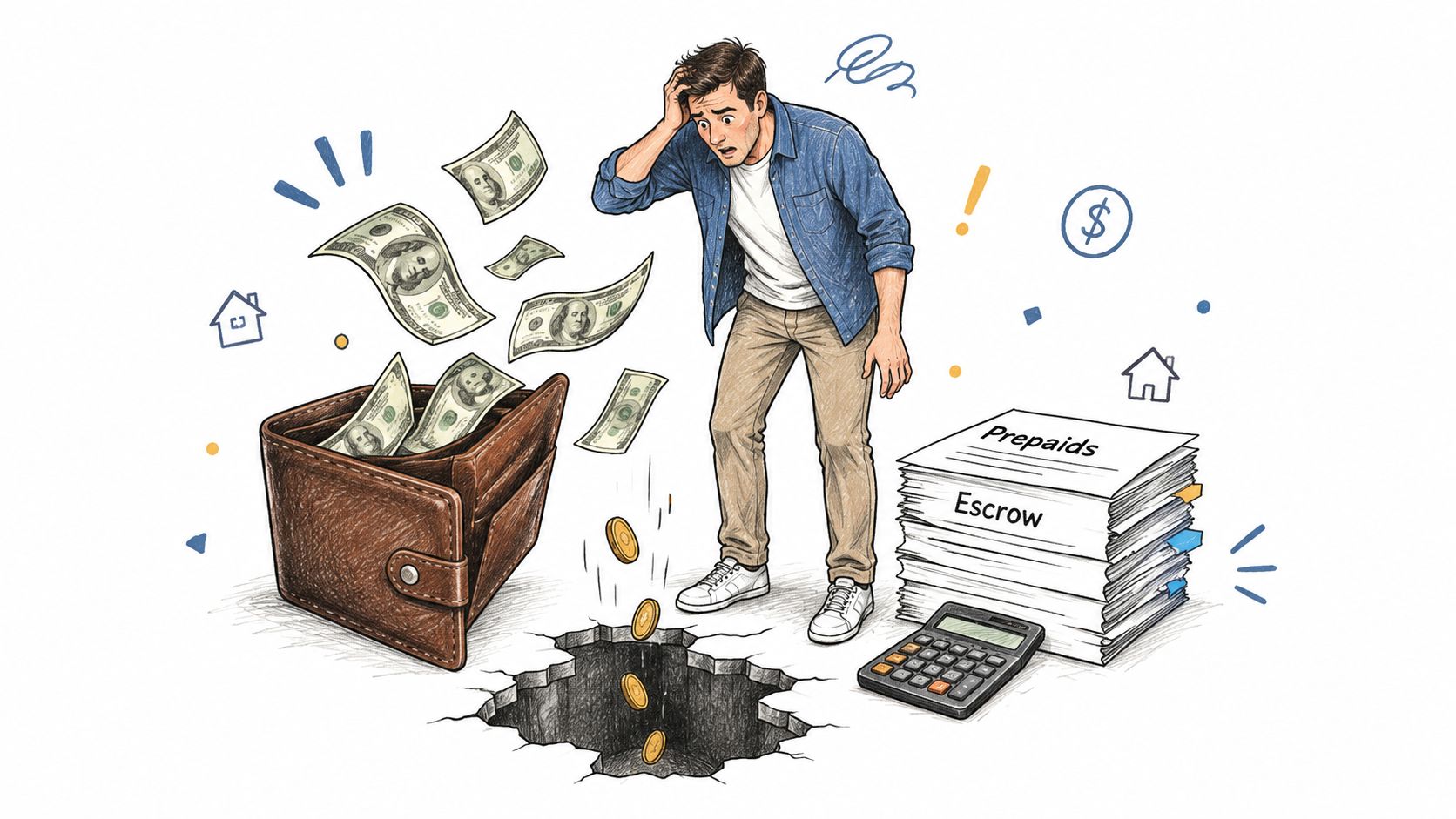
In Northeast Florida, homeowners insurance can affect that figure. Coastal exposure, flood-zone status, wind-mitigation requirements, and insurance availability may affect the premium and the reserves a lender requires. Buyers relocating to Palm Coast or St. Augustine should confirm coverage requirements early, especially when a property's age, location, or construction calls for additional review. Inspections, survey costs, and planned repairs can also require cash, even when they aren't technically closing costs.
Ask what each cash item represents
Separate the estimate into four practical groups: one-time transaction charges, prepaid expenses, escrow funding, and optional post-closing costs. Ask which items are negotiable, which may be refundable, which recur, and which depend on the property or closing date. A buyer comparing new construction should also check whether a builder incentive offsets costs they would otherwise pay, and whether the incentive affects the loan terms.
Affordability makes this distinction more important, not less. Harvard's 2025 housing report found that buyers needed income of at least $100,000 to afford the median-priced home in 53% of U.S. metropolitan areas, compared with 11% in 2021. The Harvard Joint Center for Housing Studies' 2025 report provides that national context; your actual cash requirement still needs a property-specific estimate.
Practical Ways to Estimate and Reduce Closing Costs
Get a location-specific Loan Estimate from your lender and ask for Florida taxes, title charges, prepaids, and escrow funding to be itemized. Compare lender offers using the standardized categories, not just the interest rate. If you're buying new construction, compare the builder's incentives and any rate buy-down with the full loan and cash-to-close figures.
Sellers should request an updated net sheet that includes the mortgage payoff, prorated taxes, association fees, credits, and the contract's allocation of title and transfer costs. Review the settlement statement before signing, and ask the closing agent to explain any unfamiliar line. For a sale tied to a purchase or relocation, update both estimates when terms change so you're not relying on an outdated proceeds figure.
In Palm Coast, St. Augustine, and surrounding Flagler County communities, the best estimate is the one built from the actual contract, property, financing, and insurance details. Don't plan from a generic percentage when you can verify the dollars.
Marilynn Wolfe, LLC helps buyers and homeowners in Palm Coast, St. Augustine, and Flagler County understand pricing, local market conditions, and the numbers that shape a sale or purchase. If you'd like a personalized closing-cost review or a current home-value perspective before making your next move, connect through Marilynn Wolfe, LLC.