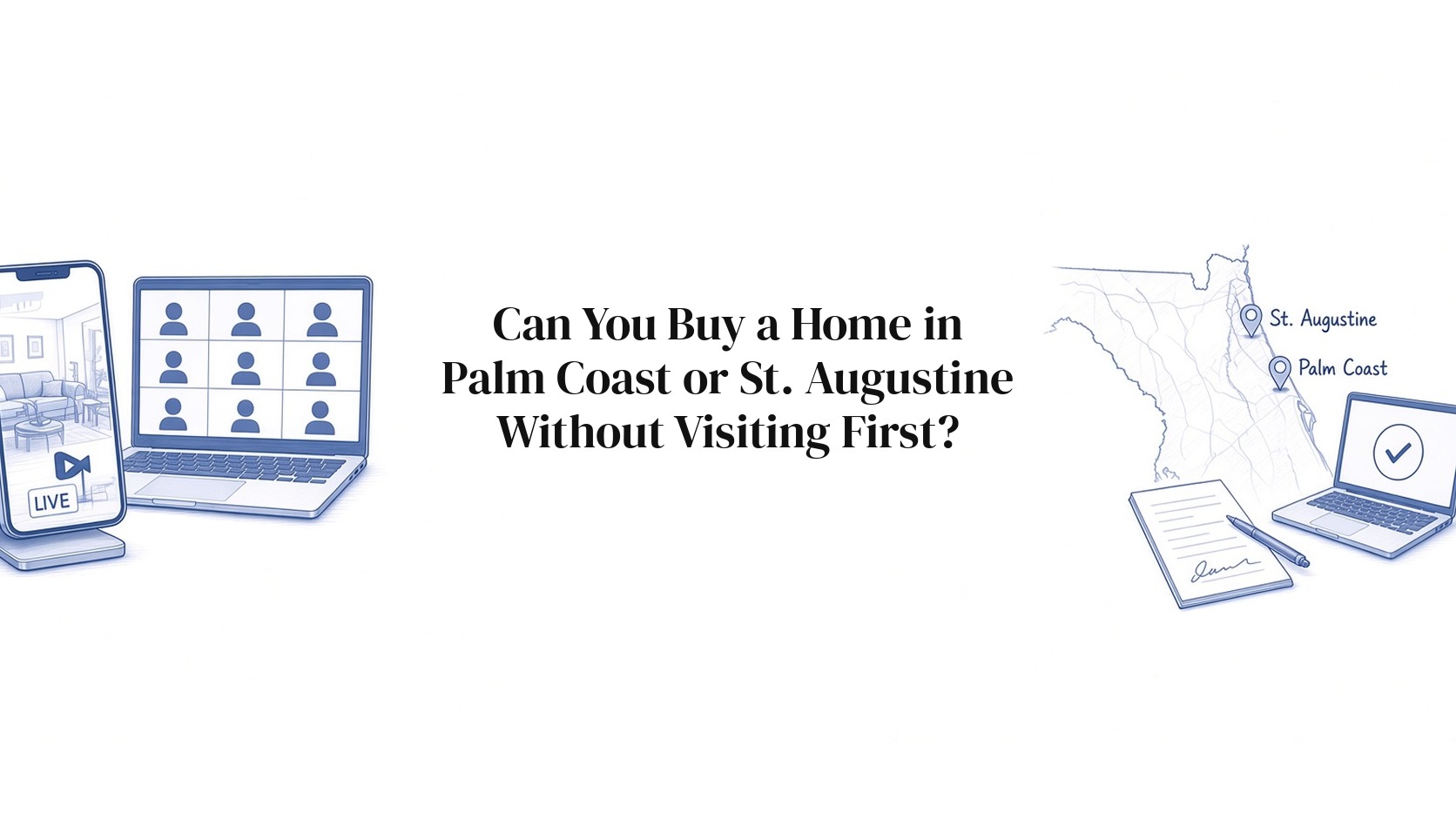
Yes, you can. Plenty of people buy a home in Palm Coast, Flagler Beach, St. Augustine or St. Johns County before they ever stand in the kitchen. Florida law allows remote online notarization, so a closing can often be signed from wherever you live, and everything before that (tours, inspections, negotiating) can be handled with live video and a local team you trust. The key is not skipping steps just because you’re far away. You replace your own eyes with better information.
I’m Marilynn Wolfe, a REALTOR® with LPT Realty, LLC, and I walk a lot of homes on a phone screen for buyers who are hundreds of miles away. Here’s how I’d do it if it were my money.
Step 1: Narrow the area before you narrow the house
From far away, every listing photo looks good. The area is the part photos can’t show you.
In Palm Coast, that starts with the city’s lettered “sections.” Each one has its own feel, street layout and mix of homes. Some areas sit along the city’s canal system, some are on golf courses, and some are wooded and quiet. My Palm Coast sections guide is a good first read.
If you’re torn between counties, my St. Augustine vs. Palm Coast comparison lays out how the two places differ, from St. Augustine’s historic district rules to Palm Coast’s planned-city layout.
What helps me most is a short list from you: your must-haves, your deal-breakers, and a rough idea of how you spend a normal week. I’ll steer you toward places that fit the house you want and away from the ones that won’t.
Step 2: Ask for a live video tour, not just a recorded one
Recorded walkthroughs are nice. A live tour is better, because you get to steer.
On a live video call, I can:
- Open closets, cabinets and the electrical panel
- Point the camera at the ceiling, the windows and the roof line
- Turn on faucets and the AC so you can hear them run
- Walk the yard, the drainage swale and the view from the back patio
- Drive the street and the neighborhood so you see what’s next door
Ask anything during the call, even if it feels picky. “What’s that stain?” and “How loud is the road?” are exactly the questions a remote buyer should ask. If something looks off, we stop and look closer.
Step 3: Check the records you can see from anywhere
Some of the most useful homework can be done from your couch, using public sources:
- Property records. The Flagler County Property Appraiser and the St. Johns County Property Appraiser both have public websites where you can look up a parcel, see past sales and check the current exemptions on the property.
- Flood zone. FEMA’s Flood Map Service Center is the official public source for flood maps. The City of Palm Coast also links to flood map tools on its Flood Preparedness page.
- Flood insurance discount. Palm Coast takes part in FEMA’s Community Rating System and holds a Class 4 rating, which the City says translates to a 30% flood insurance discount for policyholders in the Special Flood Hazard Area and 10% for those outside it. That’s worth knowing when you’re comparing homes.
- Water and septic. Not every home in our area is on city sewer. If the listing says septic, read my guide on buying a home with a septic system before you write an offer.
You can get insurance quotes early too, before you’re under contract. Florida insurance is a big part of the monthly cost, and a quote can change your mind about a house. My page on Florida flood insurance requirements explains the basics.
Step 4: Write your offer with room to protect yourself
Buying remotely doesn’t mean buying blind, and your contract is where you build in that protection. Talk with me about:
- The inspection period. Give yourself enough days to get inspections done and read the reports.
- Financing and appraisal terms. If you’re getting a loan, your lender will tell you what they need and when.
- Insurance. Make sure you can actually get coverage on this home at a price that works.
Every contract is different, and I’ll walk you through the one you’re signing line by line. For legal questions about your contract or how you’ll hold title, talk with a Florida real estate attorney.
Step 5: Let the inspectors be your eyes
This is the step remote buyers should never cut. A general home inspection is the starting point. Depending on the home, you may also want:
- A wind mitigation inspection, which can affect insurance (more on that in my wind mitigation guide)
- A four-point inspection, which insurers often ask for on older homes
- A septic inspection, if the home has one
- A pool or seawall check, if those come with the property
You don’t have to be there. Many inspectors will do a call with you when they finish to walk you through what they found, and you’ll get a written report with photos. I’m typically present at my buyers’ inspections when possible, and I’ll call you from the house if there’s anything you should see.
If the reports turn up problems, we talk about your options: ask for repairs, ask for a credit, or walk away within your inspection period if the contract allows it.
Step 6: Close from where you live
Florida has allowed remote online notarization since January 1, 2020, when House Bill 409 took effect. Under Florida law, an online notary who is physically in Florida can notarize for a signer who is somewhere else, using a recorded two-way audio and video session that checks the signer’s identity.
In real life, buyers usually close in one of these ways:
- Remote online closing. You sign on a video call with a Florida online notary.
- Mail-away closing. The title company sends you documents to sign in front of a notary where you live, and you send them back.
- In person. Some buyers fly in for the final walk-through and sign at the title office.
Which option you can use depends on your title company and, if you’re financing, your lender. Ask both early so nothing surprises you near the closing date. My post on what to expect at closing explains the day itself.
Step 7: Guard your money like it’s your house (because it is)
Wire fraud is the one risk that hits remote buyers hardest, because so much happens by email. The Consumer Financial Protection Bureau and the FBI both warn that scammers send fake “updated” wiring instructions that look like they came from your agent or title company.
My rules for every buyer:
- Get wiring instructions straight from the title company, and before you send money, call them at a phone number you already know is real. Don’t use a number from the email.
- Treat any last-minute change to wiring instructions as a red flag.
- If something feels wrong, stop and call me and the title company before you send a dime.
- If money ever goes to the wrong place, call your bank right away and report it to the FBI’s Internet Crime Complaint Center (IC3).
How I help buyers who can’t be here
When you’re far away, you need someone local who will tell you the truth about a house, even when that means “keep looking.” I do live video tours, go to inspections when possible, check the area around the home, and keep you updated so you always know what’s next. You can see more about how I work with buyers on my Buyers page, and my relocation checklist helps with the rest of the move.
If you’re thinking about buying in Palm Coast, Flagler Beach, St. Augustine or St. Johns County from out of town, call or text me at (904) 429-2829. We’ll talk about what you’re looking for and set up your first live tour.
FAQ
Can I buy a house in Florida without seeing it in person?
Yes. Many buyers use live video tours, professional inspections and a local agent to buy before they visit. Florida also allows remote online notarization, so closings can often be signed from out of state, depending on your title company and lender.
Is remote online closing legal in Florida?
Yes. Florida’s remote online notarization law took effect January 1, 2020. A registered Florida online notary can notarize documents over a recorded audio-video session, even when the signer is outside Florida.
Do I need to be at the home inspection?
No. Your inspector can review findings with you by phone or video and send a written report with photos. I’m typically present at my buyers’ inspections when possible and will show you anything that needs a closer look.
How do I check flood risk on a home from out of state?
Start with FEMA’s Flood Map Service Center, the official public source for flood maps. Then get a flood and homeowners insurance quote for that specific address before your inspection period ends.
How do I avoid wire fraud when buying remotely?
Before you wire anything, call your title company at a phone number you already know to confirm the instructions. Never trust last-minute changes sent by email or text. If you think you’ve been targeted, call your bank and report it to the FBI’s IC3.
This post is general information, not legal, tax or insurance advice. For legal questions, please talk with a Florida real estate attorney.
Marilynn Wolfe, REALTOR® | Strategic Listing Agent | LPT Realty, LLC | (904) 429-2829 | Equal Housing Opportunity